
Video Games
League Ranks in Order: Complete Guide to LoL Ranking System


League of Legends uses a tiered ranking system to assess player skill in both solo/duo and flex queues. Progression through the category is based on match performance, aiming for a prestigious Challenger level, which emphasizes both individual skill and team strength.
Understanding Tiers and Divisions

The League of Legends ranking system is spread across ten levels, with each level divided into four, except for the highest level, Challenger. Here is a breakdown of each level.
Iron: Usually where beginners start, focusing on gaining technical skills and understanding basic game concepts.
Bronze: Players here take the basics but often struggle with execution and hone their playing techniques.
Silver: Players demonstrate a solid understanding of game mechanics and contribute well to team goals, although there is still room for improvement in consistency and strategy.
Gold: Demonstrates strong teamwork and strategic thinking, capable of leading teams to victory through effective decision-making and gameplay.
Platinum: Extremely skilled in various aspects of the game, emphasizing consistent performance and the ability to change strategies based on the progress of the game.
Diamond:Technically brilliant, sound decision making, and consistently performing at a high level in competitive matches.
Master, Grandmaster, Challenger: These levels represent the highest levels of League of Legends skills. Here, players demonstrate exceptional game technical skills, depth of strategy, and consistently display a high level of play. The Challenger level is basically reserved for the top players around the world, showcasing an unparalleled level of skill, technology and competitiveness.
Each level and division of the League of Legends ladder represents a milestone, requiring dedication, skill flexibility, and the ability to adapt to the ever-evolving strategies of opponents.
Also Read: The 10 Hottest Game Characters: A definitive list
Climbing the Ranks: Strategies for Success
Iron and Bronze
The Iron and Bronze levels are an important learning phase where players gain foundational skills. For improvement:
Focus on fundamentals: Finishing off minions, understanding leader abilities, and honing basic map skills.
Learn from mistakes: Review iterations, analyze decisions, and prioritize learning over immediate promotion.
Communication: Use ping effectively, communicate with teammates, focus on goals rather than individual games.
Silver and Gold
The emphasis is on improving the feel and consistency of the game on the Silver and Gold levels:
Map awareness: Use a minimalist map to track enemy movements, anticipate ganks, and coordinate with teammates.
Objective control: Prioritize dragons, barons, and towers based on game conditions, team structure, and map pressure.
Adaptability: Understand champion matchups, change how you play accordingly, and take advantage of opponents’ mistakes.
Also Read: Top 10 Phantom Skins in Valorant: A Must-Have Guide
Platinum and Diamond
The platinum and diamond levels require advanced skill and judgment:
Macro-play: Focus on map navigation, vision control, and objective planning to set the pace of the game.
Team synergy: Coordinate with teammates, understand the responsibilities of each role, and make strategic plays.
Consistency: Maintain performance in multiplayer, adapt to meta-shifts, and constantly improve mechanics.
Master, Grandmaster, and Challenger
The Master, Grandmaster, and Challenger levels require skills and a competitive advantage:
High-level gameplay: Execute advanced tactics, anticipate opponents’ movements, and maintain peak performance.
Meta awareness: Stay updated on patch changes, new champion releases, and change strategies accordingly.
Professional mindset: Focus on achievement, manage stress, and want to compete in a professional or professional segment.
Also Read: How To Change Summoner Name In League Of Legends
Matchmaking and MMR: The Backbone of Ranking

Matchmaking in League of Legends is based on the Matchmaking Rating (MMR), which is a hidden value that measures a player’s skill and affects matchmaking:
MMR calculation: Based on win/loss ratio, performance, and opponent skill.
LP and rank promotion: League points (LP) refer to the progress of a division, with promotion based on the achievement of specific requirements.
MMR adjustments: Winning against a low number of opponents increases MMR advantage, while losing to a low number of opponents decreases MMR.
Also Read: Valorant Walkthrough: How To Lower Ping In Valaront?
Evolution of LoL Ranking System Over Time
Since its inception the League of Legends ranking system has improved significantly with updates and changes:
Seasonal changes are constant, with Riot Game tweaking ranking criteria, LP (League Points) gain/loss, level and division structure based on community feedback and gameplay data The purpose of these changes is to create balance and fairness in competitive play, and to improve the overall match experience by addressing the players’ concerns.
Other changes such as the introduction of Emerald reflect Riot’s continued efforts to provide competitive flexibility and balance in the rank distribution These changes aim to refine the player experience by better aligning skill levels across levels.
Additionally, the improvements in the Matchmaking Rating (MMR) algorithm have been significant. These improvements ensure player matches are more consistent, increase tournament integrity and provide players with a challenging yet balanced match that effectively tests their skills.
Overall, these frequent changes reflect Riot Games’ commitment to overhaul the League of Legends ranking system, creating a more dynamic and rewarding competitive environment for players around the world.
Also Read: Error Code 91: What It Is and How to Fix It Quickly
FAQ
Yes, except for the Iron Challenger level, players can quit splits due to losses and reduced MMR.
Ranked seasons are generally reset annually, with placement matches reassessing the MMR.
Single/double lines on most lines, with the exception of the single Challenger.
End-of-season bonuses include special logos, borders and skin bonuses based on the highest ranking achieved.
Conclusion
The League of Legends ranking system organizes player skills and progression, and provides a structured approach to competitive play. Whether you aim to climb from Iron to Challenger or want to play professionally, the little reasons for each level, upgrading game mechanics, optimization techniques and strategies to get it right are the keys to success. Focusing on improvement, learning from mistakes, and embracing a competitive spirit will allow players to join the queue, reach their gaming goals, and contribute to the vibrant LoL community.
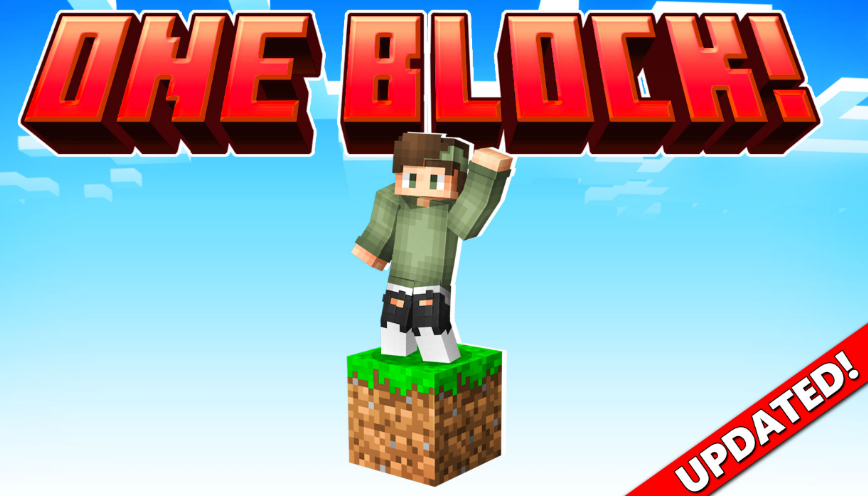
Minecraft is known for giving players endless freedom to create, explore and survive. However, starting a new world can sometimes feel overwhelming, especially when the available resources are limited. One Block survival maps add an extra challenge by changing the traditional Minecraft experience. Instead of exploring a large world from the beginning, players start with a single block and must carefully use every resource they receive.
The popular One Block by Dodo Studios experience for Minecraft Bedrock introduces players to this unique survival concept. While the idea may seem simple, many new players quickly discover that success requires planning, patience and smart decision-making.
Rushing Through The First Stages Too Quickly
One of the most common mistakes beginners make in One Block Minecraft Bedrock is progressing too quickly without preparing their surroundings. Since almost every block can provide important resources, breaking blocks without thinking about what comes next can create unnecessary challenges.
New players often focus only on collecting materials instead of building a safe and organised starting area. Creating storage, setting up basic tools and making sure there is enough space to expand can make a significant difference later in the game.
A good strategy is to treat the first stages as a preparation phase. Even simple improvements, such as creating platforms and organising resources, help players avoid losing valuable items or running into problems when new challenges appear.
Forgetting The Importance Of Resource Management
Another mistake many beginners make is using resources without considering future needs. In a traditional Minecraft world, players can usually travel to new areas to collect missing materials. In One Block gameplay, every resource has more value because progression depends on the blocks that appear.
Players should think carefully before crafting items or using rare materials. Building too many unnecessary objects early on can slow down progress and make later stages more difficult.
Learning how to manage limited resources is one of the most rewarding parts of this type of Minecraft challenge. It encourages players to plan ahead and understand the importance of every decision they make.
Missing Opportunities To Explore New Minecraft Experiences
Many Minecraft players enjoy survival mode because it allows them to create their own goals. However, custom maps and Marketplace content can introduce completely new ways to play. Exploring additional experiences is a great way to discover challenges that are different from the standard Minecraft formula.
Players looking for new adventures can visit Minecraft Bedrock Marketplace to discover a wide range of worlds, add-ons and creative projects. These experiences allow players to try different gameplay styles while keeping the familiar Minecraft foundation.
One Block-style challenges are a good example of how small changes can completely transform the way players approach the game. Instead of simply collecting materials and building freely, players must think strategically and adapt to unexpected situations.
Minecraft continues to remain popular because it gives players the freedom to create their own adventures. Whether someone is new to survival gameplay or an experienced builder looking for a fresh challenge, custom worlds and add-ons offer countless possibilities.
Avoiding common beginner mistakes can make the One Block experience more enjoyable and rewarding. With better planning, careful resource management and a willingness to explore new content, players can turn a single block into the foundation of an impressive Minecraft world.

Drifting turns ordinary racing into something much more dynamic. Instead of simply following the fastest line around a track, players have to manage steering, acceleration, braking, and momentum while deliberately sending the car sideways through corners. The result is a style of racing that rewards timing and control while still being accessible to players looking for quick entertainment.
One of the biggest advantages of modern browser racing games is convenience. There is no need to install a large game client or spend time configuring complicated settings before getting behind the wheel. With a compatible browser and an internet connection, players can jump into a drifting challenge within minutes. For those looking for a collection of accessible titles, try the top free drifting games at the Drift Games Hub, where different styles of online drifting can be explored in one place.
Whether you prefer realistic handling, arcade-style action, obstacle courses, or score-based challenges, these 10 types of browser-based drifting games offer plenty of sideways racing fun.
1. Realistic Drift Simulators
For players who want to concentrate on technique, realistic drift simulators provide a more detailed driving experience. These games often give greater importance to vehicle weight, steering response, acceleration, and traction.
The objective is not simply to turn the car sharply and hold the accelerator. Successful drifting requires players to find the right balance between throttle and steering. These games can be particularly enjoyable for people who want to practice smooth transitions and controlled slides.
2. City Street Drifting Games
City-based drifting games put the action on urban roads surrounded by buildings, intersections, tunnels, and other obstacles. Their environments can make each corner feel different from the last.
Many of these games combine drifting with traditional checkpoint racing. Players need to maintain speed while avoiding barriers and staying on course. The compact layouts also make them suitable for short gaming sessions when you want a quick race rather than a lengthy campaign.
3. Mountain Drift Challenges
Mountain roads are naturally suited to drifting because they are filled with sharp bends and changes in direction. Browser games built around these environments usually emphasize precision and cornering.
A narrow road leaves less room for mistakes, so players have to judge their speed before entering each turn. Holding a long slide without touching the barriers can become a challenge in itself. These games are especially appealing to players who enjoy technical courses rather than wide racing circuits.
4. Drift Score Attack Games
Not every drifting game needs to be about finishing first. Score attack titles make the quality and length of your slides the central objective.
Players typically earn points for maintaining drifts, linking multiple corners, or achieving impressive angles. This creates a different kind of competition because the fastest route is not always the most rewarding one. A slower but longer controlled slide can sometimes produce a much higher score.
5. Stunt and Obstacle Drifting Games
Some online drifting games combine racing with stunt-based gameplay. Instead of simply navigating conventional tracks, players may encounter ramps, barriers, platforms, jumps, and unusual layouts.
These games are often more forgiving and arcade-oriented than realistic simulators. Their appeal comes from experimentation. Players can attempt dramatic slides, discover shortcuts, and figure out how to handle unusual obstacles while keeping the car moving.
6. Traffic Drifting Games
Traffic-based drifting games introduce another challenge: other vehicles. Players have to maintain control while navigating roads populated with moving cars.
The presence of traffic changes the rhythm of a drift. A corner that looks easy can suddenly become difficult when another vehicle occupies the ideal racing line. These games reward anticipation because players need to think about both the upcoming turn and the surrounding traffic.
7. Drift Racing Games With Car Customization
Customization can make an online drifting game feel more personal. Some browser titles allow players to change the appearance of their vehicles, while others provide upgrades that affect performance.
Visual customization might include different paint jobs, wheels, body styles, or other cosmetic details. Performance-focused games can go further by allowing adjustments to handling or acceleration. This adds another layer to the experience because players can experiment with different setups before returning to the track.
8. Time-Trial Drift Games
Time trials combine the technical nature of drifting with the pressure of the clock. Players must complete a course as quickly as possible while maintaining enough control to avoid costly mistakes.
The challenge is finding a balance between speed and precision. Entering a corner too aggressively can cause a spin or collision, while being overly cautious can result in a slow finish. Replaying the same course can therefore become part of the fun as players gradually improve their route and timing.
9. Multiplayer-Inspired Drift Competitions
Some browser-based racing games are designed around competitive features, leaderboards, or multiplayer-inspired challenges. Even when players are not directly racing against opponents in real time, rankings can provide an additional reason to keep practicing.
A leaderboard turns a simple drift into a personal challenge. After learning the track, players can attempt to improve their score, reduce their completion time, or achieve a longer uninterrupted slide. This format works particularly well for short online sessions because every attempt can produce a new target.
10. Casual Arcade Drifting Games
Sometimes the best choice is simply a game that is easy to understand and fun from the first attempt. Casual arcade drifting games typically use straightforward controls and exaggerated driving physics.
These titles are ideal when you do not want to spend time learning complicated mechanics. You can start a race, learn the basic controls, and begin experimenting with corners almost immediately. Their simple approach also makes them suitable for players who are new to drifting games.
What Makes a Browser Drifting Game Fun?
The strongest online drifting games tend to combine accessible controls with mechanics that reward practice. A game can be simple to start but still provide enough depth for players to improve over multiple attempts.
Track design is another important factor. A collection of interesting corners, changing road widths, obstacles, and different environments can make a game much more replayable. Vehicle handling also matters because drifting should feel responsive rather than completely random.
Most importantly, browser-based games benefit from keeping the experience convenient. When a player can open a page, select a car, and start drifting without a lengthy setup process, it becomes much easier to fit a few races into a break or casual gaming session.
Finding Your Next Online Drifting Challenge
Drifting games come in many forms, from technical mountain-road simulators to fast arcade races and score-based challenges. Some are designed around precision, while others focus on stunts, customization, or simply creating entertaining slides.
The variety is what makes browser-based drifting particularly appealing. You can try a realistic driving challenge when you want to concentrate on technique, then switch to a more casual arcade game when you want something faster and less demanding.
With so many online options available, there is always another corner to master, another score to beat, or another track to explore. All you need is a browser, a few minutes to spare, and a willingness to put your car sideways.

The perfect home setup can seem like the condition for taking games seriously: a permanent screen, familiar purchases, and every device within reach. That view misses what a trip can add. Playing abroad puts a familiar hobby next to local conversations, public spaces, and retail displays, so a short session can become a firsthand encounter with another gaming culture. The value comes from attention to place, not from treating travel as a method for changing rules.
Local arcades, game shops, conventions, cafés, esports spaces, and multilingual communities give play a setting that a desk at home cannot reproduce. They can also broaden a player’s sense of online participation, including discussions around game-related earning activity. A resource on how to make money online fits this travel lens when treated as part of international communities and events that reveal how people connect games with online opportunities, rather than as a detached shortcut.
Travel as Cultural Discovery, Not a Region Switch
Travel can reveal local release calendars, physical editions, regional promotions, and the games that receive visible attention in a particular market. It cannot promise earlier access or a different catalogue, because publishers and platforms set availability and release timing by region. The useful move is cultural discovery: browse displays, listen to conversation, and visit public gaming spaces when they are available. Those observations give a trip texture without turning geography into an account workaround.
A game that has been available at home may take on a different character when local players recommend it, discuss it, or display it prominently in stores. Keep three situations separate: playing an existing library abroad, buying a product in another country, and changing an account’s store region. Steam lets existing users keep seeing home-country prices and shop as usual while traveling. A store-country change is intended for people who have moved or live abroad for an extended period; it needs a payment method from that country and is generally limited to once every three months. PlayStation account country or region is selected at creation and cannot be changed later.
Choosing Digital Products With Account Context
Players can buy digital games through official platform stores or digital marketplaces. Eneba offers game keys and gift cards within a broad digital catalogue, while listing details can identify the relevant region and platform for a purchase.
Those details support smart product selection during a trip. Match a purchase to the account country, platform, and activation rules before checkout. PlayStation voucher codes must match the account’s country or region for activation, and some add-ons may not work with a physical game from another region. For physical editions, the relationship between the game’s region and an add-on deserves the same attention. This preparation keeps a purchase aligned with the account already in use.
Publisher and platform rules also determine DLC and preorder availability, so travel is no promise of content ahead of its stated release. The better travel setup values flexibility over a perfect room. A laptop, handheld, console already available at the destination, or a reliable existing account can keep gaming connected to the trip, depending on the game. Digital marketplaces like Eneba offer deals on digital products as a practical part of that travel toolkit.
-
 Guides7 years ago
6 Proven Ways to Get more Instagram Likes on your Business Account
-
Mainstream12 years ago
BioWare: Mass Effect 4 to Benefit From Dropping Last-Gen, Will Not Share Template With Dragon Age: Inquisition
-
 Mainstream8 years ago
How to Buy Property & Safe Houses in GTA 5 (Grand Theft Auto 5)
-

 Guides2 years ago
Free Fire vs PUBG: Comparing Graphics, Gameplay, and More
-

 Guides2 years ago
50+ Free Fire ID and Passwords Login List (Giveaway) 2025
-
 Casual3 years ago
8 Ways to Fix Over-Extrusion and Under-Extrusion in 3D Printing
-

 Other2 years ago
Ajjubhai UID: Free Fire Details & Earnings
-

 Features2 years ago
Exploring Valorant eSports Stats: Unveiling the Metrics Behind Competitive Excellence