
Tech
Games Micropayments and Bitcoin


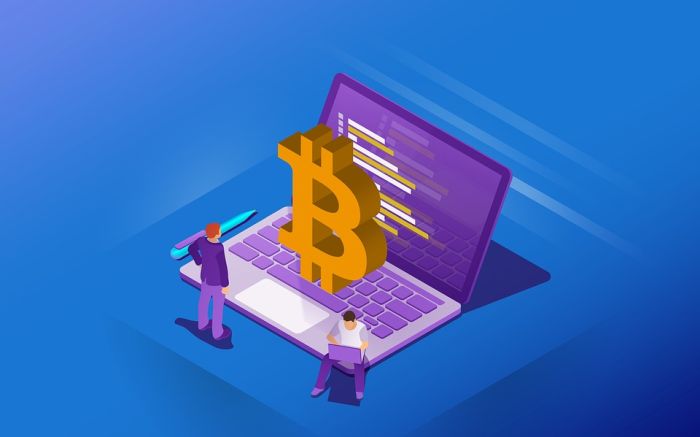
When Bitcoin started drawing users’ attention around 2010, people hailed it as a potentially great currency for micropayments. It had a fast payment network with exceptionally low fees. Gamers loved it, but now the only gamers that love Bitcoins are those holding it as an investment. So, why is Bitcoin no longer an option for micropayments?
Fees
Micropayments are any transactions of a dollar or less. Sometimes, a micropayment can be of less than 10 cents or a fraction of a cent. In the gaming world, most payments can be categorized as micropayments.
From purchasing virtual assets like automobiles to buying special services, gamers transact millions of micropayments every day. However, the average Bitcoin transaction cost $1.069 in fees, meaning gamers would have to pay higher in fees than the actual products they purchase.
Bitcoin’s fees are paid to the Bitcoin miners who verify each transaction before it’s added to the blockchain. The fees are not constant. When Bitcoin was launched, there were few people transacting in the cryptocurrency.
People who participated in Bitcoin mining paid little attention to the fees as well, which helped keep them to a few cents per transaction. With time, Bitcoin’s value increased. The number of Bitcoin transaction going through the blockchain increased.
However, the Bitcoin payment protocol did not change. The protocol only handles a maximum of 7 transactions per second. Bitcoin blocks are 1MB in size, and only 1 block can be mined within a span of 10 minutes. If there are a hundred thousand transactions sent for validation in the Bitcoin protocol, miners will prioritize transactions with the highest fees.
In December 2017, an average Bitcoin payment cost $40 to process. For a payment network heralded for its ability to facilitate micropayments, Bitcoin had become more expensive than any alternative digital payment system.
Speed
Is Bitcoin superior to all other crypto networks? In plain text, Bitcoin is not the most advanced cryptocurrency network in the world. Although a giant network with the market domination of 40%, its payment protocol is close to obsolete.
Bitcoin can only handle a maximum of 7 transactions per second, and even then, it handles about 3 transactions. Its closest rival, Ethereum, handles at least 15 transactions every second.
Some newer crypto networks like IOTA and Stellar handles thousands of transactions per second. When it comes to providing speedy payments, Bitcoin would probably not appear among the top 20 crypto networks.
For many gaming startups where gamers complete payments using cryptos, Bitcoin is often not an option. Micropayment startup, SatoshiPay, one of the few gaming payment networks where gamers used to pay using Bitcoin, ditched Bitcoin in mid-2017 for IOTA. A lot of micropayment solutions have ditched Bitcoin in the past, and nearly all of them cite Bitcoin’s delays in completing transactions as a major challenge.
High Minimum Transaction Size
With fees going as high as $5 for a Bitcoin transaction, most Bitcoin wallets and crypto exchanges set a minimum amount of Bitcoins required for the transaction to go through. While you can send cents with IOTA or WAVES at extremely low costs, most networks set a Bitcoin minimum transaction size of $10.
Some merchants won’t accept any Bitcoin payment of less than $50, which makes the network the least attractive option for gamers.
Bitcoin Cost
At the time of writing, Bitcoin costs a little over $7,600. You can purchase fractions of a Bitcoin, sometimes up to a millionth of a Bitcoin. The lowest fraction of one Bitcoin is known as a Satoshi.
However, while you can purchase fractions of Bitcoins, the prices are often inflated by traders. Add high Bitcoin fees to the already high cost of buying a Bitcoin, and it becomes impossible for gamers to rely on the cryptocurrency for their micropayment needs. Learn more about how to buy Bitcoin here.
Solution to Gamers
The Lightning Network Payment Option
For ardent Bitcoin users, the Lightning Network is a great option for completing micropayments. Lightning uses an off-chain payment system where transactions only go through the blockchain when it’s completely necessary.
The Lightning payment protocol handles millions of transactions per second. It’s scalable to the tune of billions of transactions and gamers can settle payments at speeds of milliseconds. The company behind this project says that the cost of using the network would be exceptionally low and that their services have the potential to provide solutions to most of the challenges facing Bitcoin.
Bitcoin Alternative Networks
Since the Lightning Network is still a concept under development, Bitcoin does not have a solution that can enhance Gamers’ micropayments. Fortunately, altcoin networks have solutions that are much superior to those of Bitcoin.
IOTA
With zero fees and super-fast and secure transactions, IOTA is used as the ideal service where micropayments are necessary. IOTA was initially designed to connect startups that deal with the Internet of Things.
Instead of a blockchain, the network has a payment protocol known as Tangle. The system uses a network of Acyclic nodes connected in a graph like manner. The network’s nodes are better distributed than those of a blockchain. IOTA security system is also high although overtaking 34% of the Tangle would give an attacker control over it.
IOTA can handle millions of transactions per second and has infinite scalability. With such friendly terms for gamers, the network is often the number one choice for people who handle micropayments daily.
Stellar

The Stellar network is specially designed for fast, secure and low-cost transactions. Ranking eighth among the largest crypto networks, it’s one of the fastest growing cryptocurrencies in the world.
Like IOTA, Stellar completes payments in seconds. Its payment system can handle 600,000 transactions per second while users pay $0.01 in transaction fees. Compared to Bitcoin, almost everyone that occasionally sends micropayments would choose Stellar.
In Conclusion
Bitcoin used to be the best crypto network for sending micropayments. Gamers knew of no better alternative until Ethereum came along. Ethereum was soon faced with challenges related to scalability.
Later on, IOTA and Stellar became popular for offering incredibly low transactions fees and for having great scalability. But will the two networks remain gamers’ paradises for micropayments? Will Lightning network come to the rescue of Bitcoin? The future of crypto micropayment services look great, and gamers might have even better payment gateways for their micropayments.





Speed has spoiled us a little. Once a payment lands straight away, waiting starts to feel unnecessary, whether you are shopping, running a business or cashing out online. Across New Zealand, faster money is changing what people expect from every digital service they use each day.
A Saturday evening payment no longer has to sit around waiting for Monday morning to move, and paying from a phone has become normal for a lot of New Zealanders. Once money starts moving that quickly in everyday life, patience wears thin everywhere else. A slow refund or delayed payout suddenly becomes the bit that can frustrate your day, especially when the rest of your digital life is built around getting things done.
Faster Payments Are Becoming the Baseline
New Zealand consumers are already pretty happy with bank-payment speed. Payments NZ research found 88% were satisfied with the speed of sending payments and 86% with receiving them. Real-time payments also appealed to 76% of respondents, which says plenty about where expectations are heading once waiting becomes optional.
The rules around consumer data are changing too. Customers will have new ways to share banking information with approved services, giving businesses more room to build faster account-to-account payment experiences. Seven-day bank payments have already been running since May 2023, and more than half of surveyed consumers said they had directly benefited from the change.
Waiting Costs Businesses Too
For businesses, payment speed goes straight to cash flow. Among New Zealand small businesses surveyed in 2026, 74% said credit was important for managing cash flow, and 62% used it to deal with delayed payments. Another 29% had used personal credit cards for business expenses. Businesses are asking payment providers for better services as well, with one-third of commercial clients identifying a lack of value-added payment services as their biggest problem with their provider.
That pressure does not disappear just because the sale is complete. A customer may have paid in seconds, but the business can still be waiting for funds to clear.
Faster settlement narrows that gap, giving firms quicker access to money they have earned and fewer reasons to lean on credit.
Cashing Out Is Part of the Experience
The same expectation carries into online gaming because paying in is only half of the transaction. A deposit can clear quickly and the account can be ready within minutes, so a long wait at the other end becomes much more obvious.
Consumers who get used to instant bank transfers and near-frictionless checkout start noticing delays elsewhere. That puts pressure on instant withdrawal casinos to meet the same expectation, with Casino Guru tracking New Zealand operators by payout speed, payment method and Safety Index so players can see where faster cashouts are actually backed by practical detail.
The New Zealand selection currently contains 122 casinos, with fast withdrawals built around cashouts arriving within 24 hours. Crypto can take up to one hour and e-wallets up to 24 hours; cards and bank transfers can run to two to five business days. KYC checks and internal approval can add extra waiting before the payment provider gets involved.
Checkout Is Getting Smarter as Well as Faster
Payment speed is now tied to cutting down the steps between deciding to buy and actually paying. Mastercard and Westpac completed New Zealand’s first fully authenticated agentic transactions in February 2026, testing AI-powered purchases using verified payment credentials with consumer controls built in.
For anyone used to one-tap checkout or buying games from a phone, the attraction is easy to understand. Fewer screens mean less repetition, and there is less hanging around between deciding you want something and actually completing the purchase.
New Zealanders are giving all of this technology plenty of places to prove itself. Online shoppers completed nearly six million extra transactions in 2025, a 6% increase from the previous year. In-store spending grew by 2% in the same period, while the average online transaction reached NZ$120.
Domestic retailers took 79.6% of online spending, so this is hardly a fringe habit driven by overseas marketplaces. A growing chunk of everyday retail now happens through screens, where customers can compare prices quickly and expect the payment stage to work with the same ease. Once that becomes normal across everyday digital services, a delay that might once have been shrugged off becomes something people notice straight away.
Slow Money Stands Out
Fast payments do not need to be flashy to change expectations. They simply have to work often enough that waiting starts to look unnecessary. New Zealand consumers already see money moving faster in several parts of daily digital life, and that gives them a direct comparison when another service drags its feet. The next test for digital businesses is straightforward: when the customer presses the button, how long does the money actually take to move?


Network reliability is a critical factor for businesses that rely on continuous connectivity to operate efficiently and effectively. The implementation of advanced solutions such as Cradlepoint R980 can significantly enhance network reliability by providing robust features designed to meet the demands of modern technological environments. This article explores how Cradlepoint R980 can improve network stability, examines its key features, and discusses strategies to maximize performance across various industries.
Enhancing Network Reliability with Cradlepoint R980

The Cradlepoint R980 plays a pivotal role in ensuring network reliability by leveraging cutting-edge technologies such as Edge Computing and Kubernetes Orchestration. Edge Computing processes data closer to the source, reducing latency and enhancing real-time data processing capabilities. This is particularly beneficial for industries where timely data access is crucial, such as healthcare and finance. Furthermore, Kubernetes Orchestration helps in managing containerized applications across multiple environments, ensuring seamless network operations even during peak traffic.
Beyond these technologies, the Cradlepoint R980 integrates a Load Balancer to distribute network traffic efficiently, preventing bottlenecks and ensuring optimal performance. This is crucial in maintaining the reliability of services, especially for businesses with high traffic demands. By optimizing traffic flow, the device minimizes downtime and improves service delivery.
Incorporating the Zero Trust Security Model into the Cradlepoint R980 ensures that all network activities are continuously verified, thereby enhancing security and reliability. This model is essential for businesses that prioritize data integrity and protection against unauthorized access, which is a common concern in technology-driven sectors.
Key Features of Cradlepoint R980 for Network Stability
The Cradlepoint R980 boasts several features that contribute to network stability. One prominent feature is its API Gateway, which facilitates the integration of different software systems and enables seamless communication between various applications. This integration is vital for businesses employing Microservices Architecture, as it allows for flexible and scalable system designs.
An additional feature is the built-in Content Delivery Network (CDN), which optimizes the delivery of digital content to end-users by caching data at strategic locations. This reduces load times and enhances user experience, making it an indispensable tool for organizations that rely on rapid content delivery.
WebAssembly support within the Cradlepoint R980 enhances the performance of web applications, enabling faster execution of complex tasks and improving overall application efficiency. This feature is particularly beneficial for businesses that require high-performance computing resources to operate their web applications seamlessly.
Real-World Applications of Cradlepoint R980 in Various Industries
In the healthcare industry, the Cradlepoint R980 ensures reliable connectivity for remote patient monitoring systems, enabling real-time data transmission critical for patient care. This reliability is achieved through the device’s advanced features like Edge Computing and Load Balancer, which optimize data flow and reduce latency.
Retail businesses benefit from the Cradlepoint R980 by utilizing its GraphQL Query Language capabilities to efficiently manage inventory systems and customer data integration, offering a streamlined approach to data management and enhancing operational efficiency.
For financial services, the Cradlepoint R980 provides a robust solution for secure transactions and data integrity through its Zero Trust Security Model, ensuring that sensitive data is protected from breaches and unauthorized access. This is vital in maintaining customer trust and regulatory compliance.
Strategies for Maximizing Network Performance with Cradlepoint R980
To maximize the performance of the Cradlepoint R980, businesses can employ several strategies. Utilizing DevOps Pipeline frameworks allows for continuous integration and deployment, ensuring that network configurations and updates are efficiently managed and implemented. This approach reduces downtime and enhances system reliability.
Regular Penetration Testing ensures that the network is secure against potential vulnerabilities, maintaining the integrity and reliability of the network infrastructure. This testing is crucial for identifying weaknesses and implementing necessary security measures.
Integrating UX/UI Prototyping Tools helps businesses optimize user interfaces and improve user experience, which is essential for maintaining user satisfaction and engagement. A/B Testing Frameworks can further refine these designs by comparing various interface options and selecting the most effective one based on user feedback.
Conclusion

Implementing Cradlepoint R980 is a strategic decision for businesses aiming to enhance network reliability and stability. Its advanced features, such as Edge Computing and Kubernetes Orchestration, provide robust solutions for diverse industry needs. By optimizing performance and ensuring security, the Cradlepoint R980 empowers organizations to maintain seamless operations and deliver exceptional service. For businesses committed to leveraging technology for growth, the Cradlepoint R980 offers a reliable and comprehensive solution.
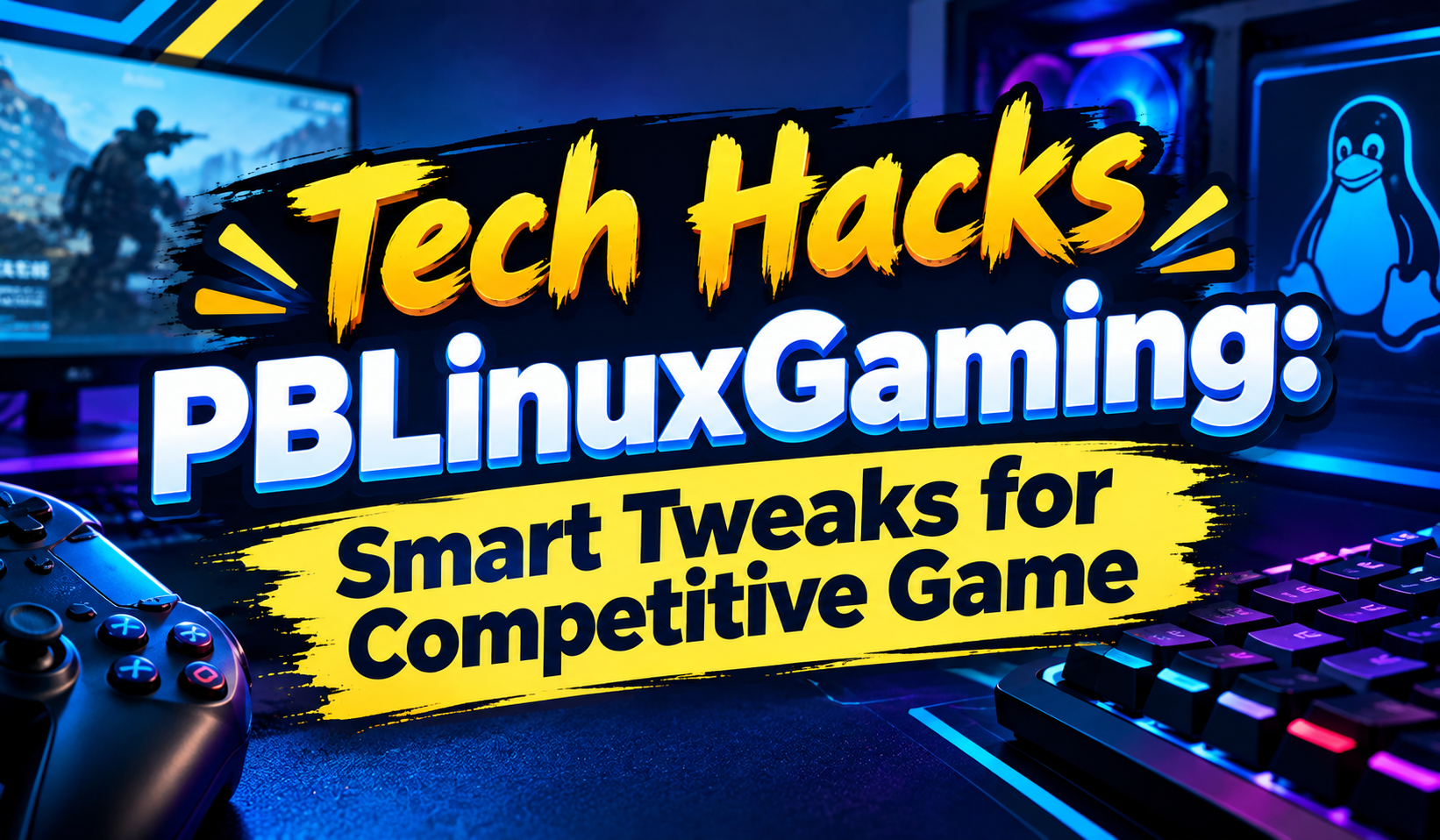
Linux gaming has come a long way from being a complicated experiment to a viable alternative for those who want the control that Linux offers paired with the convenience of Steam, Proton, Vulkan, modern graphical drivers, and a suite of optimizing tools.
Yet, getting a game to launch is only half the battle; for a competitive player, it is essential to have a graphical frame rate that does not drop unpredictably, responsive controls, audio sync, and overall steadiness of FPS with little to no stutter.
Yet, several tweaks can make all the difference between smooth gameplay and a choppy, unplayable mess. That is where the experienced tech hackers at PBLinuxGaming come in, ready to advise on what tweaks are worth the risk and reward.
Starting Smoothly Without Problems
The first several tips concern setting up a Linux machine for gaming.
It is advisable to keep your kernel and system software up to date, but not too bloated. The latest drivers and kernel versions are usually the best in terms of performance and new graphic cards or processors.
The ideal Linux distribution to use for playing games is often debated, as many suggest to stick to what you are most comfortable with and have on your system. Some popular distributions are Ubuntu, Fedora, Pop!_OS, Nobara, or another distro optimized for gaming.
Having a clean system with updated packages rarely leads to compatibility issues.
Graphics Drivers Do This First
Linux gamers know that getting the right graphics card driver is one of the most important activities in the entire setup process.
If the drivers are incorrectly configured or too old, there is not much else that can be done to improve the performance.
Most open source Linux distributions use the Mesa compiler for AMD and Intel GPUs, NVIDIA graphics cards require an additional proprietary driver to be installed.
However, in the end, it is necessary to use the correct driver to use Vulkan, a graphics API underlying many games and critical to their operation. It is advisable to make sure that the correct graphics driver is installed and up to date before testing any graphical tweaks or launch options.
Make Proton Work for You
One of the biggest reasons Linux gaming has improved is Proton. Integrated into Steam Play, Proton allows many Windows games to run on Linux without requiring players to manually configure traditional compatibility layers.
However, different games can behave differently with different Proton versions. If a game refuses to launch or performs poorly, trying another compatible Proton release can sometimes solve the problem.
It is also worth checking ProtonDB before buying or troubleshooting a game. User reports can reveal whether a title works well on Linux and which settings other players have found useful.
The key is to avoid assuming that one Proton configuration works perfectly for everything.
For players exploring unfamiliar gaming platforms, it’s also worth understanding What is Wilszoxpuz7.4.0.8 Bankroll Game? Guide & Safety Tips before getting started.
Performance Tweaks That Actually Work
Once the basic setup is working, performance tuning becomes much easier.
GameMode is one of the simplest tools to try. It can temporarily adjust system behavior while a game is running, helping the computer prioritize gaming workloads. For Steam games, a commonly used launch option is:
The actual improvement depends on the game and hardware, so treat GameMode as an optimization tool rather than a guaranteed FPS booster. Some CPU-limited games may benefit more than others.
Use MangoHud to Find the Real Problem
One of the biggest mistakes gamers make is changing settings without knowing what is causing the slowdown.
MangoHud helps solve that problem. It provides an in-game performance overlay showing useful information such as FPS, frame time, CPU and GPU usage, temperatures, RAM, and VRAM consumption.
Suppose your GPU is constantly running near full capacity. Lowering graphical settings may help. If GPU usage is low while the CPU is struggling, however, reducing texture quality may accomplish almost nothing.
For competitive gaming, frame time can be particularly useful because consistent frame delivery often feels better than simply chasing the highest average FPS.
Reduce Background Processes
Sometimes the best performance tweak costs nothing.
Browsers, cloud synchronization, software updates, recording applications, and other background processes can consume resources while you play. Before launching a competitive match, close any application you do not really need to run.
A useful tip in case you are running on low RAM machines or older processors. You do not have to go as far as killing all Linux desktop processes to free memory and CPU. Just kill apps that could possibly compete with your game for system resources such as CPU, memory, disk I/O, or network bandwidth.
PipeWire Can Improve the Audio Experience
Gaming performance is not exclusive to graphical performance. Having a crackling audio session could ruin an otherwise perfect session.
PipeWire has emerged as the new standard for audio on modern Linux distros, offering a flexible foundation for applications built upon it to implement low-latency audio. If you are facing crackling sounds, delayed audio, or overall audio issues, double-checking your sound configuration can be a good idea.
Before doing any potentially destructive operations, make sure you have a backup of the configuration and verify that the issue is actually caused by the audio server.
Keeping your gaming setup running smoothly also means understanding common tech issues, such as the Problems With Dropbox 8737.idj.029.22 Explained.
Controller Support Works Well

Modern Linux gaming generally offers solid controller support, especially through Steam Input.
Many popular controllers can work with little configuration, while Steam Input allows players to customize button layouts for individual games. This is particularly convenient when switching between genres that require different control schemes.
Bluetooth controllers can occasionally introduce connection or latency problems, so a wired connection may be preferable when maximum consistency matters.
Playing Older Games on New Hardware
Linux can also be good for enthusiasts who want to relive old games and play through emulators.
Applications like RetroArch, Dolphin, and RPCS3 are perfect for playing games that have long since been out of print. It all depends on what emulator you use, what game you want to play, and what capabilities your hardware is capable of, but modern Linux distros are surprisingly good at being able to emulate various older titles.
For anyone with a large collection of older titles this can be yet another upside of using Linux over traditional PC gaming
Small Tweaks Make all the Difference
A lot of people will tell you that the secret to great performance on Linux is to make small tweaks and get into the mindset of a power user
Updating your graphics drivers is important, as is checking compatibility reports before you install a game you aren’t familiar with. Keeping an eye out on temperatures when running older games is also a must. If something suddenly begins to stutter, always double check what software updates or driver updates you’ve installed before you begin random troubleshooting in panic. Most importantly, only change one thing at a time.
If you alter the Proton version, CPU governor, graphics settings, launch options, and desktop configuration simultaneously, you will have no idea which change actually helped.
Best Tech Hacks PBLinuxGaming for Competitive Gamers
For players who want a practical starting point, these are some of the most useful tech hacks PBLinuxGaming can inspire:
- Keep your kernel and GPU drivers updated.
- Choose a Linux distribution with good hardware support.
- Test different Proton versions when necessary.
- Use ProtonDB to research game compatibility.
- Try GameMode for supported games.
- Use MangoHud to monitor FPS and frame times.
- Close unnecessary background applications.
- Check PipeWire and audio settings if sound problems occur.
- Use wired networking and controllers when consistency matters.
- Monitor temperatures during demanding sessions.
- Test every major tweak individually.
These steps are relatively simple, but together they can create a much more predictable gaming environment.
Beyond gaming tweaks, Exploring MagFuseHub com: The Ultimate Resource for Magnet Enthusiasts offers an interesting look at magnets, their uses, and the technology behind them.
Final Thoughts
Linux gaming has come a long way, but it still takes some tinkering to get the best results. The beauty of it all is optimization does not require you to endlessly edit some configuration files or to copy-paste some forum advice command line.
The smartest tech hacks PBLinuxGaming approach is to start with the basics: current drivers, suitable Proton version, GameMode, performance monitoring, and clean system, and work to address specific issues.
Consistency, in the case of competitive play, is frequently more crucial than a high-end score. A stable frame rate and frame time distribution, reduced control lag, good audio quality, and network stability are all much more critical aspects than a lofty FPS number.
With the proper tweaks and patience, you can achieve the best possible performance in Linux for your specific gaming needs.
-
 Guides7 years ago
6 Proven Ways to Get more Instagram Likes on your Business Account
-
Mainstream12 years ago
BioWare: Mass Effect 4 to Benefit From Dropping Last-Gen, Will Not Share Template With Dragon Age: Inquisition
-
 Mainstream8 years ago
How to Buy Property & Safe Houses in GTA 5 (Grand Theft Auto 5)
-

 Guides2 years ago
Free Fire vs PUBG: Comparing Graphics, Gameplay, and More
-

 Guides2 years ago
50+ Free Fire ID and Passwords Login List (Giveaway) 2025
-
 Casual3 years ago
8 Ways to Fix Over-Extrusion and Under-Extrusion in 3D Printing
-

 Other2 years ago
Ajjubhai UID: Free Fire Details & Earnings
-

 Features2 years ago
Exploring Valorant eSports Stats: Unveiling the Metrics Behind Competitive Excellence