
iGaming
Why Modern Players Expect Casino Games to Borrow Features From Video Game

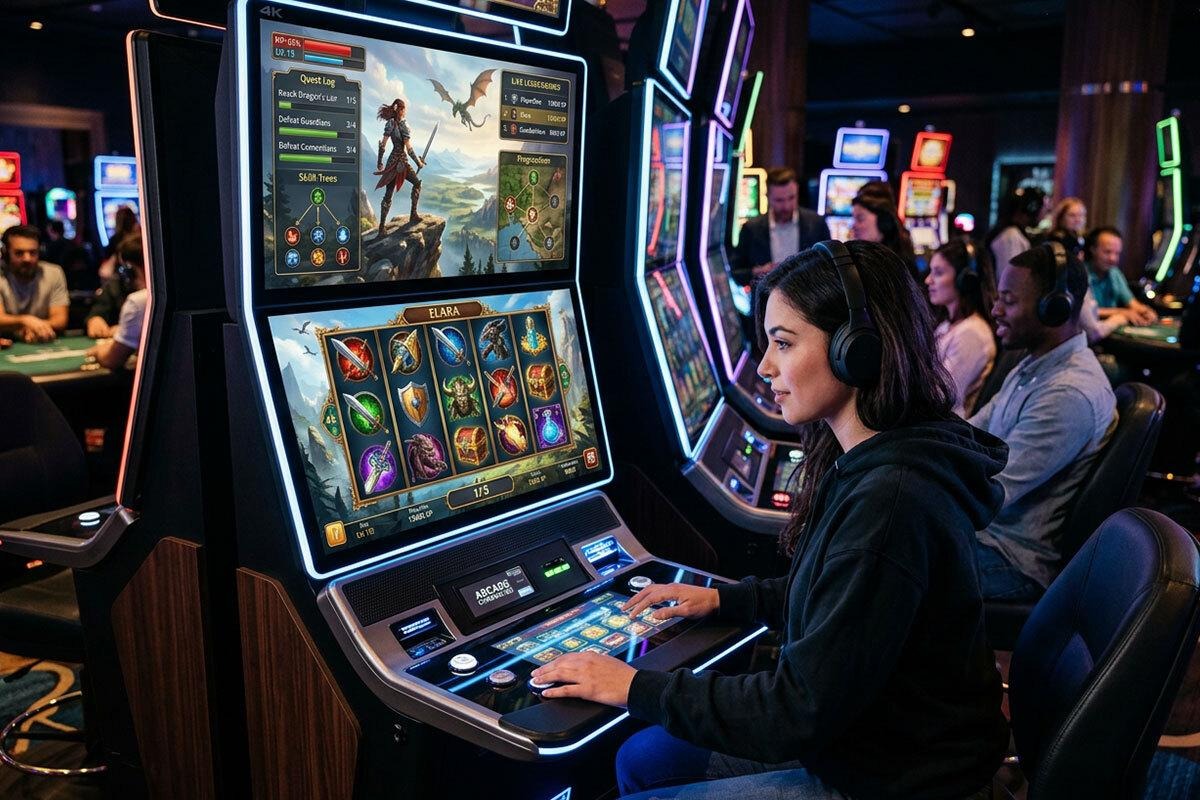
Have you ever noticed how different casino games feel today compared to a decade ago? If you walk into a modern casino or log into an online platform, you aren’t just seeing basic spinning wheels and plain card tables anymore. Instead, you see flashing skill meters, unlockable storylines, and leveling systems.
This change isn’t an accident. It is happening because a new generation of players is taking over. Today’s players grew up with video games, from mobile apps to massive console adventures. Because of this, they expect their entertainment to be interactive, visually stunning, and rewarding. They don’t just want to pull a lever and hope for the best. They want an experience.
Let’s look at exactly why modern players expect casino games to borrow features from video games and how the industry is changing to keep up.
Moving Past Passive Entertainment
For generations, traditional casino games were passive. You placed a bet, spun a reel, or dealt a hand, and waited for a random number generator to decide your fate. While that classic style still has its place, it does not cut it for younger adults.
Those individuals who have grown up with video games, such as Call of Duty and Fortnite, are accustomed to being active players. In a video game, what you do counts. You decide where to move, how to build, and when to fire at. In case those people try playing the old-fashioned slot machines, they tend to get bored really fast. Pushing one button repeatedly is like a regression for them. They want to make decisions, test their reflexes, and feel like they are part of the action.
The Craving for Progression and Rewards
One of the biggest reasons video games are so addictive is the progression system. You start at level one with basic gear. The more you play, the more experience points (XP) you earn. Soon, you level up, unlock a new character skin, or get access to a hidden map.
Many modern casino players want that same sense of achievement. They expect a session to mean something over time. If a player spends an hour on a game, they want to feel like they made progress, even if their cash balance stays the same.
In order to meet such expectations, online gaming websites have developed complete loyalty systems right within the game itself. This can be seen by players who visit websites like Play Alberta, which is a regulated online gambling website. At such websites, the players get exposed to an ecosystem of digital products where traditional casino games are available along with the more modern features of interactive lotteries and instant win games. Such legal websites demonstrate the trend towards clean and enjoyable user interfaces that resemble a fun zone rather than a traditional casino room. The ability to easily switch from live dealers to sports bets and instant games mirrors the video game interface.
Skill-Based Elements and Agency
No one likes to feel completely helpless. While luck will always be the core of gambling, modern players want a slice of the pie dedicated to skill. They want to believe that their decisions can influence the outcome of the game.
This has brought about the emergence of skill-based slot machines and arcade game hybrids. Unlike the ordinary bonus feature, where players only get to watch free spin action taking place, a current-day slot will switch from free spin mode to a mini game. You could be required to destroy enemy ships, solve puzzles by putting pieces together, and drive a racing car around obstacles, among other things. If you do well in the mini game, your winnings will be more. This blend of luck and skill gives players a sense of agency that traditional games simply lack.
Immersive Visuals and Complex Storytelling
Think about the graphics in modern video games. They look like Hollywood movies, complete with cinematic cutscenes, professional voice acting, and deep lore. When a player switches from a beautiful video game to a casino game, a massive drop in visual quality feels jarring.
Casino developers have woken up to this fact by employing first-class animators and writers. The modern slot games have become more elaborate, with their themes and stories that unfold during the game. Instead of merely matching cherries, you help an archeologist discover the mysteries of an Egyptian tomb or protect yourself from a zombie apocalypse. By playing bonus games, you move the story forward.
- Social Features and Community
Video gaming is highly social. Millions of people play online with friends every day, talking over headsets and working together to achieve goals. Traditional gambling, on the other hand, can feel a bit lonely, especially when playing on a phone or computer.
To bridge this gap, casino games are importing social tools directly from video games. You will now find live chat boxes, global leaderboards, and community achievements where everyone on a site wins a small bonus if a massive jackpot hits. Live dealer games, where a real human hosts the game on a video stream, use chat functions to let players joke with the dealer and talk to other people at the virtual table. This transforms gambling from an isolated activity into a shared social event.
Gamification of the Entire Experience
The trend doesn’t stop with individual games. Entire online casino platforms are becoming gamified. This means the website itself acts like a massive video game.
When you log in, you might see a daily quest map. Completing a task, like playing five hands of blackjack, earns you a digital badge or a spin on a prize wheel. Some sites even give you a customizable avatar that levels up the more you play. By turning the entire platform into a game, operators keep players engaged far longer than they would with a standard list of game links.
In Conclusion
Casino games have broken out of their traditional silos and are not developing in isolation any longer. Today’s players want more than just a digital slot machine; they expect a sense of progression, compelling storytelling, and social connection. These are what one would find in video games, and casino developers are aggressively borrowing the best mechanics from mainstream gaming. Whether the future brings deep AI personalization, seamless cross-platform play, or fully realized virtual worlds, the line between video games and online gambling is only going to get blurrier.
Game preferences rarely come down to graphics or trends alone. The style of play that feels right often reflects how someone thinks, reacts, and enjoys spending time.
Some players want pressure and quick choices, while others prefer planning, freedom, or strong competition. That is why certain genres feel immediately satisfying to one person and less appealing to another.
Looking at personality is a practical way to understand those choices. The pace you enjoy, the level of challenge you seek, and the kind of reward that keeps you engaged all shape the genres that suit you best. Once those patterns become clear, picking the right game becomes much easier.
Strategic Personality
Some players are driven by structure, control, and smart decision-making. They like to think a few steps ahead, weigh risk carefully, and improve through analysis rather than instinct alone. For this type of person, gaming is most satisfying when success comes from judgment, timing, and planning.
That mindset usually fits strategy games, management titles, and tactical experiences. These genres reward patience and attention to detail. A strategic player tends to enjoy systems that can be learned deeply over time, where each choice has a clear impact and strong decisions create steady progress.
A great match here is Civilization VI. The game gives players room to build, expand, negotiate, and adapt over many hours. Every move matters, from resource placement to diplomacy and long-term military planning. Someone with a strategic personality will enjoy how the game constantly asks for measured decisions instead of rushed reactions.
What makes it especially suitable is its layered design. A thoughtful player can experiment with different paths, refine methods, and see direct results from better planning. That sense of control is a major part of the appeal.
Adventurous Personality
We all know a person who has an adventurous personality. This is usually someone who likes variety, acts with confidence, and is drawn to new experiences without needing much encouragement. They get bored when things feel too predictable, and they often enjoy games that offer surprise, movement, and a steady sense of discovery.
Players with this personality type are usually interested in genres that keep opening new paths. Open-world action games, survival titles, exploration-heavy adventures, and even fast-access digital formats can all appeal to them.
Another game type to consider is online casino games. These games have become quite popular lately, mostly because popular online sites now offer slots, table games, and a variety of other game types with just a few clicks.
Another excellent fit is Subnautica. Instead of pushing the player through a narrow route, it builds tension and excitement through exploration. Diving into unknown areas, gathering tools, and uncovering hidden locations creates exactly the kind of active experience that adventurous players tend to enjoy. The appeal comes from discovery, risk, and the constant feeling that something new is waiting ahead.
Competitive Personality
Other players are motivated by challenge above everything else. They want to test themselves, improve quickly, and measure their skill against real opponents. A competitive personality usually thrives in systems with rankings, direct matchups, and clear outcomes where effort and practice lead to visible results.
For this group, multiplayer genres often fit best. Fighting games, sports games, team shooters, and competitive card games all offer a strong learning-and-performance loop. These players often enjoy reviewing mistakes, sharpening mechanics, and finding small advantages that make a big difference in the next session.
Rocket League is a strong example. Its basic concept is easy to understand, yet the skill ceiling is extremely high. Positioning, teamwork, timing, and mechanical control all matter. Competitive players tend to appreciate that every match provides immediate feedback, and improvement feels earned rather than random.
What keeps this genre appealing is the constant tension between risk and reward. Winning feels meaningful because another player is trying to outplay you at the same time. For someone who enjoys pressure and progression, that creates lasting appeal.
Creative Personality
Some people play games for expression rather than conquest. They enjoy shaping worlds, building systems, customizing spaces, and experimenting with ideas. A creative personality usually values freedom, imagination, and the ability to leave a personal mark on the experience.
Sandbox and building games fit this style especially well. These genres remove strict limits and give players tools to create their own goals. Instead of asking for one correct solution, they reward experimentation and individual taste. That makes the play session feel personal from start to finish.
Minecraft remains one of the clearest examples. A creative player can build structures, design machines, explore landscapes, or invent entirely new projects with very few restrictions. The game works because it supports both simple ideas and complex plans, which keeps it engaging across very different skill levels.
The Sims is another strong option. It appeals to people who enjoy designing spaces, shaping characters, and directing stories through small choices. That level of control suits players who like to create rather than compete, and it gives them a relaxed but highly engaging way to stay invested.
Calm and Reflective Personality
Then there are players who want games to feel steady, thoughtful, and rewarding without constant pressure. A calm and reflective personality often prefers slower pacing, clear routines, and experiences that create focus instead of noise. These players usually value atmosphere, comfort, and a satisfying rhythm.
Life simulation, puzzle, and narrative-driven games often work best here. They provide structure while still allowing space to think and settle into the experience. Rather than demanding fast reactions, they encourage observation, patience, and gradual progress.
Stardew Valley is an ideal example. Farming, fishing, exploring, and building relationships all unfold at a pace the player controls. That flexibility is important because reflective players often enjoy setting their own priorities instead of reacting to nonstop urgency. The game feels rewarding because progress comes through consistency and care.
Another good match is Unpacking. It turns an ordinary activity into a quiet, meaningful process. Players who like order and subtle storytelling often connect with games like this because they offer satisfaction through detail rather than intensity. For the right personality, that can be far more engaging than constant action.
iGaming
What Makes a Casual Game Easy to Pick Up? A Mechanics-First Guide
What Makes a Casual Game Easy to Pick Up? A Mechanics-First Guide


A game can have lovely artwork, a clever idea and plenty of content, yet still feel oddly difficult to begin. You open it, face a wall of icons or a lengthy explanation, and suddenly the spare ten minutes you had set aside doesn’t feel quite enough.
That’s why low-friction discovery matters. Approachable casual games don’t demand that you study a manual before you can enjoy the first round. They give you something understandable to do, show you what happened when you did it, then let you decide whether you’d like another go.
It sounds simple, but it’s a thoughtful bit of design. Whether you prefer a word puzzle, a match-style game, a card game or a number-based format, the mechanics determine whether the experience feels welcoming or like hard work.
The first few minutes do most of the talking
A casual game is easy to pick up when its opening moments answer three questions without making you hunt for the answers:
- What am I trying to do?
- How do I do it?
- How will I know whether it worked?
The strongest introductions let you learn by playing. Rather than presenting several screens of instructions, they offer one small action. Tap, place, match, choose or mark something. You receive an immediate response, and the next step becomes clearer.
I find this is the difference between a game that feels inviting and one that sits untouched on a phone for months. You don’t need every detail at once. You just need enough confidence to start.
Onboarding should be helpful, not a hurdle
Good onboarding is often almost invisible. A highlighted button, a brief prompt or a practice round may be all that’s needed. The aim isn’t to explain every possible feature. It’s to introduce the core loop, meaning the action you repeat during play.
For instance, a straightforward puzzle loop might be:
- Look at the board
- Make one move
- See the result
- Adjust your next move
That rhythm is easy to understand because every action has a visible consequence. The same principle works in many formats. If you’re marking called numbers, building a sequence, sorting tiles or selecting answers, the game should make the immediate task obvious.
Too much instruction can be as off-putting as too little. When a game pauses after every tap to explain another button, it breaks the flow. A better approach is to reveal features when they become relevant.
Rules should be readable at a glance
Readable rules don’t always mean very few rules. Some games have surprising depth, but their basic logic is clear enough that you can form a sensible first plan.
Look for games where:
- The main objective is visible on the screen
- Key symbols are consistent throughout
- Your available actions are easy to spot
- A mistake is understandable rather than mysterious
- Help is available without forcing you out of the round
Visual hierarchy matters here. The most important information should be larger, clearer or placed where your eye naturally goes first. If score, time, goals and menus are all shouting at the same volume, it becomes tiring.
Plain language helps too. “Match three colours” is kinder than a menu full of unexplained terms. There’s nothing wrong with specialist language later on, once you’ve found your feet.
Early feedback makes learning feel natural
Feedback is the game’s way of responding to you. It might be a tile changing colour, a short sound, a progress bar moving, or a clear message showing why a move can’t be made.
The useful kind is prompt and specific. If you complete a pattern, you should know it immediately. If an option is unavailable, the game should indicate why. Ambiguous feedback leaves players guessing, and guessing about the controls is rarely enjoyable.
Early progress matters, too. That doesn’t mean every first attempt should be effortless. It means the game gives you a fair chance to understand its rhythm before asking for more careful decisions.
A well-designed opening says, “You’ve got this.” Not through empty praise, but by making the cause and effect of play easy to follow.
Comparing mechanics: the details that affect accessibility
Once the basics are clear, a few practical mechanics decide whether a game fits neatly into your routine. The right choice depends less on what’s fashionable and more on how you actually like to spend your downtime.
Session length: can it fit the time you have?
Some games work beautifully in a five-minute gap. Others need a longer, uninterrupted sitting before they make sense. Neither is better, but it’s worth knowing which you’re choosing.
Short-session games tend to have:
- Self-contained rounds
- Quick restarts
- Little penalty for stopping after one go
- A clear end point
Longer formats may suit you if you enjoy settling into a puzzle or learning a more involved system. The key is honesty. A game that claims to be casual but takes twenty minutes before you can pause may not be the relaxed option you expected.
Before committing, try one full round and notice whether it ends naturally. If it does, you’re more likely to return to it on your own terms.
Progression: satisfying or demanding?
Progression gives a sense of movement over time. You might unlock new levels, encounter fresh layouts, collect cosmetic items or gain access to different modes. In moderation, it adds variety.
The trouble starts when progress becomes a barrier to the enjoyable bits. If you have to complete many repetitive tasks before trying a mode that interests you, the game is putting its structure ahead of your time.
An approachable game generally lets you sample its main idea early. It may have optional goals for people who want them, but it doesn’t make every player follow the same lengthy route.
Ask yourself a simple question: am I continuing because I’m interested in the next round, or because I feel obliged to tick off a task list? Your answer tells you a lot.
Optional community features
Social features can make a familiar format feel warmer. A shared room, a friendly leaderboard or the chance to play alongside others may give a game more atmosphere.
But accessibility means having choices. Not everyone wants to chat, join a group or react to every event. A good social system lets you participate quietly, adjust notifications and understand who can see what.
Adults should be able to review chat, privacy and notification settings, and use the service without joining community features.
The best communities make room for different styles of participation. You can say hello if you fancy it, or simply focus on the game.
Interface clarity: fewer surprises, more confidence
A clear interface is more than a tidy screen. It means important controls behave consistently, labels make sense and you can recover from an accidental tap without panic.
On a smaller screen, this becomes even more important. Buttons need enough space around them, text must remain readable, and pop-ups shouldn’t cover the information you need.
A quick test is to close the game and return later. Can you tell where you are and what to do next within a few seconds? If yes, the interface is doing its job.
Cross-platform access: continuity counts
Many people switch between a phone, tablet and computer depending on where they are. A game that works well across devices can feel far easier to keep up with, provided the experience is consistent.
Look for sensible touches such as:
- Progress that carries across devices where supported
- Controls designed for touch and mouse use
- Readable layouts at different screen sizes
- Easy account and privacy settings
- Clear information about data use
Cross-platform access isn’t just about convenience. It lets you choose the screen that best suits the moment, rather than wrestling with tiny controls when you’d rather use a larger display.
## UK bingo resources (18+)
>
Bingo is a useful example of how familiar mechanics can reduce the learning curve. Adults comparing new bingo sites on Jackpotjoy may wish to assess which formats are available, how clearly rooms and cards are presented, how the service works on mobile, and what safer-gambling tools are offered.
>
Jackpotjoy is a contextual destination for readers interested in exploring 75-, 80- and 90-ball bingo formats. Take time to read the room information and controls before choosing to participate.
A practical checklist before you settle on a game
You don’t need to make game discovery a research project. A few small checks can save a lot of time and prevent that feeling of being locked into something that doesn’t suit you.
Choose the smallest possible first step
Start with a single round, a demo where available, or a free introductory section. Don’t judge a game only by its store description or screenshots. The real test is how it feels in your hands.
Consider these questions:
- Can I understand the main objective in a minute or two?
- Is there a natural stopping point?
- Do the controls feel comfortable on my preferred device?
- Can I turn off sound, notifications or chat if I want to?
- Is the next step clear without constant prompts?
If the answer is mostly yes, it’s probably a good candidate for your regular rotation.
Keep time and spending boundaries clear
For any game with optional purchases or paid participation, decide your boundaries before you begin. It’s much easier to make a calm decision at the start than in the middle of a session.
You might choose a time limit, switch off non-essential notifications, or use device-level controls to keep your play separate from the rest of your day. Check the settings menu early. The presence of clear controls is often a good sign that a platform respects the player’s choices.
When gambling is involved, use licensed operators and look for practical tools such as deposit limits, time reminders, breaks and self-exclusion options. The Gambling Commission’s safer gambling information is a useful starting point for UK adults.
Bingo room information for adults
For adults exploring online bingo, format has a real effect on how easy a room feels to follow. The basic idea is straightforward: numbers are called at random and players mark matching numbers on their cards, with the required winning pattern shown in the game information. As the background to bingo explains), variations use different card layouts and number ranges.
75-ball bingo
This format uses numbers from 1 to 75 and is commonly associated with a five-by-five card. It often features named patterns, so it can be helpful for people who like a visible target. Before joining a room, check the pattern required for that round, as it may be a line, a shape or a full-card objective.
80-ball bingo
Eighty-ball games generally use a four-by-four card. The layout can feel neatly compact on a mobile screen, though the room display still matters. Look for a clear indication of called numbers, your marked positions and the current game stage.
90-ball bingo
The traditional UK-style 90-ball card is arranged in three rows and nine columns. Rounds often progress through distinct stages, such as one line, two lines and a full house. That structure can be reassuring because you can see the immediate objective, although new players may want to begin with one card and get comfortable with the display first.
Whichever format you look at, room choice matters. A beginner-friendly room should present its rules, card layout and controls plainly. On mobile, make sure numbers are legible, automatic marking settings are explained, and it’s easy to access account limits or take a break.
The mechanics that make casual games approachable are rarely flashy. They’re the quiet details: a goal you can see, controls you can trust, feedback that makes sense and the freedom to stop when you’ve had enough. Find those things, and trying something new feels far less like a commitment.
Bingo is chance-based entertainment, so readers should set limits and use available responsible-gambling controls.
Casino
Farms, Cafés and Cats: Why Cozy Games Are Quietly Taking Over the Gaming World
Farming sims, puzzle games and relaxing adventures are booming. Discover why “cozy gaming” became one of the biggest trends and what it says about how we.

For decades, the loudest games got the most attention. Explosions, headshots, boss battles and competitive rankings dominated the conversation. Then something unexpected happened. Millions of players started choosing games about watering crops, decorating tiny houses, running cafés and befriending talking animals. “Cozy gaming” went from a niche label to one of the most talked-about movements in the industry. Why are so many people choosing calm over chaos?
What Makes a Game “Cozy”?
There is no official definition, but cozy games usually share a few ingredients:
- Low pressure: no timers screaming at you, no permanent failure
- Gentle goals: grow, build, collect, decorate, befriend
- Warm visuals: soft colours, hand-drawn art, lots of little details
- Comforting sound: acoustic music, rain on windows, birdsong
- Player freedom: you decide the pace
The feeling matters more than the genre. A farming sim, a puzzle game or a fishing adventure can all be cozy if they leave you calmer than when you started.
Why Now?
Several trends collided at once. Busy, stressful lives made people crave digital spaces that feel safe. Remote work and long evenings at home created time for slower hobbies. And a new generation of players, many of whom never related to hyper-competitive shooters, found games that matched their tastes.
Gaming itself has also broadened. Today, “gaming” covers everything from console blockbusters to mobile puzzles, streaming, esports and online entertainment. Brands such as Casino Zoome are part of that wider digital entertainment landscape too, which is exactly why it is worth thinking about what kind of play actually makes you feel good, and setting limits on the kinds that don’t.
The Psychology of Calm Play
Cozy games tap into some deeply satisfying feelings.
Visible Progress
Watching a garden grow or a shop fill with customers gives a sense of steady achievement. Unlike real life, effort in cozy games is almost always rewarded.
Control
In a world full of uncertainty, arranging furniture exactly how you like it can be surprisingly soothing.
Routine
Many cozy games follow daily cycles: wake up, water crops, visit the village, go to bed. That rhythm becomes a small, comforting ritual.
Kindness
Characters are friendly, conflicts are small and helping others is often the main goal. It is a refreshing change from games built around defeating opponents.
Cozy Doesn’t Mean Easy
Some players assume cozy games are only for beginners. Not true. Many include complex crafting systems, deep economies, tricky puzzles and hundreds of hours of content. The difference is that difficulty is optional. You can optimise every inch of your farm or simply enjoy the sunset.
The Community Factor
Cozy gaming has created warm online communities. Players share screenshots of their homes, swap design ideas, trade in-game items and celebrate each other’s creations. Streamers who play cozy games often attract relaxed, supportive audiences, a contrast to the heated atmosphere around some competitive titles.
Cozy Gaming and Wellbeing
Many players describe cozy games as a way to unwind after work or to manage stressful periods. Short sessions before bed, a gentle puzzle with morning coffee or a weekend farming marathon can be genuinely restorative.
That said, any hobby can take over if it is not balanced. Even the calmest game can eat into sleep if “just one more day” turns into three hours. The same advice applies to every kind of screen time: notice how you feel afterwards, and set boundaries that protect sleep, work and relationships.
Popular Types of Cozy Games
- Farming and life sims: grow crops, raise animals, build relationships
- Decorating games: design rooms, houses and whole towns
- Café and shop management: serve customers at your own pace
- Gentle puzzle games: relaxing logic without time pressure
- Exploration games: wander beautiful worlds with no enemies
- Creature collectors: befriend rather than battle
How to Find Your Next Cozy Game
- Look for “relaxing” or “wholesome” tags in game stores.
- Watch a few minutes of gameplay to check the pace.
- Read community reviews focusing on mood, not just mechanics.
- Try demos where available.
- Choose by feeling: what do you want to feel after playing?
The Industry Is Listening
Big studios have noticed the trend. Cozy elements such as home building, farming and gentle side activities now appear in many mainstream games. Independent developers, meanwhile, continue to lead the way with small, heartfelt projects.
The Bottom Line
Cozy games prove that gaming doesn’t have to be loud to be powerful. They offer calm, creativity and connection in a busy world. Whether you play five minutes a day or lose entire weekends in a virtual village, the best gaming habits are the ones that leave you feeling better, not worse.
-
 Guides7 years ago
6 Proven Ways to Get more Instagram Likes on your Business Account
-
Mainstream12 years ago
BioWare: Mass Effect 4 to Benefit From Dropping Last-Gen, Will Not Share Template With Dragon Age: Inquisition
-
 Mainstream8 years ago
How to Buy Property & Safe Houses in GTA 5 (Grand Theft Auto 5)
-

 Guides2 years ago
Free Fire vs PUBG: Comparing Graphics, Gameplay, and More
-

 Guides2 years ago
50+ Free Fire ID and Passwords Login List (Giveaway) 2025
-
 Casual3 years ago
8 Ways to Fix Over-Extrusion and Under-Extrusion in 3D Printing
-

 Other2 years ago
Ajjubhai UID: Free Fire Details & Earnings
-

 Features2 years ago
Exploring Valorant eSports Stats: Unveiling the Metrics Behind Competitive Excellence