
iGaming
Why Balatro’s Card Runs Feel So Thrilling

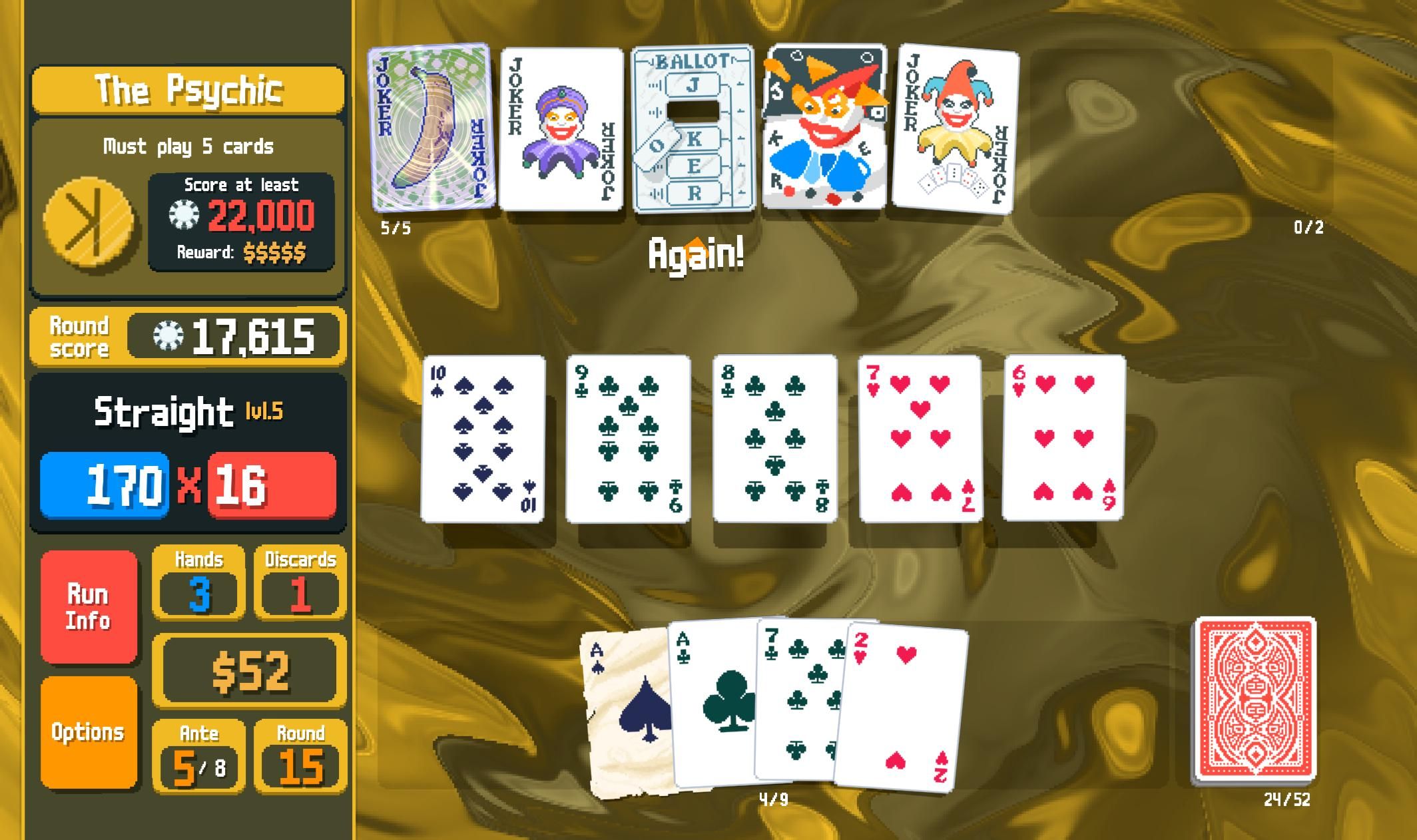
Every so often a game comes along that quietly eats up an entire evening without ever raising its voice. Balatro is one of those games. There are no sprawling worlds like GTA, no squad wipes to rage over like in Free Fire, just a deck of playing cards, a fistful of joker tokens, and a running score that keeps daring the player to push their luck one more hand. It looks simple on the surface. Yet the moment a run starts snowballing, that little poker-themed roguelike delivers a rush that feels remarkably close to the buzz people chase at a real card table.
That buzz is exactly why Balatro sits so comfortably next to another slice of modern digital leisure. Canadian players who enjoy the tension of a good hand often browse for a trustworthy online casino when they want the real-money version of that same excitement, and the good comparison pages exist precisely to make that search safer. The best of them rank real-money sites available to Canadian players by the things that actually matter day to day: proper licensing, quick withdrawal times, support for CAD and Interac deposits, sensible welcome offers and free spins, and mobile play that holds up on a phone. Instead of gambling blind on which brand to trust, a reader gets side-by-side mini-reviews and a shortlist that has already been vetted. For anyone curious about where Balatro’s card thrill translates into actual stakes, that kind of guide is the sensible first stop.
The Slot-Machine Loop Hiding in a Card Game
Here is the guiding idea worth holding onto: Balatro works because it taps the same psychological loop that makes chance-based entertainment so sticky. You play a hand, the score ticks up, and there is always a slightly better outcome dangling just out of reach. One more joker, one more re-roll of the shop, one more blind cleared. That “just one more” feeling is the engine.
Roguelike design leans on this hard. Runs are short, failure resets the board, and every attempt shuffles the odds into a fresh combination. It is the same reason players keep booting up another round of PUBG after a bad landing, or restart a Path of Exile map when the loot dries up. Balatro simply strips the loop down to its purest form and paints it with poker iconography, which is why the leap from its cartoon jokers to a genuine card table feels so natural.
Small Sessions, Big Pull
A single Balatro run rarely takes long, and that bite-sized structure is a big part of the appeal. It slots neatly into the gaps in a day, the same way a quick match of a browser game like FreeCell does. Canadians spend a meaningful chunk of their free time on this kind of low-commitment entertainment; Statistics Canada’s look a ttime spent on leisure activities shows just how much of the average day goes toward games, screens, and unwinding.
Balatro fits that reality perfectly. There is no need to block off three hours. A run can end in ten minutes or stretch into an hour if the deck cooperates, and either way the player walks away having felt the full arc of risk and payoff. That rhythm of short, self-contained tension is exactly what draws people toward games of chance in the first place, whether the chips are virtual jokers or real money on a felt table.
Why the Card-Game Itch Runs So Deep
Playing cards are older than video games by centuries, and the thrill of a strong hand is baked into how people relate to them. Balatro is clever enough to borrow that instinct. When a run lines up a flush and the multiplier stacks into the thousands, the reaction is pure delight, the digital cousin of turning over the right card at the right moment.
Modern gamers are wired for exactly this feedback. Research from Pew on how teens and adults engage with games points to how central play has become to everyday social and mental downtime, cutting across age and background. The appetite for a quick hit of tension and release does not fade once someone grows up; it just migrates to whatever games scratch the itch best. Balatro scratches it with cards, which is also why the same crowd tends to be curious about where those cards get played for stakes.
A Bigger, More Varied Audience Than People Assume
There is an old stereotype that games like Balatro or the real-money card tables they echo appeal to a narrow slice of people. The data says otherwise. The Entertainment Software Association of Canada’s work showing gamers are more diverse and mobile than ever paints a picture of players spread across every age group and background, increasingly playing on phones during commutes and coffee breaks.
That mobility matters here. Balatro runs beautifully on a handheld, and the same is true of the real-money card action Canadians enjoy, which is why mobile-friendly play sits so high on any decent comparison list. The pocket-sized nature of both keeps the thrill available anywhere.
The Thread That Ties It Together
Circle back to that guiding idea one last time: the excitement is not really about the cards themselves. It is about the loop of risk, chance, and the tantalizing “maybe this time.” Balatro bottles that feeling in a tidy, endlessly replayable package, and it lands so well because it borrows the emotional grammar of the card table. For players who feel the pull and want to explore the real-money side responsibly, the smart move is doing homework first through trusted comparison guides. The rush is the same either way, and half the fun is knowing exactly what kind of thrill you are signing up for.

A cousin of mine in Cebu decided to try an online casino for the first time last year, and the thing I remember is not the game he picked. It is that when the cashier screen asked how he wanted to fund the account, he never once reached for a debit card. He opened GCash, scanned a QR code, typed a number, and the balance landed before his coffee had cooled. Ten seconds, maybe. For him that was completely normal. For anyone still used to card forms and three-day bank clearing, it looks almost suspicious.
That small moment is worth sitting with, because it says something about how gaming money moves in the Philippines now. The rail you pay through has become almost as important as the games sitting on top of it, and for a huge share of Filipino players that rail is a mobile wallet rather than a bank.
The wallet Filipinos already trust
None of this happened by accident. The country has been shifting to digital money at a genuinely fast clip. According to the Bangko Sentral ng Pilipinas, 57.4% of retail payment transactions by volume were digital in 2024, up from 52.8% the year before, and mobile wallets are doing much of that heavy lifting. GCash sits near the front of that shift, consistently ranked among the most-used e-wallets in the country alongside Maya.
So by the time someone signs up at a casino, GCash is not a new tool they have to learn. It is already how they split a dinner bill, pay the electric company, and send money to family in the province. Casinos are simply meeting players where their money already lives. That is the honest reason it feels like a default: it was the default everywhere else first.
How the money actually moves
The mechanics are less mysterious than the speed makes them seem. A deposit usually starts at the casino cashier, where you pick GCash, enter an amount, and confirm the transfer either through a QR scan or an in-app prompt. Minimums tend to sit around ₱100, there is typically no processing fee on the casino side, and the funds show up more or less instantly because the wallet-to-operator handoff is direct. Withdrawals are the part worth managing expectations on. Once a casino approves a payout, the cash can reach a GCash balance in as little as a few hours, though some operators quote a 24 to 48 hour window depending on their own review process.
If you are doing this for the first time, it is worth reading a proper walkthrough rather than guessing at the cashier. There are guides that break down the full GCash deposit and withdrawal flow step by step, including the verification stage people tend to skip, and ten minutes with one of those saves the mild panic of watching a pending transfer and wondering whether you did something wrong. The transfer itself is simple; the account hygiene around it is what trips people up.
There is a reason this fluency feels familiar to gamers specifically. Unigamesity has written before about why video games keep sending us to the casino, and years of tapping to buy loot and battle passes have made moving digital value around feel weightless. That same psychology, the one that powers in-game economies built on abstract currency, carries straight over to a peso balance in a wallet. The tap is easy. The pesos are real. Keeping those two facts connected in your head is most of the discipline.
The part nobody enjoys talking about
Speed and convenience are not the same thing as safety, and this is where I think players get lazy. GCash itself is regulated as an electronic money issuer supervised by the Bangko Sentral ng Pilipinas, so the wallet side of the equation is on solid ground. The casino side is where you have to do the work. Online gaming in the Philippines is overseen by PAGCOR, the state regulator, and a licensed operator is a very different proposition from a slick site that simply happens to accept your wallet. A payment method being convenient tells you nothing about whether the platform behind it will actually pay you.
Two things are non-negotiable. You have to be 21 or older to gamble legally in the Philippines, full stop. And the responsible-gambling tools that good operators offer, deposit caps, session limits, cool-off periods, are there to be used, not admired. The frictionless feeling of a QR deposit is exactly what makes limits matter more, because the wallet removes every natural pause that a slower payment used to give you.
So is it actually the right choice?
For most Filipino players, yes, and I say that without much hesitation. GCash is fast, it is cheap, it settles in pesos so there is no currency-conversion tax on your fun, and it is a tool people already understand. Those are real advantages, not marketing lines.
The caveat is the one that applies to any good payment method: it works so smoothly that it can quietly outrun your judgment. Set a deposit limit before you need one. Treat the balance as entertainment spending, the same category as a night out, never as a way to make money back. Pick an operator you can verify, not just one that loads fast. Do that, and GCash earns its place as the default. Ignore it, and the same speed that felt like a feature becomes the problem.
There’s a moment every Path of Exile player knows. You’re three hours into a fresh league economy, watching Divine Orb prices swing wildly on poe.ninja, trying to decide whether to dump your currency stack now or hold through the stabilization curve. You’re processing live market data, running probability math in your head, and managing psychological pressure. All at the same time. Nobody calls that a skill. They call it “playing video games.”
That framing is wrong, and the research is starting to say so out loud.
What MMO Players Are Actually Training
When cognitive scientists look at MMO players, they don’t see people grinding for fun. They see people running iterative decision loops under uncertainty. A 2024 University of Houston study published in Human Resource Development Internationalfound that MMO players, specifically those logging significant hours in games like World of Warcraft and Destiny 2, developed measurable workplace skills including leadership, problem-solving, and strategic self-regulation that transferred directly into professional environments.
The key phrase there is “iterative decision loops.” MMO design is relentlessly conditional. Every system has rules. Rules have exceptions. Exceptions have edge cases. Players who survive long-term don’t memorize the rules. They internalize the logic beneath the rules, which means they can adapt when the rules change. PoE 3.29’s economy reset, which launched on July 24, 2026, is a good example: veterans didn’t panic when Divine Orb prices collapsed in the first 48 hours. They’d seen the curve before and positioned accordingly.
That pattern recognition extends well beyond the game client.
The Bonus Evaluation Skill Nobody Talks About
Here’s where it gets specific. MMO players are, without realizing it, among the most analytically capable consumers for evaluating conditional reward structures. Loot tables with weighted drop rates. Crafting outcomes with known probability windows. Crafting bench modifiers that change the expected value of a currency investment. All of this is bonus math with fantasy art on top.
The same analytical muscle applies cleanly in financial contexts. Take the way MMO players instinctively interrogate a “free reward” offer. Not at face value, but in terms of what it actually costs to access and what the realistic yield looks like. Finding the best casino bonus works exactly the same way: the headline number (a 200% match, say) means very little without understanding the wagering multiple, the game contribution weights, the max bet cap, and the expiry window. MMO players tend to ask those questions naturally, because they’ve spent years doing it inside game systems where a “free” crafting material isn’t free if it requires six other inputs that cost three times as much.
Gambling involves risk. Please play responsibly and only wager what you can afford to lose. If you feel gambling is becoming a problem, visit BeGambleAware.org.
The Decision-Making Edge Is Neurological, Not Anecdotal
This isn’t just observation. A study reported by ScienceDaily in July 2022 found that frequent video game players demonstrated significantly enhanced sensorimotor decision-making versus non-players, with faster, more accurate responses in tasks requiring simultaneous assessment of multiple information streams. The researchers attributed this to the speed at which gamers learn to filter signal from noise in complex visual environments.
MMO environments are especially demanding on this front. A raid leader in World of Warcraft is managing 24 individual role assignments, cooldown windows, positional requirements, and live threat priority all at once. A Path of Exile hardcore player is evaluating three different defensive layers simultaneously while running a map. That’s not a casual cognitive load. It’s closer to air traffic control than watching television. A comparison that sounds wild until you sit in a high-end raiding guild’s voice comms and hear how the calls actually sound.
Calm. Structured. Prioritized.
Why Nobody Gives Players Credit For It
The persistent underestimation has a straightforward cause. Gaming’s public image is still shaped by the 1990s moral panic era, when media coverage focused almost exclusively on addiction and desensitization. That framing stuck. Parents worried about screen time, employers didn’t list WoW guild leadership on resumes, and the broader culture filed “gamer” as an identity marker rather than a capability descriptor.
The actual trajectory of research since then has moved in almost entirely the opposite direction. The American Psychological Association’s review of gaming research found that video game play meaningfully strengthens spatial navigation, reasoning, memory, and perception. Core cognitive functions that show up in professional contexts constantly. MMO players clock those benefits in concentrated form, because the genre demands all four simultaneously.
None of this means every hour on a game is an hour well spent. Mindless farming in a low-stakes zone doesn’t build much. But active engagement, whether that’s market speculation in an MMO economy, theorycrafting a build, or running a guild through progression content, is measurably different from passive consumption and deserves to be evaluated as such.
The Skill Gap Nobody Is Monetizing
Here’s the irony: the players who’ve spent years developing these skills often don’t recognize them as portable assets. They compartmentalize. The analytical precision they bring to optimizing a Path of Exile currency flip or dissecting a loot table evaporates the moment they leave the game client, because culturally they’ve been told those skills “don’t count.”
They count. The ability to read a complex conditional system, identify where the stated value differs from the actual value, assess probability distributions, and make a calibrated commitment under uncertainty. That’s risk management. In a financial context, that’s what separates a considered decision from an impulsive one.
Overwatch’s rebranded Season 16, which launched earlier in 2026 with the Sub-Role passive system, illustrates this kind of conditional-system literacy in action. Players who understood how the new passive interactions cascaded across team compositions adapted within hours. Players who didn’t spent two weeks complaining that the meta was broken. Same patch notes. Vastly different outcomes based on who could read the underlying logic and who couldn’t.
The skill isn’t playing a game. The skill is reading a system. MMO players do it better than almost anyone.
FAQ
Do MMO games actually build skills that transfer to real-world decision-making? Yes, though the transfer depends on engagement depth. Passive grinding doesn’t do much. Active MMO play, managing economies, theorycrafting builds, leading group content, exercises risk assessment, probabilistic reasoning, and system-reading skills that researchers have confirmed transfer to professional and financial contexts.
Which MMO mechanics are most cognitively demanding? Economy systems top the list. Path of Exile’s currency market and World of Warcraft’s auction house require players to track supply-demand dynamics, spot arbitrage opportunities, and manage decision-making under time pressure. Raid coordination follows closely, demanding real-time prioritization across multiple simultaneous variables.
Why don’t employers take MMO experience seriously on resumes? Cultural lag, mostly. Hiring managers who grew up with the 1990s anti-gaming discourse still associate gaming with passivity. That’s shifting as researchers publish more data and as the generation that grew up raiding WoW moves into senior management roles and reframes what “relevant experience” looks like.
Is Path of Exile’s economy system a realistic proxy for financial markets? More realistic than most people expect. Supply shocks from league mechanics, speculation on new item bases, currency arbitrage between trade platforms. The structural dynamics mirror equity and commodity markets closely enough that finance professionals have written about PoE’s economy as a teaching tool.
Can these skills be developed through browser MMOs as well as full-client titles? Yes. The complexity threshold matters more than the platform. Browser games with meaningful economy layers or strategic depth can build the same analytical habits. The key is whether the game rewards optimization. If it does, the cognitive training follows.
—
MMO players have spent years building a cognitive toolkit that the people around them consistently fail to recognize. The research is catching up to what experienced players have quietly known for a long time: reading a complex game system well is not trivial, and that ability doesn’t stop being useful when you close the client.
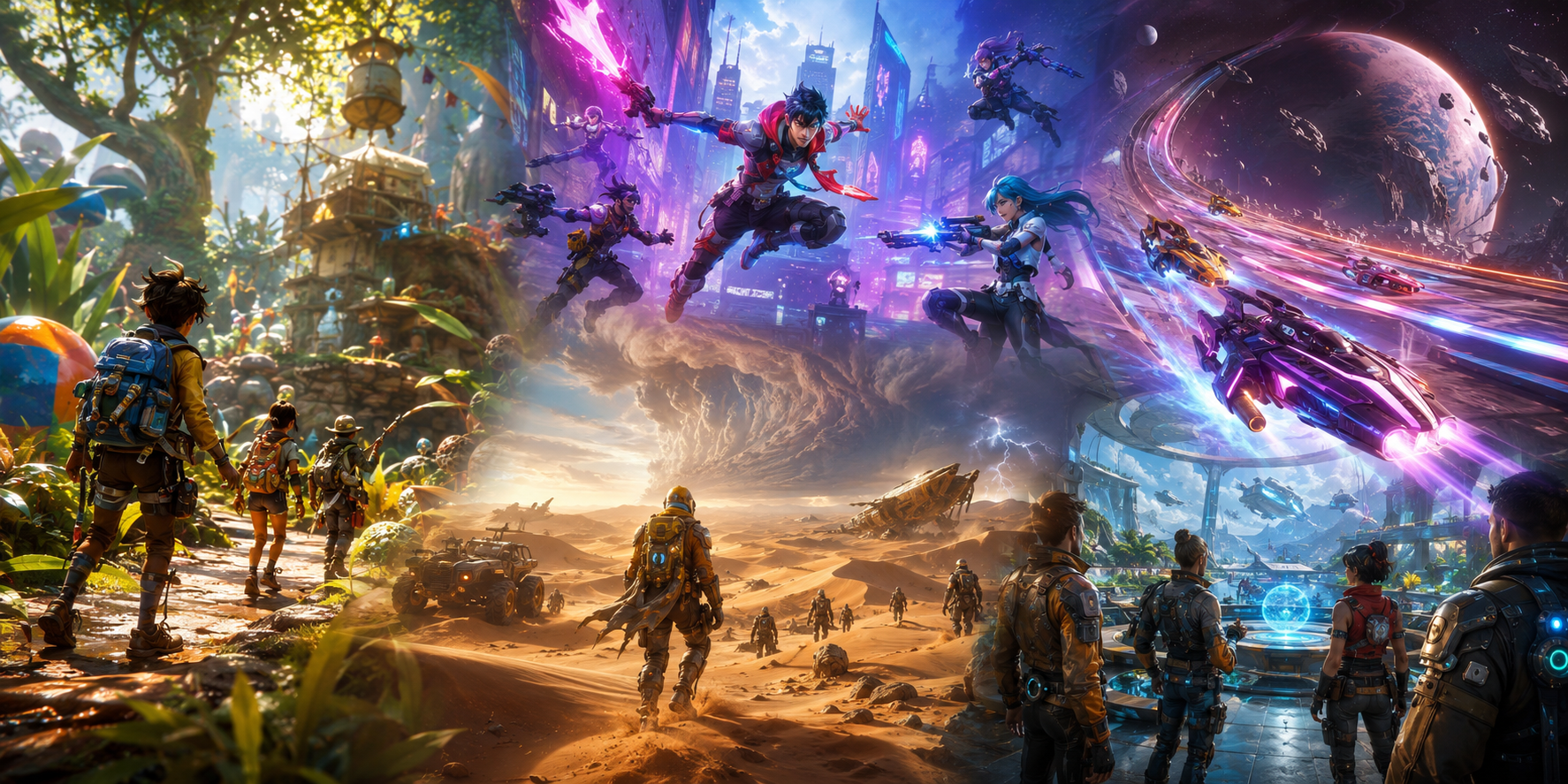
The late-2026 multiplayer calendar moves from relaxed co-op to ranked fighting, survival, racing and team action. These games ask for different group sizes and amounts of time. Readers interested in online entertainment through onexbet can compare the releases by date, multiplayer structure and expected session length. This selection combines four new game launches with the Xbox release of Dune: Awakening, all scheduled between August and October 2026.
1. Big Walk makes co-op the whole point
Big Walk launches on August 4 for PlayStation 5, Nintendo Switch 2, PC and Mac. It supports two to 12 players and crossplay. The main loop centres on walking, puzzles and communication. Proximity voice chat changes with distance and obstacles, while walkie-talkies help players stay connected.
This is the clearest choice for a regular group with mixed skill levels. It works for a pair, but the larger player limit gives it an advantage over standard four-person co-op releases. Any future esports betting coverage would require timed challenges, fixed teams and consistently recorded competitive results.
2. MARVEL Tōkon targets competitive players
MARVEL Tōkon: Fighting Souls arrives on August 6. It uses four-character teams and includes online Casual and Ranked matches. An open lobby lets players meet, chat and challenge others, while local Versus play remains available.
The game suits players who want short matches and repeated head-to-head practice. Its ranked structure gives future competitive events a clearer format than open-world games. Esports betting interest will still depend on confirmed tournaments, published rules and reliable match data rather than launch-week popularity. If an organised circuit appears, useful betting data would include character selection rates, matchup records, tournament formats and results across repeated series.
3. Dune: Awakening reaches Xbox in September
Dune: Awakening comes to Xbox Series X|S on September 22 with cloud support, crossplay and cross-progression. Players can use private servers with friends or join larger official servers. The release also adds full single-player play and optional PvP.
Players familiar with shorter formats in the 1xbet online casino catalogue will find a very different rhythm here: Dune is built around persistent progress, crafting and exploration. It suits groups ready to maintain a shared base across several evenings.
4. Galactic Racer shifts competition to the track
Star Wars: Galactic Racer launches on October 6 for PlayStation 5, Xbox Series X|S and PC. Confirmed features include a story-driven campaign, strategic online PvP and cross-platform multiplayer. The Deluxe Edition also adds three Arcade Events. Lobby size, matchmaking structure and organised competitive formats still need clarification.
For betting readers, racing markets would require organised events with fixed tracks, clear vehicle rules and verified results. Campaign performance should not be treated as evidence for multiplayer competition.
5. Modern Warfare 4 offers two online paths
Modern Warfare 4 releases on October 23 for PlayStation 5, Xbox Series X|S, PC and Nintendo Switch 2. Standard multiplayer uses direct team combat, while DMZ takes an extraction approach based on objectives, inventory and progress between deployments.
DMZ can be entered alone or with a squad. Players may complete missions, pursue side objectives, search for equipment or leave early. That freedom makes it less predictable than fixed competitive matches. Standard multiplayer is the more natural option for organised teams and possible esports markets. Betting interest would depend on confirmed competitions, stable team rosters and match formats that produce comparable results, while DMZ outcomes would be harder to standardise.
Compare the Commitment Before Launch
Before choosing a release, check:
- how many friends will play regularly
- whether crossplay covers their platforms
- whether sessions last minutes or evenings
- if progress depends on the group returning
- whether ranked play matters
- what details remain unconfirmed
| Release | Date | Online format | Group structure | Best fit |
| Big Walk | August 4 | Cooperative adventure | 2–12 players | Social puzzle groups |
| MARVEL Tōkon | August 6 | Casual and ranked fighting | Two players, four-character teams | Competitive practice |
| Dune: Awakening on Xbox | September 22 | Survival and large servers | Solo, private or public | Long-term groups |
| Galactic Racer | October 6 | Racing multiplayer | Lobby size pending | Racing fans |
| Modern Warfare 4 | October 23 | Team matches and DMZ | Teams or extraction squads | Action groups |
Big Walk offers the broadest group size. MARVEL Tōkon fits quick competitive sessions, while Dune asks for the longest commitment. Galactic Racer is the release to watch for confirmed online details. Modern Warfare 4 provides the widest contrast inside one package.
Release dates and features can still change, so official pages should be checked near launch. That practical fit matters most when friends use different platforms, schedules and tolerance for long progression systems. The most suitable choice depends on whether the group prefers short matches, persistent progress or flexible player counts.
-
 Guides6 years ago
6 Proven Ways to Get more Instagram Likes on your Business Account
-
Mainstream11 years ago
BioWare: Mass Effect 4 to Benefit From Dropping Last-Gen, Will Not Share Template With Dragon Age: Inquisition
-
 Mainstream8 years ago
How to Buy Property & Safe Houses in GTA 5 (Grand Theft Auto 5)
-

 Guides2 years ago
Free Fire vs PUBG: Comparing Graphics, Gameplay, and More
-

 Guides1 year ago
50+ Free Fire ID and Passwords Login List (Giveaway) 2025
-
 Casual3 years ago
8 Ways to Fix Over-Extrusion and Under-Extrusion in 3D Printing
-

 Other2 years ago
Ajjubhai UID: Free Fire Details & Earnings
-

 Features2 years ago
Exploring Valorant eSports Stats: Unveiling the Metrics Behind Competitive Excellence