
iGaming
Why CD Projekt is Boosting Investment into Witcher Franchise


Witcher has already had a long and successful run with fans. Dedicated followers of the franchise know that the first novel in Andrzej Sapkowski’s Witcher series was released in 1986, many moons before Dough Cockle lent his voice to the titular character (and permanently replaced whatever we’d had in mind before that point) in CD Projekt’s video game, and a great many moons before Henry Cavill stepped into the role for the highly-acclaimed first season of the Netflix original series.
Floundering with Fans, or Ready for More?
The Netflix series brought new interest to Rivia and its gruff, maybe-human-but-maybe not protagonist, Geralt – AKA, ‘Witcher’. But, true to most Netflix originals, that interest proved to be relatively fleeting. Netflix’s own 2023 What We Watched: A Netflix Engagement Report showed a gradual decline as the seasons progressed. While first came in at 171st in the platform’s most-watched list of shows, the second and third seasons ranked 233rd and 556th respectively. Much of this can simply be attributed to the fickle nature of pop culture, and for the controversial decision to replace Henry Cavill with Liam Hemsworth. Not only was Cavill’s portrayal of Geralt widely praised as being strikingly accurate to the original game design (the place where, arguably, most fans first encountered him), but he is also a self-proclaimed video games nerd who had already spent many hundreds of hours playing the CD Projekt games.
While Hemsworth’ s own portrayal of Geralt was admirable given the circumstances under which he was introduced to the project, one thing seems for certain: there is still plenty of scope left for fan engagement with this franchise.
After all, avid players of the Witcher games are among the most committed of any fanbase. While this comes at a time when game developers are facing mounting criticism for ‘playing it safe’ and clinging too hard to tried-and-tested franchises, it’s also true that winning formulas can continue to dominate, provided developers play their cards right. Final Fantasy has somewhere in the region of 80 games to its name, while EA’s FIFA has 30 main installment titles and a devoted following. Similarly, Big Bass is a popular franchise among online casino Canada platforms, with no less than 39 iterations to its name – and no sign of slowing down any time soon.
What We Know
In August this year, CD Projekt announced that their hugely popular iteration in the series, Witcher 3, would be receiving a major DLC in late September. This was a highly unusual move. The original game was released way back in 2015. For a developer to release such a major update free of charge more than a decade on from its launch is unprecedented.
Furthermore, the developer announced the upcoming 2027 release of Witcher 4 – a highly anticipated title that has eclipsed the studio for more than four years.
Finally, after the release of Witcher 4 next year, fans have the release of a remade Witcher 1 to look forward to, which promises to rework much of the game to make it more playable for modern audiences.
There are rumours circulating that the Witcher 4 intends to transform combat mechanics, and that the newest DLC for Witcher 3 will represent something of a sandbox for developers to see how it goes down with fans. If true, this could well hint at plans for plenty more future releases within the franchise down the line. We just need to hope that the combat is worth the wait.

We’ve all done this. You’ve got half an hour before class, before a shift, before bed. You sit down, boot something up, sit through a launcher update, wait in a queue, skip an intro you can’t actually skip, and suddenly you’ve got eleven minutes and a worse mood than when you started.
The thirty minutes was never the problem. You just picked the wrong game for it.
Short sessions are how most people actually play now. The marketing still shouts about 100-hour open worlds and daily login streaks, but real life hands you gaps, not weekends. The trick is knowing which games are built for gaps.
Start With the Instant Stuff
If you want zero commitment, the browser and mobile end of the pool is your friend. Word games, physics puzzles, endless runners, quick card games. Nothing to remember, nothing to lose, no teammates waiting on you.
Casino-style games live in this bracket too, and they’re popular for short windows for one obvious reason: a round finishes in seconds, so there’s never an awkward moment to stop. If that’s your thing, guides to the best slot games to play are worth a read for how the different formats, volatility levels and bonus mechanics actually work.
Two quick caveats, because they matter. Real-money play is 18+ (21+ in places) and the rules vary a lot by country, so check yours. And the thing that makes these games fit a short window is exactly what makes them easy to keep playing past it. Set a limit before you start, treat any spend as entertainment money, and use the session limits any decent operator gives you. Free-play versions exist and are the sensible default if you just want something quick.
What Makes a Game Work in Half an Hour
Four things, really.
It needs a natural unit of play. One run, one match, one level, one in-game day. If the smallest complete chunk is a two-hour dungeon, the game is out, however good it is.
It needs a low re-entry cost. If you have to spend five minutes remembering what your build does and why you had twelve quests open, that’s a sixth of your session gone.
It needs to save constantly, or have nothing worth saving. Checkpoint-only design is the enemy here.
And it needs to let you leave. Some games are built to make quitting feel like a loss. A game that respects your time doesn’t nag.
Roguelites: Basically Designed for This
This whole genre exists for the 30-minute window. A run starts, a run ends, and dying costs you nothing but the run.
Balatro is the cleanest example going. Poker-themed deckbuilder, runs of 20 to 60 minutes, pauses instantly on any screen, and it’s on everything including your phone.
Slay the Spire 2 hit Steam Early Access on 5 March 2026 and immediately became a short-session staple. Same climb-the-tower structure, new characters like the Necrobinder and the Regent, alternate acts that shuffle your route, and four-player co-op for the first time. Fair warning: co-op is great fun but much harder to walk away from politely. Solo if you’re on a clock.
Hades II gives you a full run in 30 to 45 minutes, and even a failed one moves the story along. Vampire Survivors literally caps most stages at 30 minutes, which is about as considerate as game design gets. Dead Cells and Hotline Miami cover the twitchier end, with levels measured in minutes and instant restarts.
Multiplayer That Won’t Trap You
Match length is only half the story. Queue times, warm-up and the guilt of leaving mid-series are the rest.
Rocket League is still the king. Five-minute matches, fast queues, four or five games in half an hour easily. Marvel Rivals sits around 8 to 10 minutes a match. Deep Rock Galactic tags mission length before you drop, which is unusually decent of it; pick a short one and you’re out in 15.
Counter-Strike 2 and Valorant competitive matches are far too long, but both have deathmatch and shorter unranked modes that scratch the same itch. The rule is simple: casual over ranked when time is tight. Ranked is engineered to punish leaving.
For When You Want Something Quieter
A 10-minute rapid game of chess on Lichess is free and never gets old. Marvel Snap built itself around three-minute matches. Dorfromantik and Mini Metro are the gaming equivalent of a cup of tea. Stardew Valley works beautifully because one in-game day is 15 to 20 minutes and the game saves when you sleep. PowerWash Simulator has no fail state at all.
What to Skip
MMO raids. Civilization or Total War, where “one more turn” is a documented hazard. Anything with sparse checkpoints. Ranked shooters. Brand-new open worlds, where the first hour is all tutorial. And anything you haven’t touched in three months, because the re-entry cost will eat the whole session.
Small Things That Buy You Minutes
Keep three or four games permanently on a “short shelf” so you’re not browsing your library for ten minutes. Use Quick Resume on Xbox or sleep mode on Steam Deck. Let updates download overnight. Set an actual timer, because “one more” is a designed instinct, not a decision. And remember most big games hide a short mode inside them: arcade, time trial, deathmatch, quick play.
The best game for 30 minutes usually isn’t your favourite game. It’s the one shaped like the time you’ve got.
iGaming
Beyond the Final Whistle: Mastering the Digital Second-Screen Experience for University Sports Fans
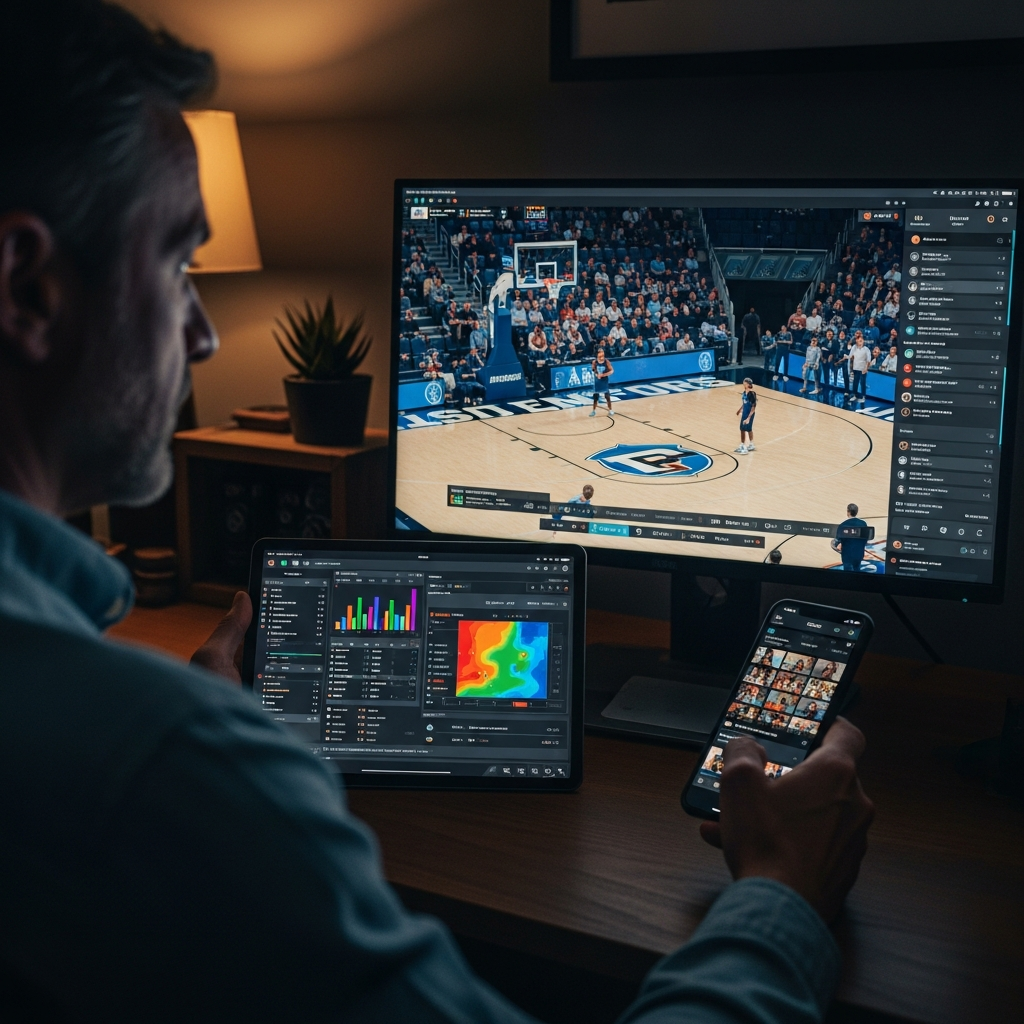
If you’ve ever found yourself huddled over a laptop at three in the morning, frantically refreshing a box score while a grainy livestream plays on your tablet, you’re likely one of us. There’s a particular kind of magic found in American college sports, specifically when the madness of the spring tournament rolls around. It’s an atmosphere that’s hard to replicate, a mixture of pure amateur spirit and high-stakes pressure that keeps us glued to our screens. But for the modern superfan, just watching the game on the telly isn’t enough anymore. We’ve moved far beyond being passive observers. We’re now active participants in a multi-platform, data-heavy experience that lasts long after the final whistle blows.
The way we consume these games has shifted dramatically over the last decade. It wasn’t that long ago when your only way of keeping up with the scores was the occasional update on the evening news or a tiny column in the sports section of the paper. Today, we’re living in an era where the “second screen” isn’t just an option; it’s an essential part of the kit. Whether it’s following real-time analytics or arguing with strangers on social media about a controversial foul call, the digital world has made the experience of being a fan more immersive than we ever thought possible.
From the Sofa to the Smartphone: A New Era of Fandom
The evolution of tournament fandom has been nothing short of a revolution. We used to sit and wait for the broadcasters to tell us what was happening. Now, we’re often better informed than the commentators themselves. The shift from passive viewing to multi-platform interaction has changed the very nature of how we experience NCAA March Madness. I’ve noticed that during any given game, my eyes are darting between the live action and a smartphone screen at least once every few minutes.
This isn’t just about checking scores from other games. It’s about the data. We want to know the “effective field goal percentage” of a point guard in real-time. We want to see how a team’s defensive efficiency fluctuates during a 10-0 run. This data-centric interaction has turned us all into amateur scouts. We aren’t just cheering for a team; we’re analysing their every move. The availability of real-time stats through various apps and websites has created a community of fans who value technical insight just as much as team loyalty.
It’s also about the social connection. In the past, you might have watched the game with a few mates at the pub. Now, you’re watching it with thousands of people across the globe. Digital platforms allow us to share the highs and lows instantly. When an underdog hits a game-winning shot, the collective roar isn’t just heard in the arena; it’s felt across the internet. This shared digital space has bridged the gap between the live broadcast and the fan, making us feel like we’re part of something much larger than a simple sports match.
Cracking the Code: The Science of the Perfect Bracket
Every year, millions of people fill out their brackets, most of them relying on nothing more than “gut feeling” or the colour of a team’s jersey. But for the superfan, bracketology is a serious business. It’s a technical challenge that requires a deep dive into authoritative rankings and hierarchical team data. We’ve moved away from the era of pure luck and into an age of “technical scouting” where the right information can give you a massive competitive edge in your friend circles or office pools.
If you want to be successful, you have to look beyond the basic win-loss record. I find myself spending hours looking at KenPom rankings or the NCAA’s own NET (NCAA Evaluation Tool). These systems provide a much more nuanced view of how a team actually performs. They take into account things like strength of schedule and scoring margin, which are much better indicators of future success than a simple seed number.
This analytical approach has changed the way we discuss the game. Instead of saying a team is “good,” we talk about their “adjusted offensive efficiency.” It’s a more intellectual way of engaging with the sport, and it adds a layer of satisfaction when your data-driven prediction actually comes true. When a 12-seed upsets a 5-seed, it isn’t just a shock to us; it’s the result of hours spent looking at the numbers and realising that the lower-seeded team actually had a statistical advantage in key areas.
Living in the Multi-Screen Moment
The concept of “second-screen synergy” is what really defines the modern sports fan. It’s the art of balancing multiple streams of information at once without losing track of the game. We’ve seen a rise in gamified fandom, where digital platforms offer real-time challenges and interactive elements that run alongside the live broadcast. You might be participating in a live poll about who will hit the next three-pointer or tracking your “fantasy” players as they rack up points.
This real-time engagement has bridged the gap between the broadcast and interactive entertainment. The live game provides the foundation, but the digital experience provides the texture. I’ve often found that the most memorable moments of a game aren’t the ones the TV cameras focus on, but the weird stats or funny interactions I see on a secondary feed. It makes the whole experience feel more personal and curated. You aren’t just being fed a one-size-fits-all narrative; you’re building your own story of the tournament.
What’s interesting is how this has influenced the way the games are broadcast. We’re starting to see more on-screen graphics that lean into this technical side of things, providing the kind of data that used to be the exclusive domain of hardcore fans. It’s a sign that the “second screen” is becoming the primary way we think about sports. The interaction isn’t just a distraction; it’s the main event.
Keeping the Momentum During the Quiet Months
The biggest problem with being a college sports superfan is that the “madness” eventually has to end. When the final confetti falls and the trophies are handed out, there’s often a bit of a slump. How do you maintain that high-energy mindset when there are no games to watch? This is where the “off-season playbook” comes into effect. Strategic scouting of digital platforms keeps the engagement high, whether you’re following the transfer portal or tracking recruiting news for the next season.
There’s something about that last-second, bracket-busting win that stays with you. It’s that feeling of high-tempo energy and the satisfaction of an instant result coming through just when you need it most. When you’re in the middle of a long halftime break or navigating the quiet lulls of the off-season, you can still find ways to keep that engagement going. For many, the transition to other forms of interactive entertainment is a natural one. You might decide to play online slots as a way to maintain that quick-fire pace and keep your mind sharp while waiting for the next tip-off.
The mechanics of digital gaming actually mirror the unpredictability of college sports quite well. You have to be quick on your feet, stay focused, and be ready for a sudden shift in momentum. It’s a brilliant way to pass the time between the major tournament windows, ensuring that your competitive edge doesn’t get dull while the players are off the court. By staying active on high-engagement platforms, you keep that “always-on” mentality that makes the tournament season so special.
The Technical Crossover: Strategy and Stats
In the end, the transition from courtside excitement to digital reels isn’t as big a leap as you might think. If you treat your fandom like a technical hobby, you can see the parallels everywhere. Think of it like a scouting report. A 15-seed that somehow makes it to the Sweet Sixteen is essentially a “high-RTP” (Return to Player) option in the tournament world. They represent a high level of volatility but offer the most interesting technical narrative.
When we look at online gaming through this same analytical lens, it becomes an extension of our hobby. We aren’t just looking for a simple distraction; we’re looking for something that respects our love for stats, patterns, and unpredictable outcomes. The mechanics of these games, much like a mid-major team’s zone defence, rely on a specific set of rules and probabilities that a dedicated fan can appreciate.
Translating the unpredictability of college sports into immersive digital mechanics is the final stage of the superfan’s journey. We’ve moved from the stands to the screen, and from the screen to the stats. By embracing the full range of digital tools available to us, we’ve turned a simple game into a year-round obsession. Whether it’s through meticulous bracketology, real-time social interaction, or a quick game during a commercial break, the modern fan is always connected to the action.
18+. Please gamble responsibly. For help and support, visit BeGambleAware.
Estonia has built a strong reputation as one of Europe’s most digitally advanced countries. From online public services to a technology-friendly business environment, the country is often associated with efficient digital infrastructure. That reputation increasingly extends into online entertainment, where players are paying more attention to how casino platforms are structured, licensed and connected to the wider European market.
Estonia’s Digital Identity Shapes Expectations
Estonia is widely recognised for making digital services part of everyday life.
Residents are accustomed to online administration, electronic identification and technology-led public services. That does not automatically make every private digital service better but it does create a culture where users expect online platforms to work efficiently.
Those expectations carry into entertainment.
People want websites that load quickly, mobile interfaces that feel natural and account processes that do not create unnecessary friction. The same principles apply whether someone is using a banking app, booking travel or opening an online gaming platform.
For Finnish players researching virolaiset nettikasinot, Estonia can therefore feel familiar as a nearby digital market. Geography matters but so does the country’s broader reputation for technology and online services.
That combination helps explain why Estonian casino platforms attract interest beyond the country itself.
Online Casinos Depend on Strong Digital Infrastructure
A modern online casino is essentially a technology platform.
The front end may focus on slots, live casino games and account management but the underlying service depends on multiple systems working together.
Payments need to be processed reliably. User accounts need to remain secure. Game providers need to connect through stable integrations. Mobile devices need to display the same information clearly as desktop browsers.
This makes digital infrastructure central to the experience.
Players rarely think about APIs, databases or server architecture while using a casino. They notice the results instead.
If games launch quickly, payment pages are responsive and account information stays consistent, the platform feels dependable. If these systems behave unpredictably, trust can disappear quickly.
Estonia’s broader technology reputation creates an interesting backdrop for this type of service because the country is already associated with digital-first thinking.
Cross-Border Interest Is Natural in the Nordics
Finland and Estonia are closely connected geographically and culturally.
Travel between the two countries is common and many Finnish consumers are already familiar with Estonian businesses and digital services. That makes cross-border curiosity around online entertainment relatively unsurprising.
Online casinos also reduce the importance of physical distance.
A player does not need to travel to use a digital platform. What matters more is language support, payment compatibility and whether the overall service feels understandable.
This creates competition based on localisation.
An Estonian operator hoping to appeal to Finnish users needs more than a functioning website. Finnish-language content, clear account information and familiar payment methods can make a major difference.
The same applies across Europe.
International casino platforms increasingly compete by making a cross-border service feel local. Strong localisation can reduce the sense that the user is dealing with a distant or unfamiliar company.
Game Variety Strengthens the International Appeal
Another reason Estonian casino platforms attract attention is access to the wider European gaming ecosystem.
Modern online casinos can integrate content from many different studios rather than relying on one supplier. This allows operators to offer large libraries covering both traditional and newer game formats.
Players may encounter:
- classic slot designs
- modern video slots
- live casino tables
- jackpot games
- mobile-optimised titles
- games from multiple European studios
The challenge is making that variety easy to navigate.
A casino with a large library still needs effective search tools and useful categories. Players should be able to filter by provider, find recent releases or return to games they have already played.
This is where design becomes part of the product.
The strongest casino platforms increasingly resemble other digital entertainment services because they focus on discovery as much as content volume.
Trust Is Built Through the Entire Experience
A country’s digital reputation can create interest but it does not replace the need for careful comparison.
Players still judge casino platforms individually.
Clear payment information, understandable account procedures and reliable customer support all contribute to whether a service feels trustworthy. Licensing context is also relevant because it helps users understand the operating environment behind the website.
The important point is that trust is cumulative.
A polished interface alone is not enough. Neither is a large game catalogue. Users build an impression through every interaction, from registration to payments and game discovery.
Estonia’s strength is that it enters this market with an established identity as a digitally capable European country.
That reputation creates a natural connection between the country and online gaming but the individual platform still has to deliver.
For Finnish players, Estonian casinos are therefore interesting not simply because they are nearby. They sit at the intersection of cross-border entertainment, digital infrastructure and a market that increasingly expects online services to feel fast, clear and dependable.
-
 Guides6 years ago
6 Proven Ways to Get more Instagram Likes on your Business Account
-
Mainstream12 years ago
BioWare: Mass Effect 4 to Benefit From Dropping Last-Gen, Will Not Share Template With Dragon Age: Inquisition
-
 Mainstream8 years ago
How to Buy Property & Safe Houses in GTA 5 (Grand Theft Auto 5)
-

 Guides2 years ago
Free Fire vs PUBG: Comparing Graphics, Gameplay, and More
-

 Guides2 years ago
50+ Free Fire ID and Passwords Login List (Giveaway) 2025
-
 Casual3 years ago
8 Ways to Fix Over-Extrusion and Under-Extrusion in 3D Printing
-

 Other2 years ago
Ajjubhai UID: Free Fire Details & Earnings
-

 Features2 years ago
Exploring Valorant eSports Stats: Unveiling the Metrics Behind Competitive Excellence