
Video Games
Overwatch, Path of Exile, and the In-Game Economy: What Virtual Currency Systems Reveal About Real Money Design

By Daniel K. | Game systems analyst, 7 years covering live-service monetization. Tested July 2026.
There’s a moment in every live-service game where the illusion cracks. You’re staring at a shop screen, doing mental arithmetic, and you realize you have no idea how much this skin actually costs. Not because the number is hidden. It’s right there. But because it’s denominated in something that isn’t money. Overwatch Coins. Path of Exile Orbs. Fortnite V-Bucks. The conversion rate is technically findable, but the friction is the point.
This isn’t an accident. It’s a deliberate design choice with deep psychological roots, and the more you trace it, the more you start to see the same logic operating far outside gaming’s borders.
The Two Models: Blizzard’s Coin Stack vs. GGG’s Barter Economy
Overwatch 2 runs on a straightforward dual-currency model. You earn Overwatch Coins through the battle pass or buy them directly, and you spend them in the shop or on premium battle pass tiers. The conversion rate (roughly 100 Coins to $1 USD) is stable, official, and intentionally awkward. Blizzard doesn’t sell skins at $18.99. They sell 2,000 Coins, and the skin costs 1,900. You’re left with 100 Coins and a gentle psychological nudge to top up.
Path of Exile does something stranger and, honestly, more interesting. Grinding Gear Games ditched gold entirely. There’s no universal currency. Instead, the economy runs on a stack of functional items. Chaos Orbs, Exalted Orbs, Divine Orbs. That players use to re-roll item modifiers. They’re tools first, currency second. The exchange rates between them float based on player supply and demand across each three-month league, and tracking them has spawned entire third-party sites like poe.ninja. A Divine Orb was worth roughly 200 Chaos Orbs in early 2026, but that ratio shifts weekly.
The design outcome is fascinating. Because orbs are crafting tools with intrinsic game value, trading them feels less like spending money and more like making smart resource decisions. You’re not buying something. You’re optimizing. GGG accidentally (or deliberately) created one of the most psychologically sophisticated virtual economies in gaming. According to a deep-dive analysis on Game Developer, the orb-based system emerged partly from GGG’s desire to avoid a gold-inflation death spiral, but it produced an emergent player-driven market that most studios would struggle to engineer intentionally.
When Gaming Logic Jumps Sectors
This currency-layering design. The abstraction of real-money value behind proprietary tokens with their own internal exchange logic. Hasn’t stayed inside gaming. It’s migrated. Hard.
Crypto platforms learned it early. Loyalty and rewards programs picked it up next. And sports and entertainment media have spent the last two years watching digital-native payment models reshape how audiences engage with content and services. Baseball America, the century-old authority on professional baseball, has documented how crypto-denominated payment systems have pushed into North American sports and entertainment verticals, bringing with them the same psychological architecture that game designers spent two decades refining. Fragmented denominations, opaque conversion rates, and reward loops that feel like progress rather than spending.
The connective tissue is behavioral. Whether it’s Chaos Orbs or Bitcoin fractions, the design goal is identical: give the user a unit that doesn’t feel like losing money.
Gambling involves risk. Play responsibly and only wager what you can afford to lose. If gambling becomes a concern, visit BeGambleAware.org.
Why Abstract Currency Works on the Brain
Spending money hurts. Neuroscience is pretty unambiguous about this. The insula, the brain region associated with pain and disgust, activates when people make purchases. But spending tokens? Much less so. The psychological distance created by a proprietary currency reduces what researchers call the “pain of paying.”
Game designers figured this out empirically long before the research caught up. EA’s FIFA Points, Riot’s Riot Points (now replaced by Riot Currency), and every mobile gacha currency in existence all exploit the same mechanism. The Consumer Financial Protection Bureau flagged this directly in its 2024 report on banking in virtual worlds, noting that in-game currencies create meaningful barriers to understanding real-money equivalents. And that cosmetic items can and do acquire real-world fiat value, sometimes substantial.
The CFPB didn’t call it a design flaw. They called it a design feature worth watching.
The Overwatch Approach: Stability as a Trap
Back to Blizzard for a second. The Overwatch Coin system looks simpler than PoE’s orb economy on the surface. Fixed rate, clear shop prices, no floating exchange. But simple doesn’t mean transparent.
The bundle sizing is where the architecture reveals itself. You can buy Coins in increments of 500, 1,000, 2,200, 5,700, and 11,500. Most skins cost 1,900. The math never works out cleanly. You’re perpetually carrying a balance, perpetually primed to top up for one more item.
I’ve been in that loop. Deposited $20, bought a Kiriko skin, had 300 Coins left. Next season there’s a Tracer outfit at 1,500. Top up with 1,000 more, spend 1,500, left with 800. The balance never zeros out. That’s not coincidence. It’s a game-within-the-game, engineered at the SKU level.
Riot Games actually shifted away from one version of this with their 2024 Riot Currency overhaul, moving toward cleaner price points in some regions. Whether that’s consumer-friendliness or competitive repositioning is a fair debate. My read: it’s both.
Path of Exile 2 and the Evolution of the Economy
GGG’s Path of Exile 2, which entered early access in late 2024 and has been iterating through 2025 and into 2026, made some notable adjustments to the currency model. The crafting economy still runs on functional orbs, but the new Atlas endgame introduced Precursor Tablets as a tier of currency with their own sub-market. Early league economy data showed Precursor Tablets denominated primarily in Divine Orbs, creating a kind of currency strata. Small change (Chaos), mid-tier (Divine), and high-end (Tablets, Mirrors).
What PoE 2 demonstrates is that a barter economy, if it’s well-designed, scales without inflation destroying it. The games industry could stand to study this more carefully. Plenty of live-service titles die when their primary currency becomes so inflated that new players can’t participate in the economy at all. PoE has avoided that for over a decade through deliberate league resets and careful orb drop rate tuning.
That’s genuine design sophistication. Not every studio can pull it off, and frankly most don’t try.
What This Means for Players (and for Anyone Building Digital Products)
Here’s the uncomfortable honest take: the same design principles that make Path of Exile’s economy compelling and Overwatch’s shop sticky are also the principles that make any proprietary digital currency harder to evaluate clearly. That doesn’t make them malicious. It makes them effective. And effectiveness is neutral. It depends entirely on what it’s in service of.
Players who understand the architecture can engage with it deliberately. You can set a mental budget in fiat terms, convert before you spend, and treat the in-game currency as a UI layer rather than a real unit of account. Most players don’t do this, and the industry designs against it.
A few things worth knowing if you spend real money inside virtual economies:
- Divine Orbs and Chaos Orbs in PoE have real real-world value. People buy and sell them for fiat on third-party markets, which puts them in a different regulatory category than pure cosmetics.
- Overwatch Coins bought on sale (Blizzard runs regional discount events periodically) represent meaningful actual savings. The posted price isn’t the floor.
- Battle pass value calculations almost always assume you complete the pass. Most players don’t. That ‘break-even point’ math you see in YouTube videos is correct for maybe 30% of buyers.
None of this means the systems are unfair. It means they reward informed players and penalize passive ones. That’s true of most markets.
FAQ
What’s the difference between Overwatch Coins and Path of Exile’s orb currency system?
Overwatch Coins are a fixed-rate proprietary currency bought directly from Blizzard. Stable but deliberately awkward in bundle sizing. Path of Exile orbs are functional crafting items that double as tradeable currency, with floating exchange rates set by player supply and demand. One is a shop mechanism; the other is a full player-driven economy.
Why do games use virtual currencies instead of letting players pay directly in USD or local currency?
Abstracting real money into tokens reduces the psychological “pain of paying,” makes pricing comparisons across regions easier, and allows studios to create bundle sizes that leave residual balances. The result is that players hold unspent currency and return to spend it, rather than making clean individual purchase decisions.
Does Path of Exile’s orb economy cause inflation over time?
GGG manages inflation primarily through seasonal league resets. Every three months, the economy effectively restarts, preventing any single currency from hyperinflating. Path of Exile 2 introduced additional currency tiers in 2025 and 2026 that have added complexity, but the reset mechanic has kept the economy functional for over a decade.
Are in-game currencies regulated the same way as real money?
Generally not, though this is changing. The CFPB’s 2024 report noted that some virtual currencies. Particularly those tradeable for fiat. Sit in a regulatory grey zone. Cosmetic-only currencies like Overwatch Coins face less scrutiny than systems where in-game items can be converted back to real-world cash.
How should players budget when spending real money on in-game currencies?
Convert to fiat before you commit. Ignore the in-game denomination entirely and ask “how much is this in dollars?” before deciding. Set a monthly fiat limit, not an orb or coin limit, since proprietary units distort your sense of scale.
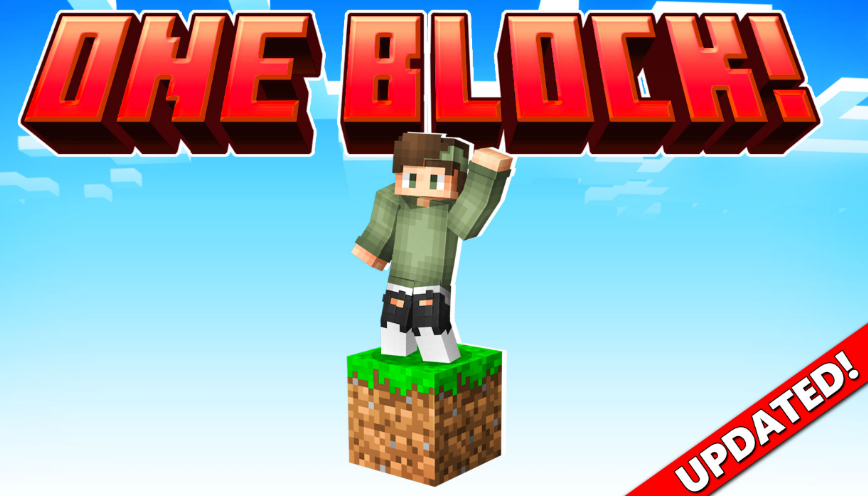
Minecraft is known for giving players endless freedom to create, explore and survive. However, starting a new world can sometimes feel overwhelming, especially when the available resources are limited. One Block survival maps add an extra challenge by changing the traditional Minecraft experience. Instead of exploring a large world from the beginning, players start with a single block and must carefully use every resource they receive.
The popular One Block by Dodo Studios experience for Minecraft Bedrock introduces players to this unique survival concept. While the idea may seem simple, many new players quickly discover that success requires planning, patience and smart decision-making.
Rushing Through The First Stages Too Quickly
One of the most common mistakes beginners make in One Block Minecraft Bedrock is progressing too quickly without preparing their surroundings. Since almost every block can provide important resources, breaking blocks without thinking about what comes next can create unnecessary challenges.
New players often focus only on collecting materials instead of building a safe and organised starting area. Creating storage, setting up basic tools and making sure there is enough space to expand can make a significant difference later in the game.
A good strategy is to treat the first stages as a preparation phase. Even simple improvements, such as creating platforms and organising resources, help players avoid losing valuable items or running into problems when new challenges appear.
Forgetting The Importance Of Resource Management
Another mistake many beginners make is using resources without considering future needs. In a traditional Minecraft world, players can usually travel to new areas to collect missing materials. In One Block gameplay, every resource has more value because progression depends on the blocks that appear.
Players should think carefully before crafting items or using rare materials. Building too many unnecessary objects early on can slow down progress and make later stages more difficult.
Learning how to manage limited resources is one of the most rewarding parts of this type of Minecraft challenge. It encourages players to plan ahead and understand the importance of every decision they make.
Missing Opportunities To Explore New Minecraft Experiences
Many Minecraft players enjoy survival mode because it allows them to create their own goals. However, custom maps and Marketplace content can introduce completely new ways to play. Exploring additional experiences is a great way to discover challenges that are different from the standard Minecraft formula.
Players looking for new adventures can visit Minecraft Bedrock Marketplace to discover a wide range of worlds, add-ons and creative projects. These experiences allow players to try different gameplay styles while keeping the familiar Minecraft foundation.
One Block-style challenges are a good example of how small changes can completely transform the way players approach the game. Instead of simply collecting materials and building freely, players must think strategically and adapt to unexpected situations.
Minecraft continues to remain popular because it gives players the freedom to create their own adventures. Whether someone is new to survival gameplay or an experienced builder looking for a fresh challenge, custom worlds and add-ons offer countless possibilities.
Avoiding common beginner mistakes can make the One Block experience more enjoyable and rewarding. With better planning, careful resource management and a willingness to explore new content, players can turn a single block into the foundation of an impressive Minecraft world.
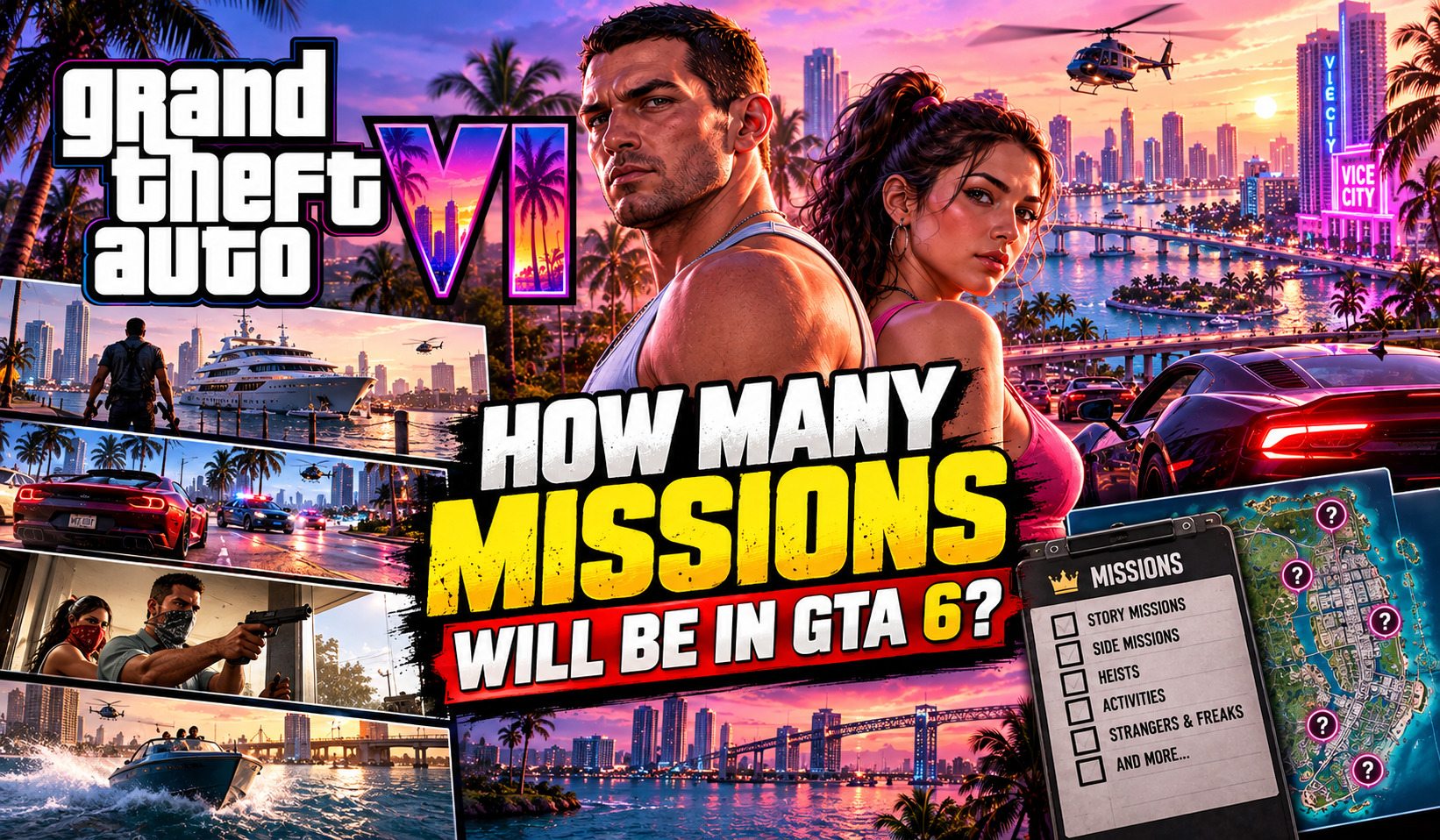
With the release of Grand Theft Auto VI approaching, one of the most common questions concerns how many missions GTA 6 will have.
After all, GTA V provided players with a next-gen sandbox with dozens of story missions, side activities, random encounters, and optional objectives. GTA 6 seems to be expanding on this to an even greater extent by introducing a dual protagonist system, a larger world, a chapter-based story, and a stronger focus on the relationship between Jason and Lucia.
There is, however, a problem – Rockstar Games has not officially announced how many GTA 6 missions there will be.
This means that the current number of GTA 6 missions floating around on the internet should be taken with a grain of salt. Here is everything that we currently know about the GTA 6 missions.
How Many Missions Are in GTA 6?
The short answer is that it is not known yet.
Rockstar has yet to reveal the list of GTA 6 missions, the total number of these tasks, or the chronological order in which they will appear in the game. GTA mission databases only list a few entries for GTA 6 so far.
Community members’ suggestions range from over 100 main missions to just dozens of tasks, with no official confirmation from Rockstar. GTA V, for comparison’s sake, includes 74 main story missions, with the number being slightly lesser if one were to exclude optional and secondary missions.
Therefore, although GTA 6 is likely to have more story missions than its predecessor due to the nature of its open-world design, there is currently no exact figure that could be listed alongside GTA 6’s name.
Why the GTA 6 Mission Count Is Difficult to Predict
One reason the numbers vary so much is that not everyone counts a “mission” in the same way.
A GTA game can contain several types of playable content, including:
- Main story missions
- Optional missions
- Character-specific missions
- Heist preparation and finale sequences
- Random events
- Side activities
- Hobbies and other open-world objectives
For example, a multi-stage robbery could potentially be treated as one major mission or several individual missions depending on how Rockstar structures it.
That makes comparing an alleged GTA 6 mission count with GTA V or Red Dead Redemption 2 particularly tricky.
GTA 6’s Story Will Be Split Into Chapters
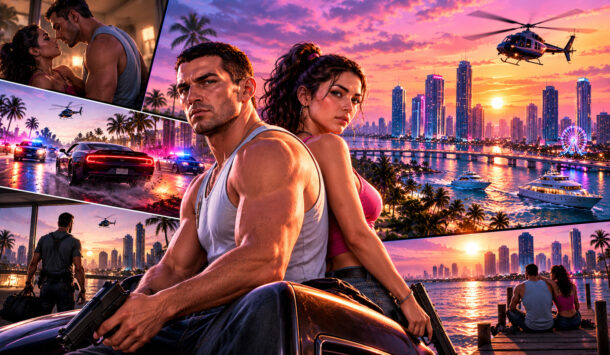
One of the more interesting details about the GTA 6 missions is that the story is structured around chapters.
Rockstar has confirmed the chapter-based structure, although it has not publicly revealed the exact number or names of those chapters.
This is significant because Rockstar previously used a chapter system extensively in Red Dead Redemption 2. That approach allowed the story to develop through distinct stages while gradually introducing new characters, locations and conflicts.
GTA 6 appears to be following a similar broad philosophy, although it is still a Grand Theft Auto game at heart.
The chapter system could allow Rockstar to divide Jason and Lucia’s criminal journey into different phases rather than simply presenting players with one enormous list of disconnected missions.
The number of missions in GTA 6 will also depend on how much of Leonida players can explore, from the streets of Vice City to the wider world featured on the GTA 6 map.
Who Will the GTA 6 Missions Focus On?
The protagonists are Jason Duval and Lucia Caminos, who are both playable.
It seems that their relationship is going to be the most important element of the game since Rockstar’s story summary describes the central conflict as a criminal conspiracy in Leonida that involves both of the protagonists after a simple heist goes wrong.
This makes it possible to have some missions concentrated on one character and some focused on another since GTA 6 does not follow the lead of GTA V and does not introduce three protagonists that share the screen time equally.
It means that instead of telling a story about three friends and focusing on each of them in parallel missions, GTA 6 can shift some missions to one character and give others more screen time to tell a personalized story.
The gameplay footage also demonstrated that Jason and Lucia can team up and participate in the same robberies and escapes as the protagonists whose actions influence the story’s development.
Could GTA 6 Have More Than 100 Missions?
Now it is time for some speculation.
Some guides and fans’ theories about GTA 6 also suggest that the game can have more than 100 missions.
Since GTA 6 appears to be even bigger than its predecessors, it is not hard to imagine that it could include a similarly impressive number.
GTABase, for instance, reported that community members suggested that GTA 6 could have more than 100 story missions.
However, there is not a single confirmation of this theory yet.
There is one popular assumption that was reported by multiple outlets that completing the game for the first time took around 80 hours for one of Rockstar’s employees.
Since this number includes optional activities and the main story missions, it cannot be used to calculate how many missions GTA 6 is going to have.
An 80-hour playthrough is a sign that the game is going to provide players with substantial content, but it does not confirm the theory about GTA 6 having 100, 80, or even 70 story missions.
Alongside the mission count, Is GTA 6 cross-platform? is another key question for players hoping to experience the game together across different consoles.
What Types of GTA 6 Missions Can We Expect?
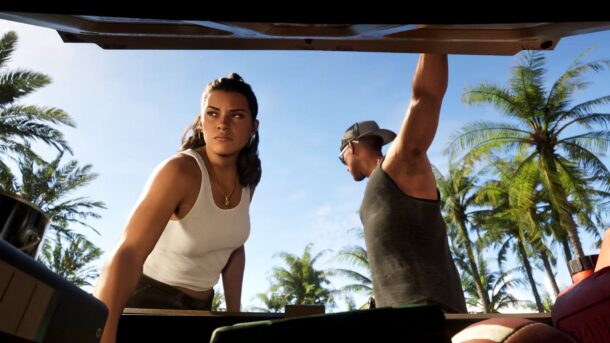
Although the complete mission list remains unknown, Rockstar’s promotional material has already given players a good idea of the game’s overall direction.
The GTA 6 missions are expected to combine several familiar Grand Theft Auto ingredients:
Heists and Robberies
Crime remains at the center of GTA 6. Jason and Lucia’s story is built around criminal activity, making robberies, scores and increasingly dangerous jobs an obvious part of the campaign.
Character-Based Missions
With two protagonists, missions can explore Jason and Lucia individually as well as together. Their different backgrounds could also create distinct mission scenarios.
Open-World Encounters
GTA 6’s world is designed to be more than a backdrop between missions. Players can expect optional activities and encounters that make Leonida feel active outside the main storyline.
Side Activities
Not everything players do will necessarily advance the central plot. Hunting, fishing, sports, races, mini-games and other activities are part of the broader GTA 6 experience.
This distinction matters when discussing the total number of GTA 6 missions. A game can have a relatively focused main campaign while still offering hundreds of hours of optional content.
Will GTA 6 Missions Have Different Outcomes?
Another intriguing possibility is greater mission variation.
GTA V already experimented with player choice through certain missions and heists. GTA 6 seems to be designed to explore the possibilities of player decisions and consequences.
But you have to be careful not to confuse rumor with reality. Rockstar has not released a detailed description of how many story missions will have branching outcomes or how much impact players will have on the story.
It is worth noting that GTA 6’s two protagonists and chapter-based structure provide ample opportunities for creating alternative mission outcomes.
GTA 6 Missions vs GTA V Missions
| Feature | GTA V | GTA 6 |
| Main protagonists | Three | Jason and Lucia |
| Confirmed main mission count | 74 | Not announced |
| Story structure | Multiple story stages | Chapter-based |
| Heists | Yes | Yes, central to the story |
| Side activities | Yes | Yes |
| Random/open-world events | Yes | Expected |
| Complete mission list available | Yes | Not yet |
When Will the Full GTA 6 Mission List Be Available?
The answer most likely lies around and after the game’s release.
GTA 6 is set for November 19, 2026, and Rockstar has yet to unveil any kind of numbered list of the game’s missions in advance of launch
Once the full game has been launched, its player base will be able to devise a complete list of missions as well as all the optional branches, side missions and requirements for achieving 100% completion. Until then, websites with a definitive pre-release list of every GTA 6 mission should be taken with a grain of salt.
As anticipation builds for GTA 6, speculation around next-generation gaming hardware is also growing, with the latest PS6 specs leak hinting at what future PlayStation consoles could bring to the gaming experience.
Final Thoughts
So, how many missions will GTA 6 have?
Well, for now the only honest answer is nobody knows. GTA V only had 74 main story missions, and some predictions say GTA 6 could even go beyond 100. Rockstar has not confirmed either, for GTA 6. We do know that the game has a chapter-based story, two playable protagonists, a crime-focused narrative and a large array of optional activities.
In other words, maybe the more interesting question isn’t simply how many GTA 6 missions there are, but how many different types of missions can Rockstar squeeze into it. If GTA 6 manages to deliver on the kind of detailed world and interconnected storytelling Rockstar is promising, the final mission count may only play a miniscule part in what makes it’s’ campaign memorable.
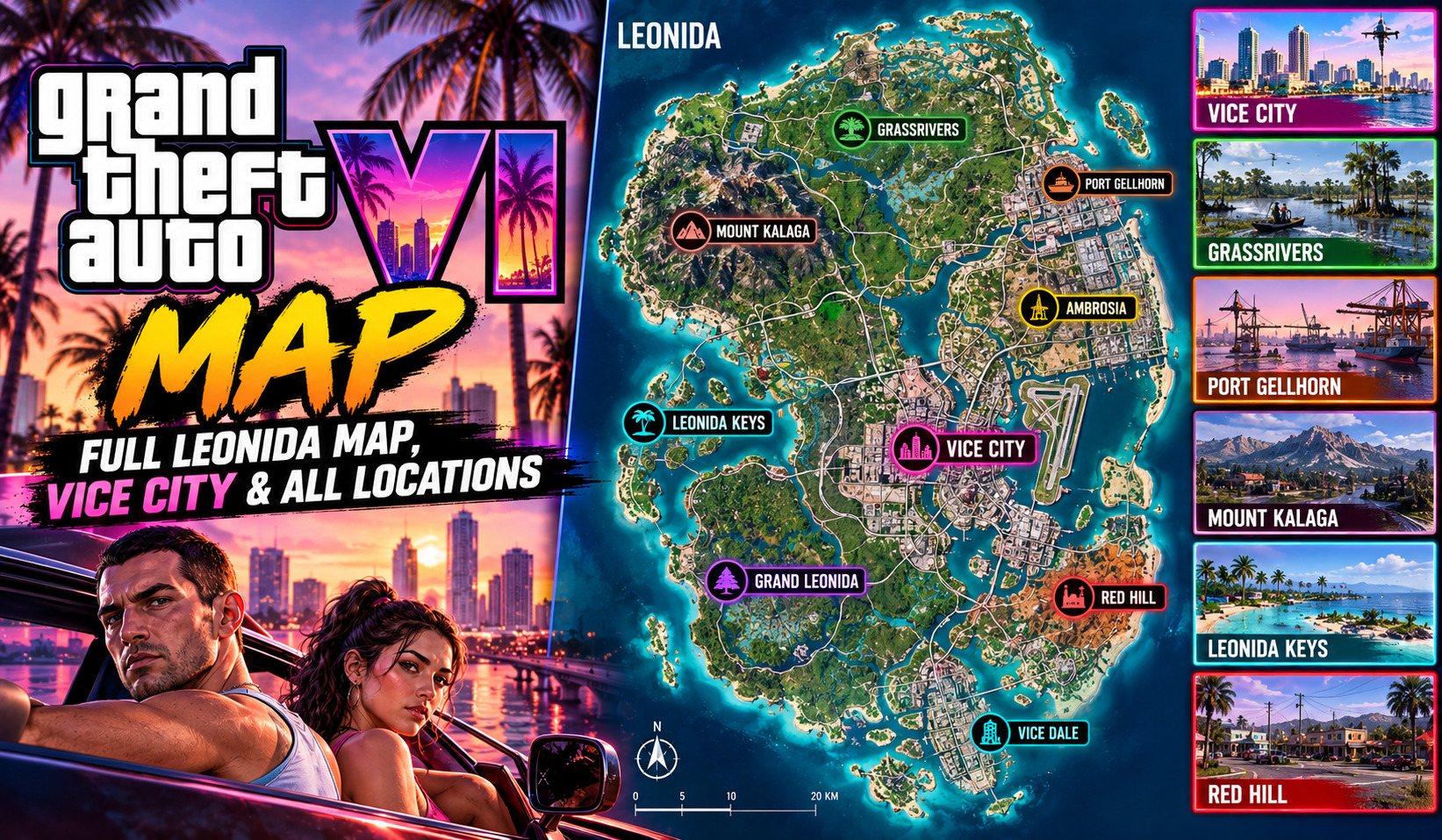
For years, fans knew that GTA 6 would bring players back to Vice City. What was less obvious was just how much would surround it.
Rockstar Games has officially stated that GTA 6 takes place in the fictional state of Leonida, an area inspired by Florida, but with the addition of Vice City and plenty of other completely different environments outside of skyscrapers and beaches. Locations shown in the official screenshots and promotional material already show a variety of environments including tropical islands, swamps, and rural backcountry.
So where is GTA 6 located? The short answer is: Vice City, within the larger state of Leonida.
The longer answer is considerably more interesting.
Where Is GTA 6 Located?
GTA 6 is set in the modern-day fictional state of Leonida, Rockstar’s fictional counterpart to Florida. Vice City is the game’s central urban setting, but it is only one part of a much larger world.
Unlike the 1980s version of Vice City from the 2002 game, GTA 6 presents a modern interpretation of the Miami-inspired city and expands far beyond its metropolitan streets.
Rockstar has officially showcased six major areas through its promotional material: Vice City, Leonida Keys, Port Gellhorn, Ambrosia, Grassrivers and Mount Kalaga National Park.
That variety is what makes the GTA 6 map particularly interesting. One moment, players can be surrounded by neon signs and high-rise buildings; the next, they can be racing through wetlands, exploring islands or heading into heavily wooded territory.
Vice City: The Heart of GTA 6
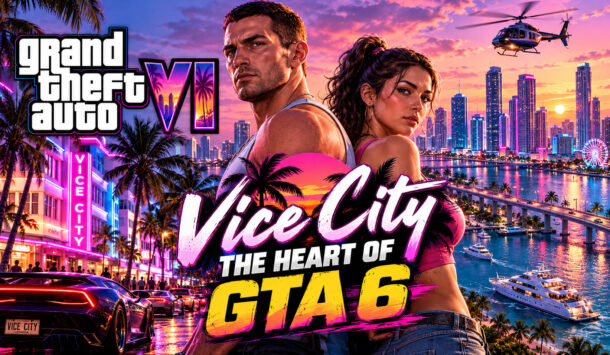
Vice City is the location most players will immediately recognize.
Inspired by Miami, the modern Vice City offers beaches, nightlife, busy districts, commercial areas and the typical excess of the Grand Theft Auto series.
Rockstar’s official media has revealed many details of the city, including its unique skyline, beaches and streets. The promotional descriptions also point toward areas such as Ocean Beach, Little Cuba, Little Haiti, South Beach, Vice City Port and Vice City International Airport.
This isn’t simply a remake of the old Vice City map. The HD Universe version is considerably more ambitious, functioning as one major urban section of the wider Leonida world.
While exploring Leonida’s vast map and its locations, players may also want to know Is GTA 6 Cross-Platform? Crossplay Answer to understand whether they can explore Vice City and beyond with friends on different gaming platforms.
Leonida Keys
South of the mainland lies the Leonida Keys, Rockstar’s fictional take on the Florida Keys.
The region is built around tropical islands, waterways and coastal communities rather than skyscrapers and dense city blocks. Rockstar describes the Keys as a laid-back tropical environment, although GTA’s usual combination of crime and chaos obviously isn’t going anywhere.
The Leonida Keys are also particularly important because footage has shown Jason and Lucia operating in this part of the state.
Among the locations associated with the wider region are Key Lento, along with several smaller islands and coastal areas.
Grassrivers: GTA 6’s Everglades
If Vice City represents Florida’s glamorous side, Grassrivers represents its wild side.
The Grassrivers are heavily inspired by the real-world Florida Everglades, featuring wetlands, mangroves, waterways and wildlife. Rockstar’s promotional material presents the area as an untamed part of Leonida where alligators are only one of the dangers players may encounter.
This area could also provide a major change of pace from traditional GTA driving. With waterways and dense vegetation forming much of the environment, exploration here is likely to feel very different from cruising through Vice City’s streets.
Port Gellhorn
On Leonida’s western side is Port Gellhorn, another location officially showcased by Rockstar.
Port Gellhorn has a distinctly different personality from Vice City. Rather than polished beaches and luxury districts, the area is portrayed as a worn-down coastal community filled with older attractions, motels and commercial areas.
Rockstar’s official artwork confirms Port Gellhorn as one of the major regions of GTA 6, while its promotional descriptions emphasize its rougher, more neglected atmosphere.
For players who enjoy GTA’s smaller towns and backroads as much as its cities, Port Gellhorn could become one of the more memorable sections of the map.
Ambrosia
Located farther inland is Ambrosia, an industrial area associated with the fictional state of Leonida.
The region revolves around industry and the local economy, with the Allied Crystal sugar refinery serving as one of its defining landmarks. Rockstar’s description also points toward a strong biker presence in the area.
That combination gives Ambrosia a very different identity from Vice City’s tourist-heavy districts. It is another example of GTA 6 using different parts of Florida-inspired culture and geography to create distinct environments.
As players explore the massive world of Leonida, the PS6 Specs Leak: Full Technical Sheet and PS5 vs PS5 Pro Comparison offers a closer look at the hardware that could shape the next generation of open-world gaming.
Mount Kalaga National Park
On the northern end of Leonida lies Mount Kalaga National Park, one of the most visually distinctive locations revealed so far.
The park has forests, waterways, rugged terrain and offers activities such as hunting, fishing, kayaking and off-road driving. Rockstar’s promotional material puts a strong focus on its wilderness and backcountry feel.
It also provides GTA 6 with a landscape that is far removed from the beaches of Vice City. The northern environment has its inspiration drawn from northern Florida and the surrounding southern states, making it one of the clearest examples of the geographical diversity Leonida can offer.
GTA 6 Map: What the 2026 Leak Revealed
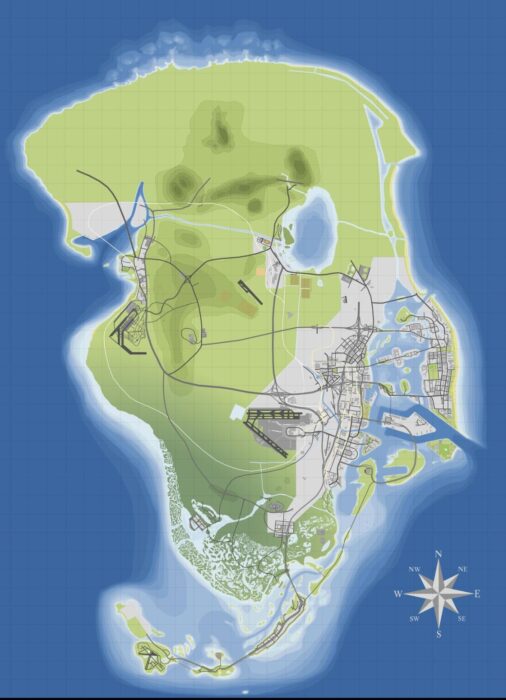
Rockstar has not officially published a complete interactive map of Leonida. However, an alleged full map surfaced online in August 2026 alongside leaked gameplay material.
The leaked map has attracted significant attention because several geographical features correspond with locations and layouts previously shown in Rockstar’s official trailers and screenshots. GTABase’s recreation of the leaked material identifies multiple counties and additional towns and locations.
However, there is an important distinction: the leaked map should not be treated as an official final map from Rockstar. Development builds can contain unfinished, removed or changed content.
For that reason, the officially revealed locations remain the safest reference point when discussing the GTA 6 world.
How Big Is the GTA 6 Map?
One of the biggest questions surrounding GTA 6 is its overall size.
Rather than simply creating another enormous city, Rockstar appears to be building a world that combines an urban center with beaches, islands, wetlands, industrial towns and wilderness.
Unofficial mapping efforts have attempted to estimate the size of Leonida using trailers, screenshots and leaked material, with estimates suggesting that the playable world could be substantially larger than GTA V’s map. Those figures should be treated as estimates rather than confirmed Rockstar specifications.
The more important difference may ultimately be density and variety, not raw square mileage.
While exploring the latest gaming updates, Minecraft players can also learn How to Update Minecraft Bedrock on PC to access new features, improvements, and gameplay fixes.
Will GTA 6 Have More Locations?
There is still plenty that Rockstar has not shown.
The official GTA 6 material already reveals a world considerably broader than Vice City alone, while leaked material has provided clues about additional towns, roads, counties and smaller locations.
That leaves room for plenty of surprises when players finally explore Leonida themselves.
Final Thoughts
So, where is GTA 6 located? It is set in Leonida, a fictional Florida-inspired state, with Vice City serving as its main urban centerpiece.
But Vice City is only the beginning. The GTA 6 map stretches across tropical islands, wetlands, industrial communities, rural roads and northern wilderness, including the Leonida Keys, Grassrivers, Port Gellhorn, Ambrosia and Mount Kalaga National Park.
Rockstar’s official material has confirmed the broad identity of these locations, while the reported 2026 map leak offers a much deeper — although still unofficial — look at how Leonida may fit together.
If GTA V made Los Santos feel like a living region rather than simply a city, GTA 6 appears to be pushing that idea considerably further: Vice City may be the star, but Leonida is the stage.
-
 Guides7 years ago
6 Proven Ways to Get more Instagram Likes on your Business Account
-
Mainstream12 years ago
BioWare: Mass Effect 4 to Benefit From Dropping Last-Gen, Will Not Share Template With Dragon Age: Inquisition
-
 Mainstream8 years ago
How to Buy Property & Safe Houses in GTA 5 (Grand Theft Auto 5)
-

 Guides2 years ago
Free Fire vs PUBG: Comparing Graphics, Gameplay, and More
-

 Guides2 years ago
50+ Free Fire ID and Passwords Login List (Giveaway) 2025
-
 Casual3 years ago
8 Ways to Fix Over-Extrusion and Under-Extrusion in 3D Printing
-

 Other3 years ago
Ajjubhai UID: Free Fire Details & Earnings
-

 Features2 years ago
Exploring Valorant eSports Stats: Unveiling the Metrics Behind Competitive Excellence