
iGaming
From New Vegas to Balatro: Why Video Games Keep Sending Us to the Casino


There is a moment in Fallout: New Vegas where you leave the irradiated wasteland behind and step onto the Strip.
Then the game gives you a choice that feels almost absurdly ordinary in a post-apocalyptic RPG.
You can gamble.
Blackjack, roulette and slots sit beneath the faded neon of a ruined Las Vegas. They are not essential to completing the story, but they feel completely natural within the world.
That is one of gaming’s most persistent design habits. No matter the genre, setting or tone, developers keep placing casinos and card tables inside their worlds.
Players keep walking straight in.
The casino as a world-building shortcut
Designers love casinos because they accomplish an enormous amount in a small space.
Fallout: New Vegas understands this better than most. The base game contains five locations where gambling is available: The Tops, Gomorrah, Ultra-Luxe, Atomic Wrangler and, after certain conditions are met, Vikki and Vance Casino.
The Dead Money expansion adds the Sierra Madre casino.
Each location is more than a room containing tables and slot machines.
The Tops channels old-school Las Vegas entertainment. Gomorrah reflects the violence and excess of the Omertas. The aristocratic Ultra-Luxe is operated by the cannibalism-haunted White Glove Society.
The Strip also contains the sealed, robot-operated Lucky 38, Mr House’s headquarters. It is a casino in the fiction and an important part of the city’s identity, although its gambling equipment is not playable.
These locations function as faction portraits, quest hubs and pieces of environmental storytelling. The gambling is only one part of their purpose.
You can learn more about the competing visions for New Vegas by walking through its casinos than through pages of direct exposition.
A card game can make a world feel lived in
Red Dead Redemption 2 uses the same idea in a different setting.
Poker appears in saloons and camps across the frontier. Sitting down at a table temporarily removes the player from shootouts, robberies and the main story.
The rules, betting rhythm and character animations help sell the illusion of a living world where people spend an evening playing cards because there is nothing unusual about doing so.
The NPCs are still controlled by programmed behaviour. Their reactions are a simplified imitation of reading real opponents rather than a full simulation of human poker psychology.
That does not weaken the scene’s purpose.
The table creates texture. It makes the world feel as though it continues to exist when the player is not advancing the plot.
GTA builds the whole resort
GTA Online takes the idea to its maximalist conclusion.
The Diamond Casino & Resort includes blackjack, Three Card Poker, roulette, slot machines, Inside Track horse racing and the Lucky Wheel. It also contains a bar, a store, penthouse content and other resort features.
Rockstar then built an entire heist around robbing it.
The casino is therefore not simply a collection of minigames. It is a social location, an economic system and a narrative target.
There is an important complication, however.
The casino uses chips purchased with GTA dollars. Those dollars can be earned through gameplay, but the wider virtual currency can also be acquired indirectly through real-money Shark Card purchases.
Casino winnings cannot be withdrawn as actual money, and access to the gambling features is restricted in some jurisdictions. Even so, the boundary between fictional and purchased currency is less clean than it is in a fully offline game.
That makes the Diamond Casino a more complicated example than a poker table in Red Dead Redemption 2.
When the minigame becomes the whole game
Then there is Balatro, one of the most acclaimed independent games of 2024.
Balatro uses gambling imagery but does not allow real-money betting or cash prizes. It borrows poker hands, cards, chips and the visual language of a casino, then builds a roguelike deck-builder around them.
The actual challenge is constructing increasingly powerful scoring combinations.
Players modify their decks, collect Jokers, manipulate probabilities and combine multipliers until an ordinary poker hand becomes an absurd mathematical machine.
It looks like a casino product but plays like a strategy game.
Its critical and commercial success says something about how deeply gambling imagery has embedded itself in popular culture. Poker does not need to represent a wager anymore. It can function as a familiar design vocabulary.
The cards tell players what kind of objects they are handling. The hand rankings provide an instantly teachable hierarchy. The chips become points rather than money.
The aesthetic has become detachable from the financial risk that originally defined it.
Nintendo’s softer version
Nintendo has also used casino imagery in playful, non-monetary ways.
The Nintendo DS version of New Super Mario Bros. includes card and casino-style minigames hosted by Luigi. The presentation uses familiar tables, cards and dealer imagery without turning the experience into real-money gambling.
This works because casino imagery is visually recognisable and its basic structure can be taught quickly.
Draw a card. Match a symbol. Choose whether to continue. Compare one hand with another.
The rules are not universally understood, but the objects and rituals are familiar enough to support a small minigame without extensive explanation.
What the virtual versions teach
The better in-game casinos can teach the basic structure and vocabulary of real games.
A blackjack minigame can demonstrate hitting, standing, doubling and splitting. Poker can introduce hand rankings, betting rounds and position. Roulette can show the difference between inside and outside bets.
The simulations are not always mathematically identical to regulated casino products.
Fallout: New Vegas, for example, allows the player’s Luck statistic to influence gambling results. Other games may simplify rules, adjust payouts or make AI opponents more predictable for entertainment and balancing purposes.
The rules may resemble the real games while the underlying probability model remains different.
GTA Online blackjack still includes meaningful decisions. Mathematically sensible choices perform better over time than random ones, although the exact optimal strategy depends on the rules implemented in the game.
Correct play does not guarantee profit. It only avoids some unnecessary errors.
Red Dead Redemption 2 recreates the basic shape of poker rather than the full complexity of playing against adaptive human opponents.
These games can make someone familiar with the language of gambling without teaching the complete mathematics behind it.
What the virtual version leaves out
The largest difference is consequence.
In Fallout: New Vegas, Red Dead Redemption 2 and Balatro, the player is not risking money that can be withdrawn from a bank account. The currencies, scores and chips exist inside the game.
Losing them can still cost time or progression. A player may need to earn the money again, reload an earlier save or accept that another purchase within the game is now further away.
The loss is therefore not meaningless.
It is simply different from losing real money.
GTA Online complicates the distinction because its wider economy can be connected to real-money purchases. Even there, however, casino winnings cannot be cashed out as legal currency.
When people move from fictional casino minigames to playing casino games online with real money, the presentation may feel familiar while the economic proposition changes completely.
The losses now affect an actual balance. The rules, payouts and house edge matter because the value at risk exists outside the fictional world.
In a conventional video game, the casino minigame primarily supports the wider entertainment experience.
In real-money gambling, the wager itself is the commercial product.
Why the fascination endures
Casinos keep appearing in games because they are useful design spaces.
They are contained, visually distinctive and naturally suited to short, rule-based interactions. They can create tension without requiring combat and provide a break from the main gameplay loop without feeling disconnected from the world.
A casino can also communicate character and power quickly.
A luxurious room suggests wealth and control. A damaged slot machine suggests decline. A private poker table creates secrecy. A crowded floor creates noise, movement and opportunity.
In New Vegas, casinos explain the factions competing to control the city.
In Red Dead Redemption 2, poker makes the frontier feel inhabited.
In GTA Online, the Diamond Casino becomes a monument to excess and a target for a robbery.
In Balatro, casino imagery becomes the foundation of an original strategy system that has almost nothing to do with monetary gambling.
The same visual language serves entirely different design goals.
Fictional stakes and real risk
There is nothing inherently troubling about using cards, roulette wheels or casino floors as fictional settings.
They are rich symbols. They represent risk, luck, greed, status and the possibility that everything could change with one decision.
The important distinction is between representation and participation.
A virtual poker table may teach the rules and reproduce the tension. It does not necessarily reproduce the financial consequences or use the same probability model.
The version worth celebrating is the one that uses casino imagery as a foundation for atmosphere, storytelling or strategy without pretending that fictional stakes and real-money risk are the same thing.
Losing some in-game currency may cost time or progress.
Losing real money is a different proposition entirely.
18+. Please gamble responsibly. If gambling is causing problems for you or someone you know, free and confidential support is available 24/7 through the National Problem Gambling Helpline. Call or text 1-800-MY-RESET.

You want to add live dealer games to your casino; maybe your players keep asking for real tables, or you simply want your lobby to feel more like a real casino floor. Either way, you’ve probably noticed it’s not as easy as signing one deal. Each studio comes with its own contract and its own integration, and your back office tools all need to keep pace with real dealers and real-time bets. That’s where an aggregator can help, because you get one agreement with a whole list of studios behind it.
But which aggregator should you trust with your live casino? Let’s walk through five platforms, where each one has its own strengths, whether that’s live promotions, one shared wallet, or regional live games. It’s worth looking past the big names and asking which one actually fits the way you run your casino.
Live Dealer Platform Providers Compared
Here’s how the five line up on the points that matter most for live casino.
| GR8_TECH | St8 | Hub88 | QTech Games | Groove Technologies | |
| Best for | Live casino promotions alongside slots and instant games | Premium live studios plus casino and sportsbook under one agreement | One API and one wallet for live and RNG games | Different markets that want regional live games | Broad catalogues across real-money, social and sweepstakes brands |
| Live studios | Evolution, Playtech, Pragmatic Play and more | Evolution, Pragmatic Play Live, Playtech, Ezugi and more | Evolution Gaming, including Crazy Time and Monopoly Live | Evolution, Pragmatic Play, Playtech and more | Evolution, Ezugi, Playtech, Pragmatic Play, Vivo Gaming and more |
| Go-live | N/A | A few days for most, a few weeks for complex builds | As little as 3 days | Within days for most operators | N/A |
Top Live Dealer Game Aggregators Reviewed
The table gives you the outline, but below we take a closer look at what each platform does well for live casino, and where you’ll want to ask more questions.
1. GR8_TECH

GR8_TECH’s GREAT_CASINO AGGREGATION handles live dealer game integration through one API, with live casino in the same mix as slots and instant games. GR8_TECH takes care of provider communication, licensing and integration, so you simply choose the studios you want.
- Catalogue: 250+ providers and 20,000+ games, with Evolution, Playtech and Pragmatic Play among the live casino providers
- Live promotions: bonus and tournament engines launch across slots, live casino and instant games at once, plus FreeChips through CRM Journey Builder
- Market control: a live casino provider per market, with its own lobby placement, promotions and game analytics
- Localised live games: versions with localised backgrounds and live dealers, which GR8_TECH points to as important for MENA and LATAM
- Planning tools: a game release calendar, a promo calendar and a promo materials portal
Best for live casino promotions through one API
2. St8
St8 treats live casino as a product of its own, with live dealer content from diverse studios through one API and a single agreement. The same API also covers slots, crash games, jackpots, table games and sportsbook.
- Live content: live tables and game shows in 4K from Evolution, Pragmatic Play Live, Playtech, Ezugi and more
- Live extras: free bets, bonus money and local-language tables on Evolution games, plus Pragmatic Play’s Free Chips
- Market tailoring: live game portfolios, interfaces, reporting and content filters set for specific markets
- Promotions software: free spins, deposit matches, cashback, reload and seasonal campaigns across every connected provider
- Wider catalogue: 200+ providers and 19,000+ games overall
Best for premium live studios under one agreement
3. Hub88

Hub88 keeps things simple. Live casino runs on the same API as its slots and table games, so live dealer content doesn’t need a separate integration.
- One balance: live bets and payouts flow through the Hub88 wallet, so players use one balance for live and RNG games
- Wallet models: the REST API supports both seamless and transfer wallets
- Fast setup: integration can take as little as three days, depending on your needs and infrastructure
- Game shows: Evolution Gaming tables plus shows such as Crazy Time and Monopoly Live
- Operator Backoffice: real-time dashboards, player analytics, big-win and failed-round flags, and one-click opt-in to supplier promotions
Best for one wallet across live and RNG games
4. QTech Games

QTech Games’ live casino includes regional titles such as Andar Bahar and Teen Patti alongside Blackjack, Baccarat and Roulette.
- Live tables: 2,000+ live tables and 12,000+ casino games by QTech’s own count
- Regional games: Andar Bahar, Teen Patti, Dragon Tiger and Sic Bo alongside Baccarat, Blackjack, Poker and Roulette, plus game shows
- Studio partners: Evolution, Pragmatic Play and Playtech
- QTech Connect: a unified game launcher, seamless and transfer wallets, fiat and crypto, and direct or reversed integration
- QTech Engage: Collect Point, Best Round and Prize Drop tournaments, an opt-in progressive jackpot and free rounds
Best for regional live games next to classic tables
5. Groove Technologies
Groove Technologies comes at live dealer from the catalogue side rather than through a dedicated live casino product. Its single API covers slots, table games as well as live dealer games.
- Catalogue size: 15,000+ titles with integrated bonuses
- Live Dealer studios: Evolution, Ezugi, Playtech, Pragmatic Play, Vivo Gaming, Bombay Live and BetGames
- Back office: RTPs, volatility, bet limits, session history and upcoming releases in one place, with multi-brand control
- Marketing tools: jackpots, tournaments and free-spin campaigns, plus deposit, welcome, cashback and loyalty bonuses through the Marketing API
- Brand types: real-money casinos, social casinos and sweepstakes platforms
Best for broad catalogues across real-money, social and sweepstakes brands
Choosing Your Live Dealer Partner
Live dealer integration comes down to the following things: which studios you get, how your promotions reach the tables, and how quickly you can go live in your markets. Each of the five platforms here answers those questions a little differently.
- GR8_TECH fits operators who want live casino, slots and instant games through one API, with bonuses, tournaments and FreeChips that reach live players
- St8 fits regulated-market operators who want premium live studios, casino and sportsbook under one agreement
- Hub88 fits operators who want live dealer on the same API and wallet as slots, with a quick integration
- QTech Games fits those markets that want a large live table count and regional live games, as long as you’re outside its restricted territories
- Groove Technologies fits operators who want a broad catalogue with live dealer studios across real-money, social or sweepstakes brands
So start with your markets and the live studios your players expect, then shortlist two or three platforms and compare how each one would handle your launch in practice.
Frequently Asked Questions
What Is A Live Dealer Games Integration Platform?
It’s a platform, usually a casino game aggregator, that connects your casino to live dealer studios through one integration. Instead of building a separate connection for every studio, you plug into a single API, and the platform handles the studio connections, game launches and the bets and payouts that run through your wallet.
Can I Run Bonuses And Tournaments On Live Dealer Games?
On several of these platforms, yes. GR8_TECH’s bonus and tournament engines can launch across slots, live casino and instant games, and its CRM campaigns can include FreeChips for live casino. St8 supports Evolution free bets and bonus money and Pragmatic Play’s Free Chips. QTech Games and Groove Technologies also offer tournaments, jackpots and free-round or free-spin tools, so check which ones apply to live tables.
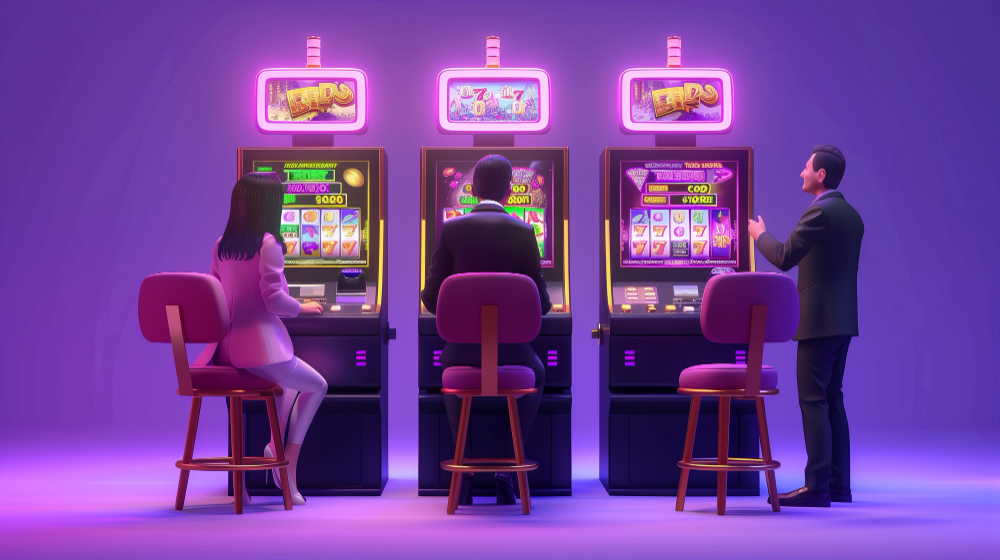
Every long RPG has that moment. The villain is raising an army, the party is low on potions, and the smartest plan somehow seems to be three more hours at the slot machines. The best in-game casinos are built for exactly that kind of detour, and some of them end up more memorable than the story itself.
Roulette turns up in three of the five games on this list. Funny how often designers reach for the wheel, but it makes sense. Red or black needs zero explanation, and a spin is done in seconds. Games that simple tend to travel well, and that goes a long way toward explaining how online roulette caught on so fast once casinos moved onto computers and phones. In a game, though, the chips are fake and a losing streak is just an excuse to try again.
1. GTA Online and the Diamond Casino & Resort
Rockstar opened the Diamond on July 23, 2019, after years of it sitting closed on the Los Santos skyline. Inside, players found blackjack, three card poker, roulette, slots and the Inside Track horse races, plus a penthouse to buy and a free daily spin on the Lucky Wheel with a podium car up for grabs.
That December, the Diamond Casino Heist turned the same building into a robbery target, with approaches ranging from a silent infiltration to an all-out armed raid. The gambling side had real-world complications too. Chips are bought with GTA$, which can be purchased with real money, though winnings can never be cashed out. The betting features were blocked in dozens of countries at launch, and Australia joined that list in July 2026.
2. Fallout New Vegas and the Strip
Nuclear war wrecked most of America, but Las Vegas came through largely intact. Obsidian’s 2010 RPG puts a working Strip at the heart of the Mojave, and every casino has its own personality. Gomorrah is sleazy from the front door in, The Tops leans hard into Rat Pack style, and the Ultra-Luxe hides something very dark behind its polished white interior.
The Luck stat quietly tilts the odds at blackjack, roulette and slots, and a player who wins too much gets banned from that casino’s tables. The Dead Money DLC then flips the fantasy with the Sierra Madre, a sealed pre-war casino where getting out alive matters far more than getting rich.
3. Final Fantasy VII and the Gold Saucer
The Gold Saucer is more theme park than casino, but it runs on the same idea. Visitors earn GP, the park’s own currency, and spend it on chocobo races, arcade games in Wonder Square and fights in the Battle Square arena.
The park towers over a desert, and Corel Prison sits in the sand below, so the neon above looks straight down on the outcasts beneath. It is also home to the famous night-time gondola ride, where Cloud’s companion depends on choices made hours earlier. Final Fantasy VII Rebirth rebuilt the whole park in 2024, and it proved just as hard to leave the second time.
4. Pokémon Red and Blue and the Celadon Game Corner
For a lot of kids in the late ’90s, this was the first casino they ever set foot in. Celadon’s Game Corner is wall-to-wall slot machines. Win enough coins and the prize shop next door hands over TMs and Pokémon that are tough to get anywhere else. Porygon is the big one, since it never shows up in the wild.
Then there’s that poster on the back wall. Walk up, press A, and a staircase opens down into the Team Rocket Hideout. Giovanni is waiting at the bottom. Pretty bold reveal for a game aimed at kids. The series hasn’t had playable slot machines in a long time now, which makes this whole corner of Celadon feel weirdly old-school.
5. Dragon Quest VIII and the Baccarat Casino
Dragon Quest has had casinos since the NES days, but VIII is the one a lot of fans remember. Pickham’s is a bit of a dive, just slots and bingo. Baccarat is where things get serious. The town’s casino adds a roulette table and a prize list that makes the local weapon shops look silly.
Tokens go for 20 gold apiece. That sounds steep until a lucky run on the wheel lands gear that would otherwise take hours of grinding to afford. Most players figured out the trick pretty fast. Save first, bet big, and reload if it goes wrong.
Why These Side Trips Stick
What the best game casinos share is that they belong to their worlds. Celadon’s slots hide a villain’s base. The Diamond ends up as a heist target. The Gold Saucer glitters right above a prison. They’re also just a nice excuse to stop saving the world for an hour, a bit like the classic games that went from tabletops to browsers and never really lost their pull. Real money is another story. Anyone curious about it should be of legal age, treat it as paid entertainment and set a hard limit before placing a bet.

Game preferences rarely come down to graphics or trends alone. The style of play that feels right often reflects how someone thinks, reacts, and enjoys spending time.
Some players want pressure and quick choices, while others prefer planning, freedom, or strong competition. That is why certain genres feel immediately satisfying to one person and less appealing to another.
Looking at personality is a practical way to understand those choices. The pace you enjoy, the level of challenge you seek, and the kind of reward that keeps you engaged all shape the genres that suit you best. Once those patterns become clear, picking the right game becomes much easier.
Strategic Personality
Some players are driven by structure, control, and smart decision-making. They like to think a few steps ahead, weigh risk carefully, and improve through analysis rather than instinct alone. For this type of person, gaming is most satisfying when success comes from judgment, timing, and planning.
That mindset usually fits strategy games, management titles, and tactical experiences. These genres reward patience and attention to detail. A strategic player tends to enjoy systems that can be learned deeply over time, where each choice has a clear impact and strong decisions create steady progress.
A great match here is Civilization VI. The game gives players room to build, expand, negotiate, and adapt over many hours. Every move matters, from resource placement to diplomacy and long-term military planning. Someone with a strategic personality will enjoy how the game constantly asks for measured decisions instead of rushed reactions.
What makes it especially suitable is its layered design. A thoughtful player can experiment with different paths, refine methods, and see direct results from better planning. That sense of control is a major part of the appeal.
Adventurous Personality
We all know a person who has an adventurous personality. This is usually someone who likes variety, acts with confidence, and is drawn to new experiences without needing much encouragement. They get bored when things feel too predictable, and they often enjoy games that offer surprise, movement, and a steady sense of discovery.
Players with this personality type are usually interested in genres that keep opening new paths. Open-world action games, survival titles, exploration-heavy adventures, and even fast-access digital formats can all appeal to them.
Another game type to consider is online casino games. These games have become quite popular lately, mostly because popular online sites now offer slots, table games, and a variety of other game types with just a few clicks.
Another excellent fit is Subnautica. Instead of pushing the player through a narrow route, it builds tension and excitement through exploration. Diving into unknown areas, gathering tools, and uncovering hidden locations creates exactly the kind of active experience that adventurous players tend to enjoy. The appeal comes from discovery, risk, and the constant feeling that something new is waiting ahead.
Competitive Personality
Other players are motivated by challenge above everything else. They want to test themselves, improve quickly, and measure their skill against real opponents. A competitive personality usually thrives in systems with rankings, direct matchups, and clear outcomes where effort and practice lead to visible results.
For this group, multiplayer genres often fit best. Fighting games, sports games, team shooters, and competitive card games all offer a strong learning-and-performance loop. These players often enjoy reviewing mistakes, sharpening mechanics, and finding small advantages that make a big difference in the next session.
Rocket League is a strong example. Its basic concept is easy to understand, yet the skill ceiling is extremely high. Positioning, teamwork, timing, and mechanical control all matter. Competitive players tend to appreciate that every match provides immediate feedback, and improvement feels earned rather than random.
What keeps this genre appealing is the constant tension between risk and reward. Winning feels meaningful because another player is trying to outplay you at the same time. For someone who enjoys pressure and progression, that creates lasting appeal.
Creative Personality
Some people play games for expression rather than conquest. They enjoy shaping worlds, building systems, customizing spaces, and experimenting with ideas. A creative personality usually values freedom, imagination, and the ability to leave a personal mark on the experience.
Sandbox and building games fit this style especially well. These genres remove strict limits and give players tools to create their own goals. Instead of asking for one correct solution, they reward experimentation and individual taste. That makes the play session feel personal from start to finish.
Minecraft remains one of the clearest examples. A creative player can build structures, design machines, explore landscapes, or invent entirely new projects with very few restrictions. The game works because it supports both simple ideas and complex plans, which keeps it engaging across very different skill levels.
The Sims is another strong option. It appeals to people who enjoy designing spaces, shaping characters, and directing stories through small choices. That level of control suits players who like to create rather than compete, and it gives them a relaxed but highly engaging way to stay invested.
Calm and Reflective Personality
Then there are players who want games to feel steady, thoughtful, and rewarding without constant pressure. A calm and reflective personality often prefers slower pacing, clear routines, and experiences that create focus instead of noise. These players usually value atmosphere, comfort, and a satisfying rhythm.
Life simulation, puzzle, and narrative-driven games often work best here. They provide structure while still allowing space to think and settle into the experience. Rather than demanding fast reactions, they encourage observation, patience, and gradual progress.
Stardew Valley is an ideal example. Farming, fishing, exploring, and building relationships all unfold at a pace the player controls. That flexibility is important because reflective players often enjoy setting their own priorities instead of reacting to nonstop urgency. The game feels rewarding because progress comes through consistency and care.
Another good match is Unpacking. It turns an ordinary activity into a quiet, meaningful process. Players who like order and subtle storytelling often connect with games like this because they offer satisfaction through detail rather than intensity. For the right personality, that can be far more engaging than constant action.
-
 Guides7 years ago
6 Proven Ways to Get more Instagram Likes on your Business Account
-
Mainstream12 years ago
BioWare: Mass Effect 4 to Benefit From Dropping Last-Gen, Will Not Share Template With Dragon Age: Inquisition
-
 Mainstream8 years ago
How to Buy Property & Safe Houses in GTA 5 (Grand Theft Auto 5)
-

 Guides2 years ago
Free Fire vs PUBG: Comparing Graphics, Gameplay, and More
-

 Guides2 years ago
50+ Free Fire ID and Passwords Login List (Giveaway) 2025
-
 Casual3 years ago
8 Ways to Fix Over-Extrusion and Under-Extrusion in 3D Printing
-

 Other3 years ago
Ajjubhai UID: Free Fire Details & Earnings
-

 Features2 years ago
Exploring Valorant eSports Stats: Unveiling the Metrics Behind Competitive Excellence