
iGaming
Péter Magyar’s Position on gambling in Hungary


The rise of Péter Magyar as Hungary’s new political leader in 2026 marks a significant shift in the country’s political direction. After defeating longtime prime minister Viktor Orbán, Magyar has positioned himself as a reformer focused on transparency, rule of law, and closer alignment with the European Union.
However, when it comes to gambling policy, Magyar’s position is less explicitly defined. While he has not outlined a detailed gambling reform agenda, his broader political priorities (anti-corruption, market fairness, and institutional reform) provide important clues about how his government may approach the sector.
To understand Magyar’s potential stance, it is essential to consider the current gambling framework in Hungary. Under Orbán’s government, the gambling sector has been tightly regulated and partially monopolized, particularly in areas like lotteries and land-based casinos.
The state-owned operator Szerencsejáték Zrt dominates much of the market, while private operators face strict licensing requirements. Critics have argued that the system has favored politically connected business groups, raising concerns about transparency and fair competition.
This context is crucial because Magyar’s political platform directly challenges these kinds of structures.
Anti-Corruption First
Magyar’s campaign and early statements as prime minister strongly emphasize fighting corruption. He has described the previous system as deeply flawed, promising to investigate misuse of public funds and restore institutional integrity.
European Union institutions have welcomed his victory, particularly because of his commitment to transparency and reforms aimed at unlocking billions in frozen EU funds.
These priorities suggest that any sector associated with state control or political favoritism, including gambling, could face scrutiny.
What This Means For Gambling Policy
Although Magyar has not publicly released a detailed gambling policy, several likely directions can be inferred from his broader platform.
1. Increased Transparency in Licensing
Given his focus on anti-corruption, one probable change is greater transparency in gambling licenses and concessions.
Under the previous system, critics claimed that licenses were often granted to politically connected entities. Magyar’s reform agenda could lead to:
- More competitive and open licensing processes
- Independent oversight of gambling regulators
- Public disclosure of ownership structures
Such measures would align Hungary more closely with EU norms regarding competition and state aid.
2. Reduced Political Influence in the Gambling Sector
Magyar has pledged to dismantle what he calls a “system of cronyism” in Hungary’s economy.
If applied to gambling, this could mean:
- Breaking up monopolistic or semi-monopolistic structures
- Reducing the role of politically affiliated businesses
- Encouraging a more level playing field for operators
3. Potential Alignment with EU Standards
Magyar is widely described as pro-European, advocating closer cooperation with EU institutions and policies.
In the context of gambling, this could involve:
- Harmonizing regulations with broader European practices
- Strengthening consumer protection measures
- Improving oversight of online gambling operators
Many EU countries operate regulated but competitive online gambling markets, suggesting Hungary could gradually move in a similar direction.
4. Focus on Consumer Protection
Although not explicitly addressed by Magyar, EU-aligned reforms often emphasize responsible gambling policies, including:
- Player protection tools (deposit limits, self-exclusion systems)
- Stronger rules on advertising and bonuses
- Monitoring of problem gambling behavior
If Hungary follows this path, the gambling industry may face stricter compliance requirements—but also more legitimacy within a regulated framework.
It is important to note that, as of now, there is no clear public statement from Magyar specifically addressing gambling policy. This lack of direct commentary means that any conclusions about gambling must remain informed speculation rather than explicit commitments.
However, while Péter Magyar has not yet articulated a detailed stance on gambling, his broader political agenda offers important insights. His commitment to transparency, anti-corruption, and EU alignment suggests that Hungary’s gambling sector could undergo meaningful reform in the coming years.
For now, the future of gambling in Hungary remains an open question. But under Magyar’s leadership, it is almost certain that the industry will not remain unchanged.
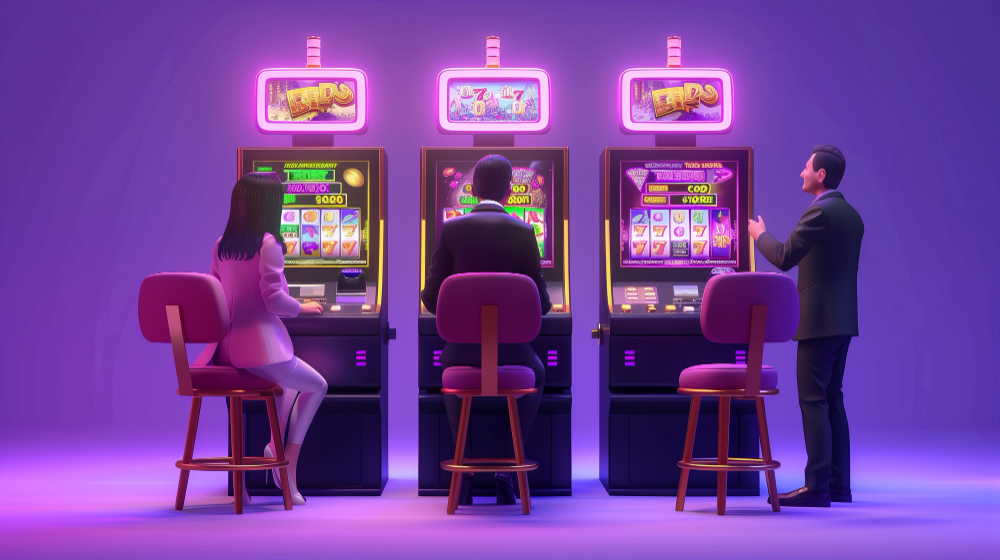
Every long RPG has that moment. The villain is raising an army, the party is low on potions, and the smartest plan somehow seems to be three more hours at the slot machines. The best in-game casinos are built for exactly that kind of detour, and some of them end up more memorable than the story itself.
Roulette turns up in three of the five games on this list. Funny how often designers reach for the wheel, but it makes sense. Red or black needs zero explanation, and a spin is done in seconds. Games that simple tend to travel well, and that goes a long way toward explaining how online roulette caught on so fast once casinos moved onto computers and phones. In a game, though, the chips are fake and a losing streak is just an excuse to try again.
1. GTA Online and the Diamond Casino & Resort
Rockstar opened the Diamond on July 23, 2019, after years of it sitting closed on the Los Santos skyline. Inside, players found blackjack, three card poker, roulette, slots and the Inside Track horse races, plus a penthouse to buy and a free daily spin on the Lucky Wheel with a podium car up for grabs.
That December, the Diamond Casino Heist turned the same building into a robbery target, with approaches ranging from a silent infiltration to an all-out armed raid. The gambling side had real-world complications too. Chips are bought with GTA$, which can be purchased with real money, though winnings can never be cashed out. The betting features were blocked in dozens of countries at launch, and Australia joined that list in July 2026.
2. Fallout New Vegas and the Strip
Nuclear war wrecked most of America, but Las Vegas came through largely intact. Obsidian’s 2010 RPG puts a working Strip at the heart of the Mojave, and every casino has its own personality. Gomorrah is sleazy from the front door in, The Tops leans hard into Rat Pack style, and the Ultra-Luxe hides something very dark behind its polished white interior.
The Luck stat quietly tilts the odds at blackjack, roulette and slots, and a player who wins too much gets banned from that casino’s tables. The Dead Money DLC then flips the fantasy with the Sierra Madre, a sealed pre-war casino where getting out alive matters far more than getting rich.
3. Final Fantasy VII and the Gold Saucer
The Gold Saucer is more theme park than casino, but it runs on the same idea. Visitors earn GP, the park’s own currency, and spend it on chocobo races, arcade games in Wonder Square and fights in the Battle Square arena.
The park towers over a desert, and Corel Prison sits in the sand below, so the neon above looks straight down on the outcasts beneath. It is also home to the famous night-time gondola ride, where Cloud’s companion depends on choices made hours earlier. Final Fantasy VII Rebirth rebuilt the whole park in 2024, and it proved just as hard to leave the second time.
4. Pokémon Red and Blue and the Celadon Game Corner
For a lot of kids in the late ’90s, this was the first casino they ever set foot in. Celadon’s Game Corner is wall-to-wall slot machines. Win enough coins and the prize shop next door hands over TMs and Pokémon that are tough to get anywhere else. Porygon is the big one, since it never shows up in the wild.
Then there’s that poster on the back wall. Walk up, press A, and a staircase opens down into the Team Rocket Hideout. Giovanni is waiting at the bottom. Pretty bold reveal for a game aimed at kids. The series hasn’t had playable slot machines in a long time now, which makes this whole corner of Celadon feel weirdly old-school.
5. Dragon Quest VIII and the Baccarat Casino
Dragon Quest has had casinos since the NES days, but VIII is the one a lot of fans remember. Pickham’s is a bit of a dive, just slots and bingo. Baccarat is where things get serious. The town’s casino adds a roulette table and a prize list that makes the local weapon shops look silly.
Tokens go for 20 gold apiece. That sounds steep until a lucky run on the wheel lands gear that would otherwise take hours of grinding to afford. Most players figured out the trick pretty fast. Save first, bet big, and reload if it goes wrong.
Why These Side Trips Stick
What the best game casinos share is that they belong to their worlds. Celadon’s slots hide a villain’s base. The Diamond ends up as a heist target. The Gold Saucer glitters right above a prison. They’re also just a nice excuse to stop saving the world for an hour, a bit like the classic games that went from tabletops to browsers and never really lost their pull. Real money is another story. Anyone curious about it should be of legal age, treat it as paid entertainment and set a hard limit before placing a bet.

Game preferences rarely come down to graphics or trends alone. The style of play that feels right often reflects how someone thinks, reacts, and enjoys spending time.
Some players want pressure and quick choices, while others prefer planning, freedom, or strong competition. That is why certain genres feel immediately satisfying to one person and less appealing to another.
Looking at personality is a practical way to understand those choices. The pace you enjoy, the level of challenge you seek, and the kind of reward that keeps you engaged all shape the genres that suit you best. Once those patterns become clear, picking the right game becomes much easier.
Strategic Personality
Some players are driven by structure, control, and smart decision-making. They like to think a few steps ahead, weigh risk carefully, and improve through analysis rather than instinct alone. For this type of person, gaming is most satisfying when success comes from judgment, timing, and planning.
That mindset usually fits strategy games, management titles, and tactical experiences. These genres reward patience and attention to detail. A strategic player tends to enjoy systems that can be learned deeply over time, where each choice has a clear impact and strong decisions create steady progress.
A great match here is Civilization VI. The game gives players room to build, expand, negotiate, and adapt over many hours. Every move matters, from resource placement to diplomacy and long-term military planning. Someone with a strategic personality will enjoy how the game constantly asks for measured decisions instead of rushed reactions.
What makes it especially suitable is its layered design. A thoughtful player can experiment with different paths, refine methods, and see direct results from better planning. That sense of control is a major part of the appeal.
Adventurous Personality
We all know a person who has an adventurous personality. This is usually someone who likes variety, acts with confidence, and is drawn to new experiences without needing much encouragement. They get bored when things feel too predictable, and they often enjoy games that offer surprise, movement, and a steady sense of discovery.
Players with this personality type are usually interested in genres that keep opening new paths. Open-world action games, survival titles, exploration-heavy adventures, and even fast-access digital formats can all appeal to them.
Another game type to consider is online casino games. These games have become quite popular lately, mostly because popular online sites now offer slots, table games, and a variety of other game types with just a few clicks.
Another excellent fit is Subnautica. Instead of pushing the player through a narrow route, it builds tension and excitement through exploration. Diving into unknown areas, gathering tools, and uncovering hidden locations creates exactly the kind of active experience that adventurous players tend to enjoy. The appeal comes from discovery, risk, and the constant feeling that something new is waiting ahead.
Competitive Personality
Other players are motivated by challenge above everything else. They want to test themselves, improve quickly, and measure their skill against real opponents. A competitive personality usually thrives in systems with rankings, direct matchups, and clear outcomes where effort and practice lead to visible results.
For this group, multiplayer genres often fit best. Fighting games, sports games, team shooters, and competitive card games all offer a strong learning-and-performance loop. These players often enjoy reviewing mistakes, sharpening mechanics, and finding small advantages that make a big difference in the next session.
Rocket League is a strong example. Its basic concept is easy to understand, yet the skill ceiling is extremely high. Positioning, teamwork, timing, and mechanical control all matter. Competitive players tend to appreciate that every match provides immediate feedback, and improvement feels earned rather than random.
What keeps this genre appealing is the constant tension between risk and reward. Winning feels meaningful because another player is trying to outplay you at the same time. For someone who enjoys pressure and progression, that creates lasting appeal.
Creative Personality
Some people play games for expression rather than conquest. They enjoy shaping worlds, building systems, customizing spaces, and experimenting with ideas. A creative personality usually values freedom, imagination, and the ability to leave a personal mark on the experience.
Sandbox and building games fit this style especially well. These genres remove strict limits and give players tools to create their own goals. Instead of asking for one correct solution, they reward experimentation and individual taste. That makes the play session feel personal from start to finish.
Minecraft remains one of the clearest examples. A creative player can build structures, design machines, explore landscapes, or invent entirely new projects with very few restrictions. The game works because it supports both simple ideas and complex plans, which keeps it engaging across very different skill levels.
The Sims is another strong option. It appeals to people who enjoy designing spaces, shaping characters, and directing stories through small choices. That level of control suits players who like to create rather than compete, and it gives them a relaxed but highly engaging way to stay invested.
Calm and Reflective Personality
Then there are players who want games to feel steady, thoughtful, and rewarding without constant pressure. A calm and reflective personality often prefers slower pacing, clear routines, and experiences that create focus instead of noise. These players usually value atmosphere, comfort, and a satisfying rhythm.
Life simulation, puzzle, and narrative-driven games often work best here. They provide structure while still allowing space to think and settle into the experience. Rather than demanding fast reactions, they encourage observation, patience, and gradual progress.
Stardew Valley is an ideal example. Farming, fishing, exploring, and building relationships all unfold at a pace the player controls. That flexibility is important because reflective players often enjoy setting their own priorities instead of reacting to nonstop urgency. The game feels rewarding because progress comes through consistency and care.
Another good match is Unpacking. It turns an ordinary activity into a quiet, meaningful process. Players who like order and subtle storytelling often connect with games like this because they offer satisfaction through detail rather than intensity. For the right personality, that can be far more engaging than constant action.
iGaming
What Makes a Casual Game Easy to Pick Up? A Mechanics-First Guide
What Makes a Casual Game Easy to Pick Up? A Mechanics-First Guide


A game can have lovely artwork, a clever idea and plenty of content, yet still feel oddly difficult to begin. You open it, face a wall of icons or a lengthy explanation, and suddenly the spare ten minutes you had set aside doesn’t feel quite enough.
That’s why low-friction discovery matters. Approachable casual games don’t demand that you study a manual before you can enjoy the first round. They give you something understandable to do, show you what happened when you did it, then let you decide whether you’d like another go.
It sounds simple, but it’s a thoughtful bit of design. Whether you prefer a word puzzle, a match-style game, a card game or a number-based format, the mechanics determine whether the experience feels welcoming or like hard work.
The first few minutes do most of the talking
A casual game is easy to pick up when its opening moments answer three questions without making you hunt for the answers:
- What am I trying to do?
- How do I do it?
- How will I know whether it worked?
The strongest introductions let you learn by playing. Rather than presenting several screens of instructions, they offer one small action. Tap, place, match, choose or mark something. You receive an immediate response, and the next step becomes clearer.
I find this is the difference between a game that feels inviting and one that sits untouched on a phone for months. You don’t need every detail at once. You just need enough confidence to start.
Onboarding should be helpful, not a hurdle
Good onboarding is often almost invisible. A highlighted button, a brief prompt or a practice round may be all that’s needed. The aim isn’t to explain every possible feature. It’s to introduce the core loop, meaning the action you repeat during play.
For instance, a straightforward puzzle loop might be:
- Look at the board
- Make one move
- See the result
- Adjust your next move
That rhythm is easy to understand because every action has a visible consequence. The same principle works in many formats. If you’re marking called numbers, building a sequence, sorting tiles or selecting answers, the game should make the immediate task obvious.
Too much instruction can be as off-putting as too little. When a game pauses after every tap to explain another button, it breaks the flow. A better approach is to reveal features when they become relevant.
Rules should be readable at a glance
Readable rules don’t always mean very few rules. Some games have surprising depth, but their basic logic is clear enough that you can form a sensible first plan.
Look for games where:
- The main objective is visible on the screen
- Key symbols are consistent throughout
- Your available actions are easy to spot
- A mistake is understandable rather than mysterious
- Help is available without forcing you out of the round
Visual hierarchy matters here. The most important information should be larger, clearer or placed where your eye naturally goes first. If score, time, goals and menus are all shouting at the same volume, it becomes tiring.
Plain language helps too. “Match three colours” is kinder than a menu full of unexplained terms. There’s nothing wrong with specialist language later on, once you’ve found your feet.
Early feedback makes learning feel natural
Feedback is the game’s way of responding to you. It might be a tile changing colour, a short sound, a progress bar moving, or a clear message showing why a move can’t be made.
The useful kind is prompt and specific. If you complete a pattern, you should know it immediately. If an option is unavailable, the game should indicate why. Ambiguous feedback leaves players guessing, and guessing about the controls is rarely enjoyable.
Early progress matters, too. That doesn’t mean every first attempt should be effortless. It means the game gives you a fair chance to understand its rhythm before asking for more careful decisions.
A well-designed opening says, “You’ve got this.” Not through empty praise, but by making the cause and effect of play easy to follow.
Comparing mechanics: the details that affect accessibility
Once the basics are clear, a few practical mechanics decide whether a game fits neatly into your routine. The right choice depends less on what’s fashionable and more on how you actually like to spend your downtime.
Session length: can it fit the time you have?
Some games work beautifully in a five-minute gap. Others need a longer, uninterrupted sitting before they make sense. Neither is better, but it’s worth knowing which you’re choosing.
Short-session games tend to have:
- Self-contained rounds
- Quick restarts
- Little penalty for stopping after one go
- A clear end point
Longer formats may suit you if you enjoy settling into a puzzle or learning a more involved system. The key is honesty. A game that claims to be casual but takes twenty minutes before you can pause may not be the relaxed option you expected.
Before committing, try one full round and notice whether it ends naturally. If it does, you’re more likely to return to it on your own terms.
Progression: satisfying or demanding?
Progression gives a sense of movement over time. You might unlock new levels, encounter fresh layouts, collect cosmetic items or gain access to different modes. In moderation, it adds variety.
The trouble starts when progress becomes a barrier to the enjoyable bits. If you have to complete many repetitive tasks before trying a mode that interests you, the game is putting its structure ahead of your time.
An approachable game generally lets you sample its main idea early. It may have optional goals for people who want them, but it doesn’t make every player follow the same lengthy route.
Ask yourself a simple question: am I continuing because I’m interested in the next round, or because I feel obliged to tick off a task list? Your answer tells you a lot.
Optional community features
Social features can make a familiar format feel warmer. A shared room, a friendly leaderboard or the chance to play alongside others may give a game more atmosphere.
But accessibility means having choices. Not everyone wants to chat, join a group or react to every event. A good social system lets you participate quietly, adjust notifications and understand who can see what.
Adults should be able to review chat, privacy and notification settings, and use the service without joining community features.
The best communities make room for different styles of participation. You can say hello if you fancy it, or simply focus on the game.
Interface clarity: fewer surprises, more confidence
A clear interface is more than a tidy screen. It means important controls behave consistently, labels make sense and you can recover from an accidental tap without panic.
On a smaller screen, this becomes even more important. Buttons need enough space around them, text must remain readable, and pop-ups shouldn’t cover the information you need.
A quick test is to close the game and return later. Can you tell where you are and what to do next within a few seconds? If yes, the interface is doing its job.
Cross-platform access: continuity counts
Many people switch between a phone, tablet and computer depending on where they are. A game that works well across devices can feel far easier to keep up with, provided the experience is consistent.
Look for sensible touches such as:
- Progress that carries across devices where supported
- Controls designed for touch and mouse use
- Readable layouts at different screen sizes
- Easy account and privacy settings
- Clear information about data use
Cross-platform access isn’t just about convenience. It lets you choose the screen that best suits the moment, rather than wrestling with tiny controls when you’d rather use a larger display.
## UK bingo resources (18+)
>
Bingo is a useful example of how familiar mechanics can reduce the learning curve. Adults comparing new bingo sites on Jackpotjoy may wish to assess which formats are available, how clearly rooms and cards are presented, how the service works on mobile, and what safer-gambling tools are offered.
>
Jackpotjoy is a contextual destination for readers interested in exploring 75-, 80- and 90-ball bingo formats. Take time to read the room information and controls before choosing to participate.
A practical checklist before you settle on a game
You don’t need to make game discovery a research project. A few small checks can save a lot of time and prevent that feeling of being locked into something that doesn’t suit you.
Choose the smallest possible first step
Start with a single round, a demo where available, or a free introductory section. Don’t judge a game only by its store description or screenshots. The real test is how it feels in your hands.
Consider these questions:
- Can I understand the main objective in a minute or two?
- Is there a natural stopping point?
- Do the controls feel comfortable on my preferred device?
- Can I turn off sound, notifications or chat if I want to?
- Is the next step clear without constant prompts?
If the answer is mostly yes, it’s probably a good candidate for your regular rotation.
Keep time and spending boundaries clear
For any game with optional purchases or paid participation, decide your boundaries before you begin. It’s much easier to make a calm decision at the start than in the middle of a session.
You might choose a time limit, switch off non-essential notifications, or use device-level controls to keep your play separate from the rest of your day. Check the settings menu early. The presence of clear controls is often a good sign that a platform respects the player’s choices.
When gambling is involved, use licensed operators and look for practical tools such as deposit limits, time reminders, breaks and self-exclusion options. The Gambling Commission’s safer gambling information is a useful starting point for UK adults.
Bingo room information for adults
For adults exploring online bingo, format has a real effect on how easy a room feels to follow. The basic idea is straightforward: numbers are called at random and players mark matching numbers on their cards, with the required winning pattern shown in the game information. As the background to bingo explains), variations use different card layouts and number ranges.
75-ball bingo
This format uses numbers from 1 to 75 and is commonly associated with a five-by-five card. It often features named patterns, so it can be helpful for people who like a visible target. Before joining a room, check the pattern required for that round, as it may be a line, a shape or a full-card objective.
80-ball bingo
Eighty-ball games generally use a four-by-four card. The layout can feel neatly compact on a mobile screen, though the room display still matters. Look for a clear indication of called numbers, your marked positions and the current game stage.
90-ball bingo
The traditional UK-style 90-ball card is arranged in three rows and nine columns. Rounds often progress through distinct stages, such as one line, two lines and a full house. That structure can be reassuring because you can see the immediate objective, although new players may want to begin with one card and get comfortable with the display first.
Whichever format you look at, room choice matters. A beginner-friendly room should present its rules, card layout and controls plainly. On mobile, make sure numbers are legible, automatic marking settings are explained, and it’s easy to access account limits or take a break.
The mechanics that make casual games approachable are rarely flashy. They’re the quiet details: a goal you can see, controls you can trust, feedback that makes sense and the freedom to stop when you’ve had enough. Find those things, and trying something new feels far less like a commitment.
Bingo is chance-based entertainment, so readers should set limits and use available responsible-gambling controls.
-
 Guides7 years ago
6 Proven Ways to Get more Instagram Likes on your Business Account
-
Mainstream12 years ago
BioWare: Mass Effect 4 to Benefit From Dropping Last-Gen, Will Not Share Template With Dragon Age: Inquisition
-
 Mainstream8 years ago
How to Buy Property & Safe Houses in GTA 5 (Grand Theft Auto 5)
-

 Guides2 years ago
Free Fire vs PUBG: Comparing Graphics, Gameplay, and More
-

 Guides2 years ago
50+ Free Fire ID and Passwords Login List (Giveaway) 2025
-
 Casual3 years ago
8 Ways to Fix Over-Extrusion and Under-Extrusion in 3D Printing
-

 Other3 years ago
Ajjubhai UID: Free Fire Details & Earnings
-

 Features2 years ago
Exploring Valorant eSports Stats: Unveiling the Metrics Behind Competitive Excellence