
Video Games
3 Ways AI Quietly Runs Modern Games


Most players never think about it. They boot up a game, matchmaking does its thing, an NPC says something halfway clever, the world loads, and that’s that. But behind the scenes, machine learning models are doing a lot of heavy lifting in ways that arguably weren’t even possible five or so years ago. And honestly, a lot of it goes unnoticed on purpose.
There’s a weird overlap, too, between what game studios use AI for and what big enterprise IT teams do with it. The patterns look similar once you squint. Studios catching server problems before players notice aren’t doing anything that different from companies running AI in IT to keep their internal systems from breaking. Same problem, different room.
Anyway. Three areas where AI is doing real work in games right now.
1. NPCs That Don’t Just Repeat Themselves
For a long time, NPCs were sort of a running joke. You’d talk to a guard in some fantasy village and he’d say the same six lines forever. Bethesda fans, you know what we’re talking about.
That’s shifting. Studios are using large language models to give characters memory and reactions that aren’t pre-written. MIT Technology Review covered an early Ubisoft demo where players could just, you know, talk to a character. No dialogue tree. The model figures out what they’d say based on backstory and personality.
It’s not perfect. NPCs sometimes wander into hallucination territory or break their own lore. But it’s getting there. Some surveys suggest more than half of studios are experimenting with this in some form, though most of it’s still in prototype stages.
2. Procedural Worlds That Actually Feel Designed
Procedural generation isn’t new. Roguelikes have done it for decades. What’s different now is the quality, and the fact that AI can balance things on the fly. A dungeon that adjusts difficulty based on how someone’s actually playing, not from a fixed table. Loot distribution that learns. Terrain that doesn’t just look random but has actual flow.
This is the area where it seems most likely to shift smaller studios’ output the fastest. A two-person team can ship something that, a decade ago, would’ve needed twenty designers.
3. Keeping Servers Standing
This one’s less glamorous but probably the most important. Modern multiplayer games run on infrastructure that’s genuinely massive. One bad patch, one DDoS attempt, one weird memory leak nobody saw coming, and a million players are staring at error screens.
Machine learning watches all of that. It flags anomalies in traffic patterns, predicts capacity issues before big launches, and routes around problems automatically. Research bodies like NIST have been pushing standards around how this kind of AI should actually work and be measured, which matters more than it sounds.
Side note, this is also why anti-cheat has gotten so much harder to fool lately. The systems learn what a cheater looks like even when the cheater is trying really hard to look human.
So.
Players probably won’t ever care about most of this, and that’s fine. Half the point is for it to stay invisible. The work happens, the game runs, the NPC says something that doesn’t break the illusion. For anyone curious where some of this overlaps with where games are actually being played, the rise of instant-play browser titles is a decent rabbit hole.
Whether all this is “good” for games as an art form is a different argument. Probably one for another day.

Black Friday 2026 falls on November 27, and if you play games, it’s the one sale worth actually planning for. Discounts go up to 70% off and cover pretty much everything: new releases, older hits, DLC, gift cards and subscriptions, on PC, PlayStation, Xbox and Switch 2.
The hard part isn’t finding discounts. It’s not ending the weekend with fifteen new games you’ll never install. My own backlog is proof that a cheap game isn’t automatically a good buy, so this one’s about getting value, not just volume.
Why Prices Drop So Hard in Late November
It comes down to competition. Publishers, platforms and digital stores all run promotions in the same week, and nobody wants to be the one still charging full price. Games that almost never go on sale suddenly do.
The calendar helps too. Most of this autumn’s big releases have been out for a couple of months by now, which is usually when the first real price cut shows up. And with the holidays a month away, it’s a good time to sort out gifts before December prices creep back up.
Add-ons get cheaper alongside the games. So if you’ve been eyeing a game and its expansion, you can grab both in one go, sometimes for less than the base game cost on day one.
It also pays to look back before you look forward. If a new sequel has caught your eye but you never played the earlier entries, a heavily discounted previous game or a series bundle is a cheap way to find out whether the series is really for you.
What Usually Goes on Sale
Not every discount is equal. This year’s blockbusters tend to get modest cuts, maybe 20 to 40%. Older titles and indie games are where the big numbers live, and that’s where you’ll most likely see the full 70%. If you don’t mind playing something from two or three years ago, you’ll get far more for your money.
Already own a game you love? Then it’s a good moment for its DLC or season pass. Gift cards and in-game currency packs are often cheaper too, and they’re the safest present when you have no idea what’s already in someone’s library.
Don’t skip subscriptions either. A discounted year of a game library service can cost less than two new releases, and it’s a low-risk way to try genres you’d never pay full price for.
One thing to keep in mind: a big percentage doesn’t always mean a low price. 70% off a game that launched at a premium price can still cost more than 30% off a smaller title you’d enjoy just as much. Look at the final price, not just the discount badge.
Where to Look for the Best Black Friday Deals?
G2A.COM is a good first stop. It’s a marketplace, so many sellers list the same game keys, gift cards and subscriptions, and you get to pick the best price instead of taking whatever one store decides to charge.
You’ll find amazing black friday gaming deals on G2A.COM gathered on one dedicated page, with offers for every major platform. That alone saves a lot of tab-hopping between stores.
Digital codes also arrive right away. No shipping, no scratched discs, and if you remember a friend’s birthday the night before, nobody has to know.
Don’t leave it to the last day, though. Popular offers can sell out, and prices sometimes shift mid-sale as sellers undercut each other. If a game on your wishlist hits a price you’re happy with, that’s your cue to buy it rather than gamble on it dropping further.
A Few Ground Rules Before You Buy
Sales are built to make you spend fast. A bit of planning keeps you in charge:
- Make a wishlist now, before the sale starts. If a game isn’t on it, ask yourself why you’re about to buy it.
- Set a budget and stick to it, even when a countdown timer says the deal ends in three hours.
- Check the platform and region of every key. A cheap code that won’t activate isn’t a bargain.
- On marketplaces, buy from sellers with plenty of positive reviews.
- Compare a few offers for the same game. Prices between sellers can differ more than you’d think.
The Bottom Line
Up to 70% off is a big number, but the real win is finishing the weekend with games you’ll actually play. Make your list, set your budget, and check G2A.COM once the deals go live.
And if you’re shopping for someone else and can’t decide, a gift card is never the wrong answer. They get to pick, and you get the credit.
See you in the backlog.
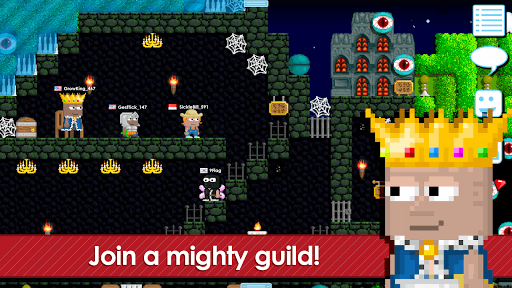
Growtopia has been running long enough that it has its own economy, its own slang, and a player base that treats world ownership the way other MMOs treat guild halls. It is a 2D sandbox where every world is built by someone, every item has a market value, and most of the content you play was made by another person rather than a design team. Published under the name Ubisoft Entertainment, it sits in the Adventure category on mobile stores, though in practice it behaves like a persistent online world with crafting, farming and trading at its core.
The pitch is simple. You get a blank world, a seed, and a few blocks. What you do with that is entirely up to you.
What Makes Growtopia an MMO Rather Than a Sandbox Toy
The distinction matters because it changes how people play. Worlds in Growtopia are shared spaces with names, locks and access rules, so building something is only half the activity. The other half is showing it to people, defending it, or charging admission in the form of world locks, the game’s informal currency.
Farming is the engine underneath all of it. You splice seeds, grow trees, harvest blocks and gems, then either use the materials or sell them. Thousands of unique items exist, and the ones that stop being obtainable become collector pieces. That is how a game about punching dirt turned into something with a secondary market and players who specialise in trading rather than building.
Mini games are the third pillar. Parkour runs, races, PVP arenas, puzzle worlds and story worlds are all player-generated, which means the catalogue grows constantly and quality varies wildly. Finding a good one is part of the experience.
Costumes, Status and the Social Layer of Growtopia
Growtopia leans hard on costume items. You can put together a space knight with a lightsaber, a doctor, a wizard, a queen with a dragon following her around, and the parts come from drops, events and the market. Appearance carries social weight here. Veteran players are recognisable on sight, and rare items function as a status marker in a way that is closer to an MMO than a casual builder.
Seasonal events bring in limited items and themed worlds, and the community organises around them, with trading servers and world shops filling up whenever a new batch lands. If you are the kind of player who enjoys spreadsheet-adjacent market games, that layer alone can hold your attention longer than the building does.
Running Growtopia on Windows for Longer Building Sessions
On a phone, Growtopia works fine for quick harvesting runs and checking your worlds, but placing blocks precisely with a thumb over the screen gets tedious during a large build, and trade chat is slow to type. That is the gap a desktop setup fills, and players who download Growtopia for Windows through an Android emulator usually do it for the keyboard, the mouse precision on block placement, and the ability to keep a wiki or item price list open in another window while they work.
The approach is the standard one: an Android environment running on your PC, with the game installed inside it. Nothing about Growtopia requires heavy hardware, so this is less about performance than about input and screen space.
Where New Players Usually Get Stuck
The early game is slow if you do not know what you are doing. New accounts start with limited inventory space and no world locks, and the fastest route forward is farming a cheap, reliable tree rather than chasing rare items. Learning what splices into what saves hours.
The other common trap is trusting strangers with your items. Scam attempts are a known part of the game’s social landscape, and the drop-and-trade culture makes them easy to fall for.
Shop world owners running a storefront for weeks, or players grinding toward one specific rare splice, are the ones who feel the difference a keyboard makes most: typing out prices in trade chat, lining up blocks exactly, keeping a splice list open while they farm. That’s less a phone game habit and more a routine, which is exactly what a bigger screen and a mouse are built for.
A Minecraft server can look simple from the outside: blocks, tools, farms, and a chat feed moving by at speed. Spend time on established community servers, though, and a much more structured system appears. Prices form around rare materials. Labor gets paid through plugins. Land carries upkeep costs. Whole districts become trade zones with their own routines and unwritten rules. What started as shared survival spaces has, over time, turned into a patchwork of functioning economies shaped by code, scarcity, and player behavior. The strongest servers do not leave that process to chance. They build rules that keep trade moving, wealth circulating, and resource pressure from tearing the whole system apart.
Server currencies, trade, land value, and controlled markets
Community servers use different economic systems depending on how players earn, exchange, and spend resources. Some rely on physical goods such as diamonds or emeralds, while others use plugin-based currencies connected to Vault and EssentialsX. Custom tokens are another option, often distributed through quests, daily tasks, or server events. Each model influences how administrators manage prices, resource availability, and currency circulation.
Player-operated shops form another part of these economies. Chest shops, trading posts, and automated farms allow players to exchange materials, equipment, and crafted goods. On Towny and SMP servers, land ownership also influences prices. Plots near town centers, transport routes, or established marketplaces can command higher prices because they provide better access to customers and trading infrastructure.
Chance-based minigames can operate within these controlled economies, allowing players to use server tokens in activities determined partly by random outcomes. However, virtual-currency minigames differ from real-money casino games, where wagers and payouts involve actual financial transactions. The distinction becomes clearer when comparing server minigames with established table-game categories, including variants grouped under 32Red Tafelspelen. While both formats may use recognizable mechanics involving cards, random outcomes, or virtual chips, their payment structures, currency values, and regulatory requirements are fundamentally different.
Towny and Skyblock produce opposite economic pressures
Two of the clearest examples of economic design in Minecraft are Towny-based survival servers and Skyblock networks. Towny usually produces a decentralized market. Players gather from a finite world, claim land, organize towns, and trade under natural limits set by distance, terrain, and time. Scarcity has weight because ore veins, building space, and safe transport all depend on the map and on local control. In that setting, a currency can act like soft fiat through plugins or remain tied to commodities such as diamonds. Either way, prices emerge from uneven supply and local demand.
Skyblock moves in the opposite direction. Resource generation is often engineered through island systems, minions, spawners, cobblestone generators, and admin-defined progression loops. That setup pushes servers toward a centralized economy, with hard fiat coins minted through tasks, sales, or automated actions. Global auction houses and instant-sell bazaars replace regional trade routes because distance has little meaning. Wealth moves faster, but scarcity is weaker unless administrators create strict sinks.
Those structural differences explain why the same item can hold very different value across server types. In Towny, labor and geography keep prices uneven. In Skyblock, automation and rapid turnover can flatten markets unless upgrades, cosmetic spending, and special enchants absorb currency. One format rewards regional commerce. The other needs firm top-down tuning to prevent runaway accumulation.
Jobs, guilds, and paid labor turn routine tasks into market roles
Many long-running servers add job systems to make repetitive work pay in a predictable way. Mining, farming, woodcutting, fishing, and crafting become income sources through plugin frameworks that assign fixed rewards per action. That changes the economy in a direct way. Instead of relying only on resale value, players can estimate returns from time spent on labor. A wheat farm is no longer useful only for food or villager trading. It becomes part of a wage loop backed by server rules.
Guilds and town groups build on that foundation. A settlement may hire members to gather stone for walls, stock community shops, or harvest wood for construction. Large factions often divide labor into roles: suppliers, builders, transport handlers, and traders. This creates a labor market with visible pay rates and known specialties. Newer players gain a route into the economy through work rather than land ownership or rare gear.
Paid labor also gives administrators another balancing tool. If item prices fall because supply gets too high, wage outputs can be adjusted or tied to daily caps. If a server wants to push agriculture, shipping, or brewing, it can reward those jobs more strongly for a period. That level of control keeps markets moving without forcing every decision through direct price setting.
Wealth gaps appear fast when sinks and limits are too weak
Unregulated Minecraft economies often run into the same pattern. Early adopters secure land, automate farms, and gain access to trade first. Their position compounds over time, especially when there are few maintenance costs and no meaningful limits on stockpiling. The result can be extreme wealth inequality. On some servers, staff have reported Gini-style patterns that resemble severe concentration in real-world economies. Once that happens, normal trade starts to weaken because too much value sits with too few players.
Inflation often grows alongside that gap. If server money is created faster than goods leave circulation, prices climb and common labor pays less in real terms. This happens often on servers with unchecked mob farms, loose sell-shop values, or stacked automation that floods the market around the clock. Rich players can absorb the shift. New arrivals usually cannot.
Communities that stay healthy tend to install several drains at once. Land upkeep taxes remove passive hoards. Nation maintenance in Towny pushes groups to stay productive. Auction fees clip rapid reselling. Limited plots near spawn stop a few players from owning all prime retail space. Some servers also reset resource worlds on a schedule so extraction continues without collapsing the main map’s settlement structure.
-
 Guides7 years ago
6 Proven Ways to Get more Instagram Likes on your Business Account
-
 Mainstream8 years ago
How to Buy Property & Safe Houses in GTA 5 (Grand Theft Auto 5)
-

 Guides2 years ago
Free Fire vs PUBG: Comparing Graphics, Gameplay, and More
-

 Guides2 years ago
50+ Free Fire ID and Passwords Login List (Giveaway) 2025
-
 Casual3 years ago
8 Ways to Fix Over-Extrusion and Under-Extrusion in 3D Printing
-

 Other3 years ago
Ajjubhai UID: Free Fire Details & Earnings
-

 Features2 years ago
Exploring Valorant eSports Stats: Unveiling the Metrics Behind Competitive Excellence
-

 MMOs2 years ago
Top 15 Famous Minecraft YouTubers You Should Watch in 2024